
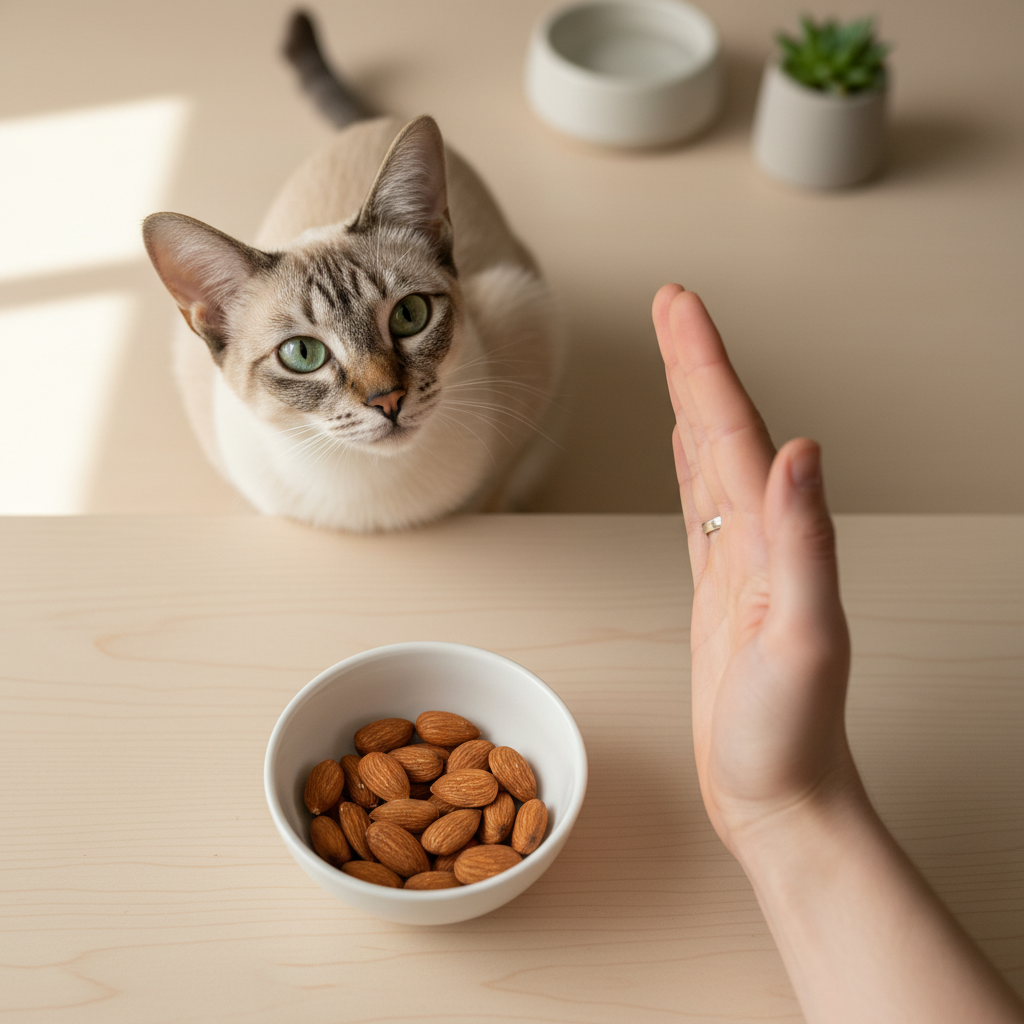
Quick answer: No, cats should not eat almonds. While not as toxic as some nuts, almonds can cause digestive upset, blockages, and contain cyanogenic compounds.
Key Takeaways
- Almonds are not recommended for cats
- High fat content can cause pancreatitis
- Hard texture poses choking and blockage risks
- Bitter almonds contain cyanide compounds
- Flavored almonds contain unsafe seasonings
Safety Overview
Almonds are not considered toxic to cats by the ASPCA, but they are not safe either. The high fat content can cause digestive upset and potentially pancreatitis. The hard, irregular shape of almonds presents a choking hazard and can cause intestinal blockages. Additionally, bitter almonds contain cyanogenic glycosides that release cyanide when metabolized. Sweet almonds (the common variety) contain trace amounts of these compounds as well. Salted, flavored, or chocolate-covered almonds are especially dangerous.
Nutrition Facts (per 100g almonds)
| Nutrient | Amount |
|---|---|
| Calories | 579 kcal |
| Fat | 50g |
| Protein | 21g |
| Carbohydrates | 22g |
| Fiber | 12.5g |
| Vitamin E | 25.6mg |
Risks and What to Avoid
- High fat: Risk of pancreatitis
- Choking hazard: Hard, irregular shape
- Intestinal blockage: Cats cannot digest nuts well
- Cyanogenic compounds: Present in bitter almonds
- Salt and seasonings: Flavored almonds are dangerous
- Chocolate coating: Chocolate is toxic to cats
Symptoms of Concern
Contact your vet if your cat shows:
- Vomiting or diarrhea after eating almonds
- Signs of choking
- Abdominal pain or bloating
- Lethargy or weakness
- Loss of appetite
When to Call a Veterinarian
Contact your vet if your cat ate:
- More than one or two almonds
- Chocolate-covered almonds
- Salted or seasoned almonds
- Shows any signs of digestive distress