
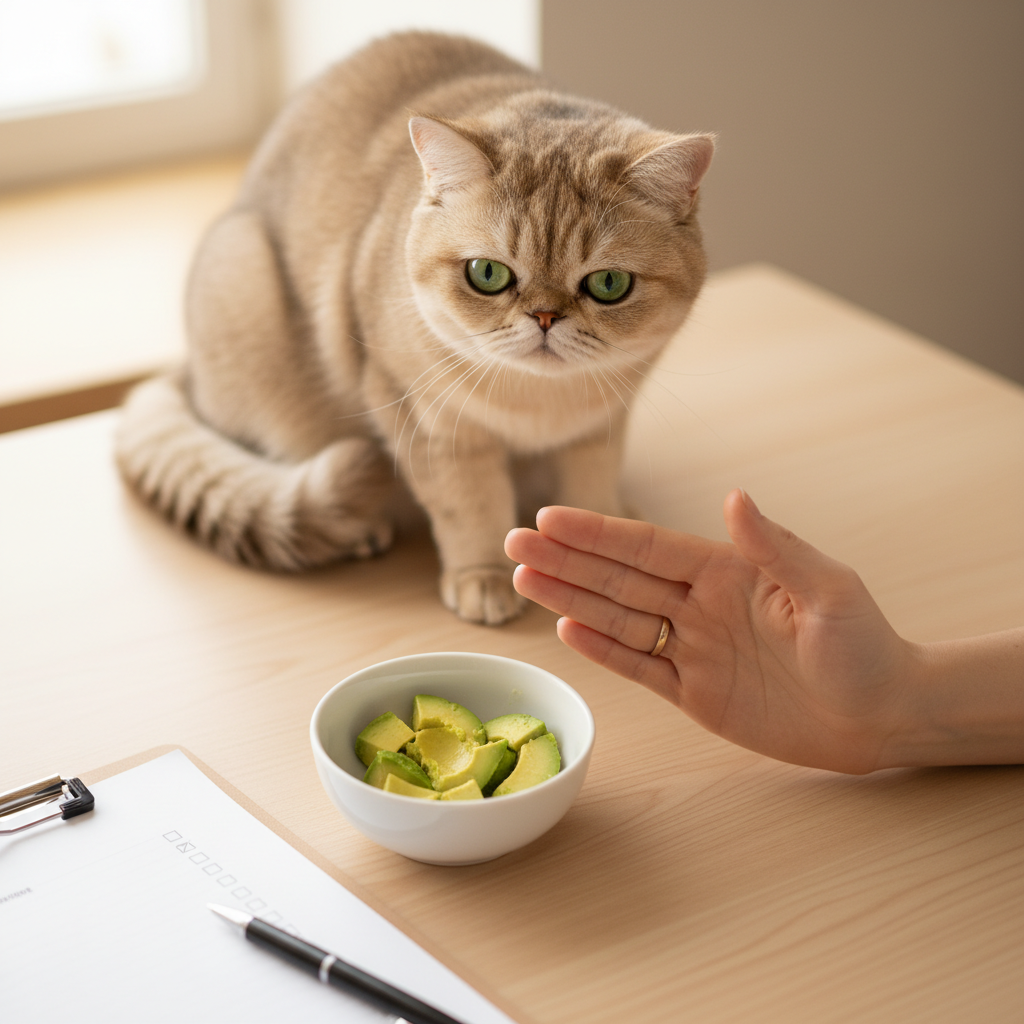
Key Takeaways
- Avocado contains persin, a toxin found in the leaves, bark, skin, and pit — and in smaller amounts in the flesh.
- Persin can cause vomiting, diarrhea, and potentially serious cardiovascular and respiratory issues in cats.
- The avocado pit is a serious choking hazard and mechanical obstruction risk.
- The high fat content in avocado flesh can also trigger pancreatitis in cats.
- Avoid all avocado products for cats — guacamole, avocado toast, avocado oil-based foods, and anything containing avocado.
Is Avocado Safe for Cats?
No. Avocado should be kept entirely away from cats. Avocado contains a naturally occurring fungicidal compound called persin, which is toxic to many animals including cats. Persin is present in the avocado leaves, bark, skin (rind), and the pit (stone) in the highest concentrations, but the edible flesh also contains low levels of persin. While the exact level of toxicity from avocado flesh in cats is less well-established than in birds or livestock (where persin is highly toxic even in small amounts), the ASPCA classifies avocado as toxic to cats and dogs.
In cats, persin exposure can cause gastrointestinal upset (vomiting and diarrhea) as the primary presentation. More concerning is the potential for cardiovascular effects — persin has been shown to cause myocardial necrosis (damage to heart muscle cells) in some species, and while dose-dependent thresholds in cats are not precisely quantified, the risk is real enough to warrant complete avoidance.
Beyond persin, avocado flesh is extremely high in fat — roughly 15g of fat per 100g of fruit, primarily monounsaturated fat. Cats are prone to pancreatitis when exposed to sudden high-fat foods, and avocado’s fat content alone is enough to cause a painful and potentially serious pancreatic episode. The pit presents a mechanical hazard: it is large, smooth, and sized appropriately to become lodged in the throat or intestines of a cat that might bite off a piece or swallow it.
Nutritional Value
Avocado is nutritionally rich for humans — high in healthy monounsaturated fats, folate, vitamins K, E, C, B5, and B6, and potassium. For cats, however, these nutrients are either not needed (vitamin C), already adequately provided by complete cat food, or present in a form (plant-based fats) that does not align with feline metabolic needs. The high fat content, in the context of avocado’s toxin presence, makes it a net harmful food for cats rather than a beneficial one.
Risks and What to Avoid
Persin toxicity: The primary toxin in avocado can cause vomiting, diarrhea, lethargy, and in serious cases, fluid accumulation around the lungs (pulmonary edema), difficulty breathing, and myocardial damage. The leaves, bark, pit, and skin contain the highest concentrations, but flesh should also be avoided.
Pancreatitis: The high fat content in avocado flesh can trigger an acute pancreatitis episode in cats, characterized by severe abdominal pain, vomiting, loss of appetite, and lethargy. Pancreatitis can range from mild to life-threatening.
Avocado pit: A serious mechanical hazard. The large, smooth pit can obstruct the esophagus or intestines if ingested. Emergency surgery may be required for intestinal obstruction.
Guacamole and avocado dips: Guacamole contains avocado, lime juice, salt, garlic, and onion — multiple toxic ingredients combined. This is particularly dangerous for cats and should never be anywhere a cat can access it.
Avocado oil: Cold-pressed avocado oil may contain persin residues and is high in fat. It is not appropriate for cats. Do not cook cat food in avocado oil or use it as a supplement.
“Cat-safe” avocado products: Some pet products claim to use persin-free avocado extract. Consult your veterinarian before using any such product, as the research on persin extraction and safety in cats is limited.
How Much Can a Cat Eat?
| Cat Size | Max Serving | Frequency |
|---|---|---|
| Small (under 8 lbs) | None — avoid entirely | Never |
| Medium (8–12 lbs) | None — avoid entirely | Never |
| Large (12+ lbs) | None — avoid entirely | Never |
There is no safe amount of avocado for cats. The combination of persin toxicity, high fat content, and the mechanical risk of the pit makes avocado one of the more important foods to keep completely away from cats in the household.
When to Call Your Vet
Contact your veterinarian or the ASPCA Animal Poison Control Center (888-426-4435) immediately if your cat ate any part of an avocado — including the flesh, skin, pit, or leaves. Signs of persin toxicity may include vomiting, diarrhea, difficulty breathing, weakness, and swollen abdomen. Signs of avocado pit obstruction include repeated vomiting, retching, and inability to keep food down. Both scenarios require prompt veterinary evaluation.