
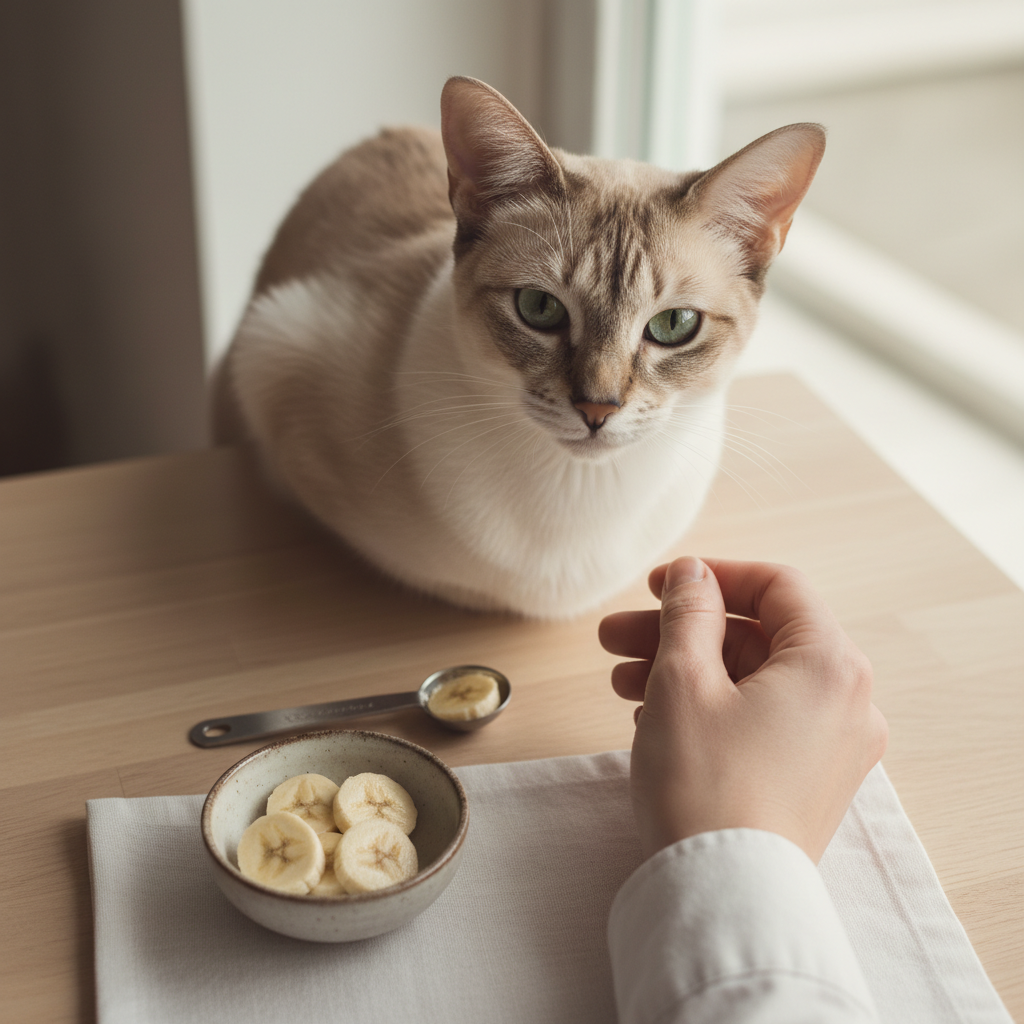
Key Takeaways
- Banana is not toxic to cats, but its high sugar content makes it a questionable treat choice.
- Most cats won’t be interested in banana — they lack sweet taste receptors.
- The potassium and vitamins in banana offer minimal benefit to obligate carnivores.
- Never feed banana peel — it’s difficult to digest and may cause GI upset.
- Cats with diabetes or obesity should avoid banana entirely.
Is Banana Safe for Cats?
Banana is not toxic to cats. The ASPCA does not list bananas as a dangerous food for cats, and a small piece of ripe banana flesh is unlikely to cause harm in a healthy adult cat. That said, “not harmful” and “a good idea” are not the same thing. Bananas are high in natural sugars and carbohydrates — two things that cats are not nutritionally designed to process in significant amounts. Cats are obligate carnivores with a very limited carbohydrate metabolism, and a high-sugar diet can contribute to weight gain, dental issues, and blood sugar instability.
Practically speaking, most cats simply aren’t interested in bananas. Because cats lack functional sweet taste receptors, the sweet appeal that makes bananas popular with humans is entirely lost on most felines. If your cat is drawn to banana (perhaps by texture, smell, or novelty), a thin slice on rare occasions is not going to cause lasting harm. But there’s no compelling reason to make banana a regular treat, and for cats with metabolic conditions, it should be avoided entirely.
The banana peel, while not toxic, is very difficult for cats to digest. The thick, fibrous peel can cause digestive upset and should never be offered. Only offer ripe banana flesh in very small amounts.
Nutritional Value
Bananas are rich in potassium, vitamin B6, vitamin C, manganese, and magnesium. They are also high in natural sugars (fructose, glucose, sucrose) and carbohydrates, with a medium banana containing about 27g of carbohydrates and 14g of sugar. While these nutrients are beneficial for humans, they offer limited value to cats. Cats do not require vitamin C (they synthesize it endogenously), their kidneys regulate potassium efficiently from meat-based diets, and carbohydrates provide no essential nutrition to obligate carnivores. A small piece of banana contains approximately 10–15 calories.
Benefits for Cats
There are no significant health benefits of banana for cats that cannot be better provided by their regular cat food. The small amount of vitamin B6 in banana is already present in adequate amounts in complete cat foods. The potassium content may theoretically support heart and muscle function, but again, a balanced cat diet provides sufficient potassium from animal sources. Banana’s only practical role might be as an extremely occasional novel treat for a food-motivated cat — and even then, lower-sugar options like a piece of cooked chicken or a few blueberries are more appropriate.
Risks and What to Avoid
High sugar and carbohydrates: Bananas are high-glycemic and can contribute to blood sugar spikes, weight gain, and over time, may increase the risk of feline diabetes with regular consumption. Cats with existing diabetes or obesity should not eat banana.
Banana peel: The peel is fibrous, indigestible, and may cause vomiting or diarrhea. It may also harbor pesticide residues on its surface. Never offer banana peel to cats.
Banana-flavored products: Banana candy, chips, dried banana with added sugar, and banana-flavored treats for humans are not appropriate for cats. Many contain artificial flavors, preservatives, and potentially xylitol. Only fresh, ripe banana flesh is safe.
Overripe banana: While not toxic, overripe bananas have a higher sugar content and mushier texture that may cause more digestive upset. A ripe (yellow with no brown spots) banana is the safest option if you choose to offer any.
Dental effects: Sugary foods, including banana, can contribute to plaque buildup and dental disease in cats — already a widespread feline health issue. Keep banana treats very rare and maintain regular dental care.
How Much Can a Cat Eat?
| Cat Size | Max Serving | Frequency |
|---|---|---|
| Small (under 8 lbs) | A thin slice (¼ inch) | Very occasionally — once a week at most |
| Medium (8–12 lbs) | 1–2 thin slices | Very occasionally — once a week at most |
| Large (12+ lbs) | 2 thin slices | Very occasionally — once a week at most |
Given banana’s high sugar content relative to a cat’s caloric needs, less is more. Many nutritional experts suggest avoiding banana as a cat treat altogether in favor of lower-sugar options like cooked chicken or plain pumpkin.
When to Call Your Vet
A small amount of banana is very unlikely to require a vet call for a healthy cat. Contact your vet if your cat ate a large amount of banana and develops persistent vomiting or diarrhea, or if your cat is diabetic and you’re concerned about blood sugar impact. Never give banana to a diabetic cat without discussing it with your vet first.