
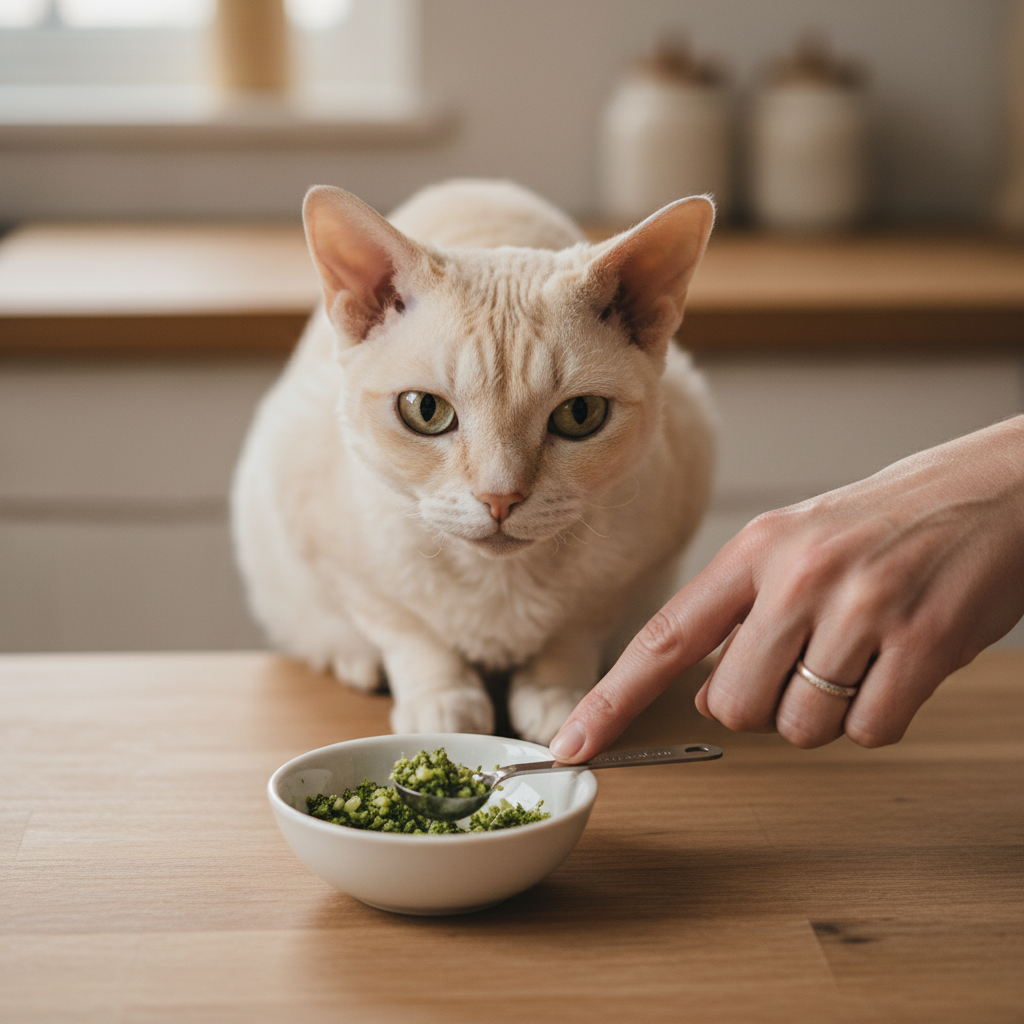
Key Takeaways
- Plain, cooked broccoli in small amounts is not toxic to cats and is safe as an occasional treat.
- Raw broccoli is harder to digest and poses a mild choking risk — always cook before offering.
- Broccoli offers minimal nutritional benefit to obligate carnivores; cats cannot process plant nutrients as efficiently as humans.
- Large amounts of broccoli can cause gas, bloating, and digestive upset due to its fiber and sulfur content.
- Never season broccoli — no butter, garlic, onion, salt, or cheese sauce.
Is Broccoli Safe for Cats?
Broccoli is listed as non-toxic to cats by the ASPCA. Small amounts of plain, cooked broccoli are safe for most cats and won’t cause harm. Some cats are actually drawn to broccoli — veterinarians hypothesize that broccoli’s bitter, sulfur-containing compounds may appeal to cats in the same way catnip does, though the response varies widely between individuals.
As with other vegetables, broccoli’s safety for cats depends heavily on preparation and portion size. Raw broccoli has a firm, fibrous texture that can be difficult to chew and digest properly. In large pieces, it poses a mild choking risk. It can also cause more gas and digestive irritation when raw due to tough cellulose fibers. Lightly steamed or boiled broccoli (until just tender, with no added seasoning) is the appropriate preparation for cats.
The bigger picture is that broccoli — like all vegetables — provides limited nutritional value to an obligate carnivore. Cats’ digestive systems are optimized for animal protein and fat, not plant matter. While broccoli won’t hurt them in small quantities, it also won’t provide the nutritional benefits it does for humans. If your cat is interested in broccoli, a small floret now and then is a harmless, low-calorie treat. If they’re not interested, there’s no reason to push it.
Nutritional Value
Broccoli is nutritionally dense for humans — high in vitamin C, vitamin K, folate, fiber, and glucosinolates (compounds with anti-cancer properties). For cats, however, the picture is different. Cats synthesize vitamin C endogenously, so they don’t need it from food. Vitamin K is present in animal-based cat foods. Cats lack the gut flora diversity to efficiently process and extract many plant phytonutrients. The fiber content may mildly support digestive health. A small broccoli floret contains approximately 5–8 calories — making it a very low-calorie treat option.
Benefits for Cats
The main practical benefit of cooked broccoli for cats is as a very low-calorie treat — useful for overweight cats who are food-motivated. The mild fiber content may offer slight digestive support in small amounts. Some anecdotal reports suggest cats showing a “catnip-like” interest in broccoli due to its sulfur compounds, though this is not a consistent or predictable response. Broccoli’s high water content (when cooked) can also marginally contribute to a cat’s hydration.
Risks and What to Avoid
Gas and bloating: Broccoli belongs to the Brassica family (cruciferous vegetables), which are known to produce gas during fermentation in the gut. Large amounts can cause significant bloating, gas, and digestive discomfort in cats.
Raw broccoli: Hard raw florets are difficult to chew and can be a mild choking hazard, particularly for smaller cats. The cellulose in raw broccoli is also harder to digest, increasing the risk of digestive upset. Always cook before offering.
Seasonings: Broccoli commonly served to humans is cooked with butter, garlic, onion, salt, or cheese sauce — all of which are harmful to cats. Garlic and onion in particular are toxic to cats, causing hemolytic anemia. Only plain, water-cooked broccoli is appropriate.
Portion size: Even though broccoli is not toxic, large amounts can cause vomiting and diarrhea due to the high fiber and sulfur content. Keep servings small and infrequent.
Broccoli rabe/rapini: This is a different, more bitter variety. While not toxic, it should be treated the same way as regular broccoli — plain, cooked, in tiny amounts if at all.
How Much Can a Cat Eat?
| Cat Size | Max Serving | Frequency |
|---|---|---|
| Small (under 8 lbs) | ½ small floret (cooked) | Once or twice a week |
| Medium (8–12 lbs) | 1 small floret (cooked) | Once or twice a week |
| Large (12+ lbs) | 1–2 small florets (cooked) | Once or twice a week |
Only plain, lightly steamed or boiled broccoli with no seasoning. Cut into small pieces. Introduce gradually and watch for any signs of digestive upset. Most cats show no interest in broccoli at all.
When to Call Your Vet
Contact your vet if your cat ate a large amount of broccoli and develops persistent vomiting, significant gas pain (hunching, not wanting to move), or diarrhea lasting more than 24 hours. If broccoli was cooked with garlic or onion, contact your vet or the ASPCA Animal Poison Control Center (888-426-4435) promptly — even small amounts of alliums can cause toxicity in cats.