
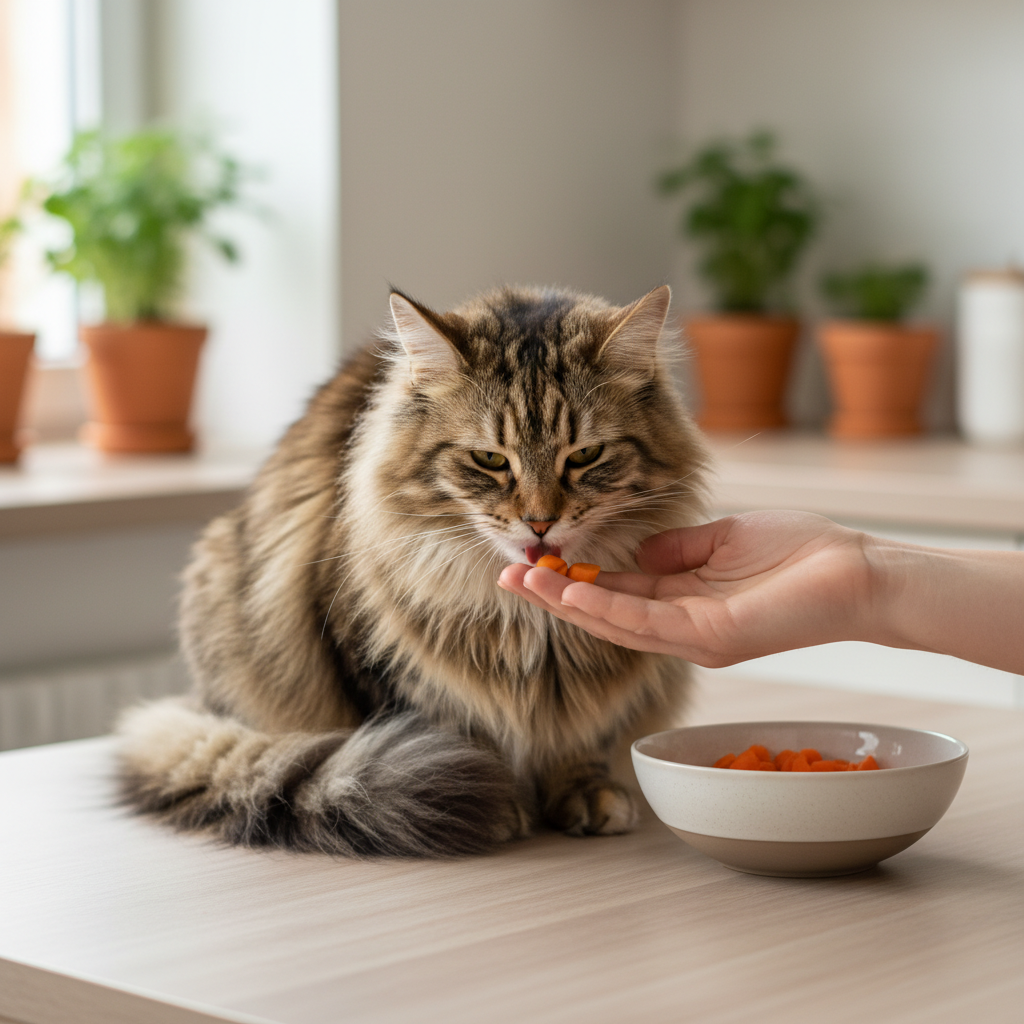
Key Takeaways
- Cooked, plain carrots are not toxic to cats and are safe in very small amounts.
- Raw carrots are a choking hazard due to their hard texture — always cook before serving.
- Cats cannot efficiently convert beta-carotene (from carrots) to vitamin A — they need preformed vitamin A from animal sources.
- Carrots offer minimal nutritional benefit to obligate carnivores; they are at best a low-calorie treat.
- Never serve carrots seasoned with butter, salt, glaze, or any flavoring.
Is Carrot Safe for Cats?
Carrots are not toxic to cats, and small amounts of cooked carrot are safe to offer as an occasional treat. However, carrots are a vegetable — and cats are obligate carnivores whose digestive systems are optimized for animal-based foods, not plants. This doesn’t mean vegetables cause immediate harm, but it does mean cats derive very little actual nutritional value from them compared to what a human or even a dog would gain from the same food.
The most practical concern with carrots is texture. Raw carrots are firm and crunchy — a potential choking hazard for cats, especially when cut into larger pieces. Cats also lack the flat molars that humans use to grind hard vegetables; their teeth are designed for tearing meat. Always cook carrots (steam or boil without seasoning) until soft before offering them to your cat, and cut them into small, bite-sized pieces.
Cooked carrots are much safer from a choking standpoint and are easier to digest. Some cats enjoy the sweet flavor of cooked carrot, while others will ignore it entirely. If your cat enjoys it, a small piece of cooked carrot now and then is a harmless, low-calorie treat — just don’t expect it to add meaningful nutrition to their diet.
Nutritional Value
Carrots are rich in beta-carotene, fiber, vitamins C and K, and potassium. For humans, beta-carotene is converted to vitamin A in the body. Cats, however, are unique in that they cannot efficiently convert beta-carotene to vitamin A — they require preformed vitamin A (retinol) obtained directly from animal sources like liver. This means one of the key nutrients carrots are famous for providing is essentially unavailable to cats. The fiber content may offer some minor digestive benefit, and the vitamin C and antioxidants are not harmful, but the overall nutritional contribution to a cat’s diet is minimal.
Benefits for Cats
The main practical benefit of carrots for cats is as an extremely low-calorie treat option. For overweight cats that tend to beg for food, a small piece of plain cooked carrot gives them something to eat without adding significant calories. The fiber content may also mildly support digestive regularity in some cats. Some cats enjoy the act of chewing soft cooked vegetables, which can also provide minor dental scraping — though purpose-designed dental treats and cat-safe chews are far more effective for dental health.
Risks and What to Avoid
Choking hazard (raw): Never feed raw carrot to cats. The hard texture is a choking risk, especially for smaller cats. Always cook thoroughly until soft.
Seasonings and glazes: Carrots prepared for human consumption are often glazed with honey, butter, or brown sugar, or seasoned with salt and spices. Never feed seasoned carrots to cats. Only plain, water-cooked carrot is appropriate.
High sugar content: While not as high as some fruits, carrots do contain natural sugars. For cats with diabetes, even a small amount of carrot may not be advisable — consult your vet.
Displacement of nutrition: If a cat fills up on vegetables, they may eat less of their nutritionally complete cat food, which could contribute to deficiencies over time. Treats — including carrots — should make up no more than 10% of daily caloric intake.
Carrot tops: The leafy green tops of carrots are not toxic to cats in small amounts, but they provide no benefit either. There’s no reason to offer them.
How Much Can a Cat Eat?
| Cat Size | Max Serving | Frequency |
|---|---|---|
| Small (under 8 lbs) | 1 small cube of cooked carrot (½ inch) | Once or twice a week |
| Medium (8–12 lbs) | 2–3 small cubes of cooked carrot | Once or twice a week |
| Large (12+ lbs) | 3–4 small cubes of cooked carrot | Once or twice a week |
Only offer cooked, plain carrot (steamed or boiled, no seasoning). Cut into small pieces to prevent any choking risk. Most cats will have little interest in carrots — don’t push it if they’re not interested.
When to Call Your Vet
Contact your vet if your cat chokes on a piece of carrot or shows signs of throat obstruction: pawing at the mouth, gagging, or labored breathing. For cats with diabetes, consult your vet before introducing any sugar-containing food including carrots. Routine carrot treats in a healthy cat are very unlikely to require veterinary attention.