
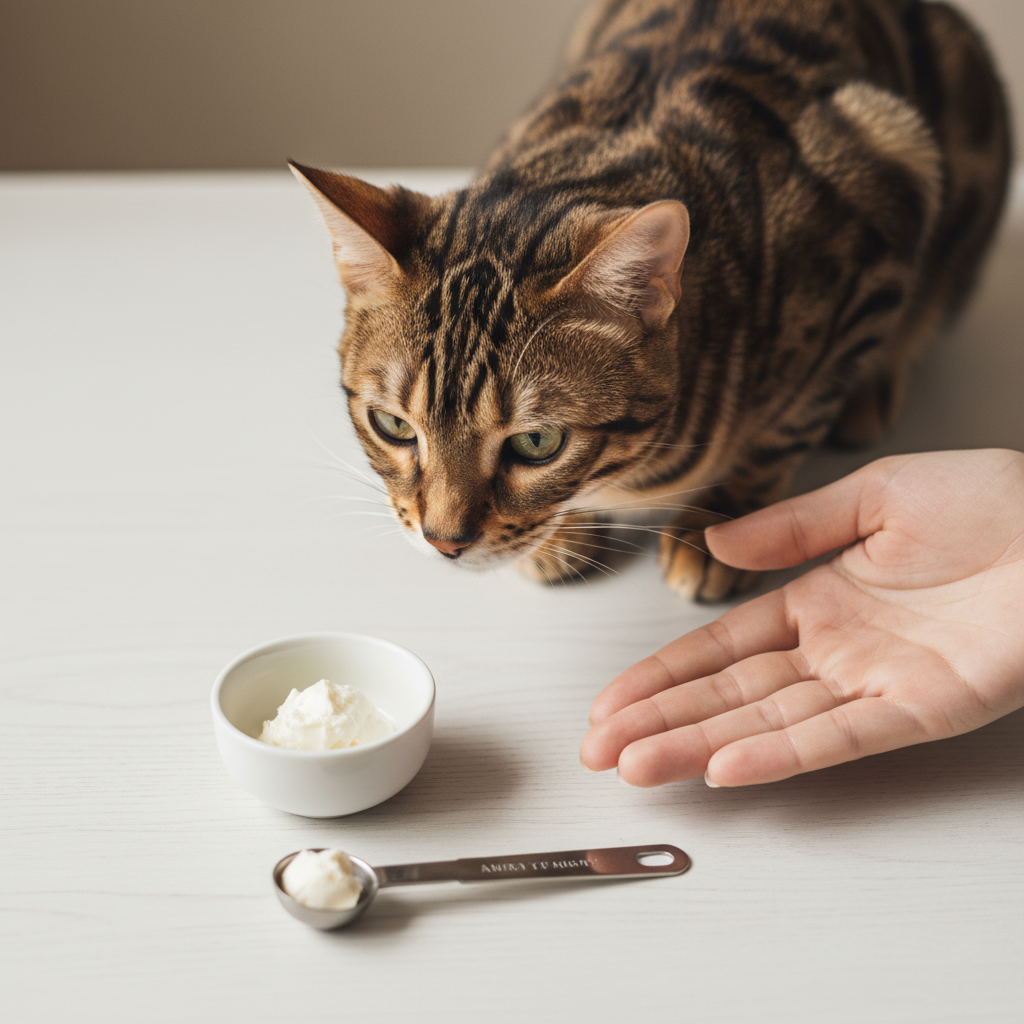
Key Takeaways
- Most adult cats are lactose intolerant — their bodies lack sufficient lactase to digest dairy properly.
- Hard, aged cheeses (cheddar, Swiss, Parmesan) contain less lactose and are tolerated better than soft cheeses.
- Cheese is high in fat and salt — even small amounts add significant calories and sodium.
- Never offer cheese containing onion, garlic, herbs, or xylitol (some low-fat varieties).
- Cats do not nutritionally need dairy — it should be a rare treat at most.
Is Cheese Safe for Cats?
Cheese is not toxic to cats, but that doesn’t mean it’s a good idea to offer it freely. The central issue is that most adult cats are lactose intolerant. Kittens produce lactase — the enzyme that digests lactose — in abundance, but as they wean, lactase production typically declines dramatically. Many adult cats who consume dairy products experience digestive upset: gas, bloating, soft stools, or diarrhea. The severity varies by individual — some cats have higher lactase production than others and tolerate small amounts without issue, while others react to even a small cube of cheese.
Hard, aged cheeses like cheddar, Swiss, and Parmesan contain significantly less lactose than soft cheeses or milk, because much of the lactose is converted to lactic acid during the aging process. If you do choose to offer cheese to your cat, a small piece of a hard aged variety is the lower-risk option. Soft cheeses like brie, cream cheese, cottage cheese, or ricotta contain more lactose and are more likely to cause digestive distress.
Beyond lactose, cheese is calorie-dense and high in fat and sodium — nutrients cats don’t need in excess. Obesity is a significant health problem in domestic cats, and high-fat treats contribute meaningfully to caloric overconsumption. For cats with kidney disease, hypertension, or heart disease, the sodium content of cheese is a particular concern.
Nutritional Value
Cheese provides protein, calcium, phosphorus, and fat-soluble vitamins (A, D, K2). A 1-inch cube of cheddar contains approximately 70–80 calories, 4g of protein, 6g of fat, and 110–180mg of sodium — a notable sodium load for a small cat whose kidneys process sodium very differently from humans. The calcium in cheese is bioavailable, though cats consuming a complete commercial cat food already have their calcium needs met. Cheese does not provide taurine or arachidonic acid in meaningful amounts.
Benefits for Cats
There is no compelling nutritional reason for cats to eat cheese — but it does have practical uses. Its strong flavor and slightly sticky texture make it an excellent vehicle for hiding pills or medication. For owners who struggle to medicate their cats, a small piece of soft cheese used to conceal a tablet can be a lifesaver. Beyond medication, cheese can occasionally serve as a high-value reward during training, though cats are generally less motivated by food rewards than dogs.
Risks and What to Avoid
Lactose intolerance: Most adult cats will experience gas, bloating, or diarrhea from dairy. Even “small” amounts can be enough to trigger digestive upset in sensitive individuals. Watch your cat after the first offering and discontinue if any GI distress occurs.
High fat and calories: Cheese is energy-dense. Regular cheese treats contribute to weight gain, which is a leading cause of diabetes, arthritis, and liver disease in cats. Keep servings tiny and infrequent.
High sodium: Many cheeses contain substantial salt. Excess sodium strains the kidneys — particularly concerning for cats with chronic kidney disease (CKD), which is extremely common in older cats.
Toxic ingredients: Never offer cheese containing garlic, onion, chives, or herbs from the Allium family — all toxic to cats. Check labels on flavored cheese products carefully. Also avoid any cheese products containing xylitol, a sweetener found in some low-fat cream cheese brands that is toxic to cats.
Mold: Blue cheese and other mold-ripened cheeses should be avoided entirely. The Penicillium molds used in blue cheese produce roquefortine C, a mycotoxin that can cause vomiting, diarrhea, and neurological symptoms in cats.
How Much Can a Cat Eat?
| Cat Size | Max Serving | Frequency |
|---|---|---|
| Small (under 8 lbs) | Pea-sized piece of hard cheese | Once a week or less |
| Medium (8–12 lbs) | ½ teaspoon grated hard cheese | Once a week or less |
| Large (12+ lbs) | 1 teaspoon grated hard cheese | Once a week or less |
Choose hard, aged, low-sodium cheese. Monitor for digestive upset after first offering. Cats with lactose intolerance, kidney disease, or obesity should avoid cheese entirely.
When to Call Your Vet
Contact your vet if your cat develops persistent diarrhea, vomiting, or abdominal discomfort after eating cheese. Also seek guidance if your cat accidentally consumed blue cheese or cheese containing garlic or xylitol. If your cat has known kidney disease, heart disease, or diabetes, consult your vet before introducing any dairy product.