
Key Takeaways
- Plain, cooked chicken (no seasoning, no bones) is safe and nutritious for cats.
- Chicken is a lean, high-quality protein that supports muscle maintenance in obligate carnivores.
- Never feed raw chicken due to risk of Salmonella and Campylobacter contamination.
- Remove all bones before serving — cooked chicken bones splinter and can cause internal injury.
- Chicken should complement, not replace, a complete and balanced cat food diet.
Is Chicken Safe for Cats?
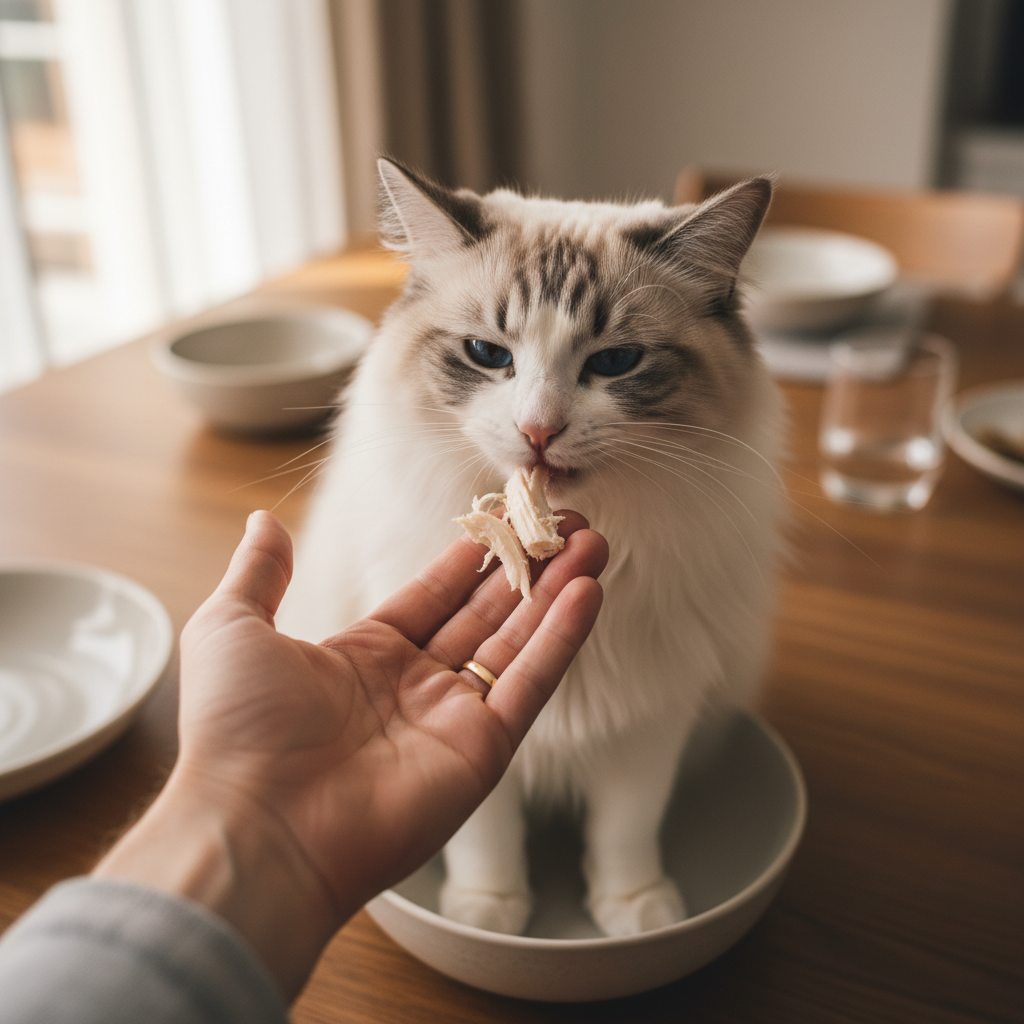
Chicken is one of the most commonly recommended supplemental proteins for cats, and with good reason. As obligate carnivores, cats thrive on animal-based protein, and plain cooked chicken provides exactly that — without unnecessary additives, high sugar content, or the toxicity risks associated with many other human foods. Most cats tolerate chicken exceptionally well, and it’s frequently used as a hypoallergenic protein in veterinary elimination diets.
The key word is plain. Chicken prepared for human consumption is often marinated, seasoned with garlic or onion, cooked in butter or oil, or served with sauces — all of which are problematic or outright toxic for cats. What your cat should get is simply boiled or baked chicken breast or thigh meat, with all skin and bones removed, and no salt or seasoning of any kind.
Raw chicken is a topic of debate. While some raw-feeding advocates promote it, mainstream veterinary organizations including the American Veterinary Medical Association (AVMA) and the Cornell Feline Health Center advise against raw poultry for cats due to the risk of bacterial contamination (Salmonella, Campylobacter, Listeria) and potential parasites. Immunocompromised cats, kittens, and senior cats are especially vulnerable. Cooking eliminates these risks without significantly diminishing the protein quality.
Nutritional Value
Chicken breast is one of the leanest animal proteins available. A 3-oz serving provides approximately 26g of protein, 3g of fat, and no carbohydrates. It’s rich in B vitamins (B3/niacin, B6, B12), phosphorus, and selenium. Chicken also contains taurine — an essential amino acid cats cannot synthesize in sufficient quantities themselves — though commercial cat foods are formulated to provide adequate taurine independently. The protein profile of chicken closely mirrors what a cat would consume in the wild, making it a biologically appropriate treat or supplement.
Benefits for Cats
Plain cooked chicken can be a valuable addition to a cat’s diet for several reasons. Its high protein content supports lean muscle mass, which is especially important for senior cats who naturally lose muscle with age. The easily digestible protein is gentle on the digestive system, making it a common recommendation for cats recovering from gastrointestinal illness. Chicken’s mild flavor also tends to be well-accepted even by picky eaters. Veterinarians sometimes recommend boiled chicken as a bland diet component after vomiting or diarrhea episodes, alongside plain white rice.
Risks and What to Avoid
Bones: Cooked chicken bones are a serious hazard. Unlike raw bones (which are softer), cooked bones splinter into sharp shards that can lacerate the mouth, throat, esophagus, stomach, or intestines. Always remove all bones completely before giving chicken to your cat.
Skin and fat: Chicken skin is high in fat and often seasoned. Excessive fat can cause digestive upset and contribute to obesity or pancreatitis over time. Always remove the skin.
Seasonings and marinades: Garlic, onion, chives, and leeks are toxic to cats and cause hemolytic anemia — even in small amounts. Salt, pepper, paprika, and most cooking herbs are also inappropriate. Only offer completely unseasoned chicken.
Raw chicken risks: Raw chicken may harbor Salmonella, Campylobacter, or Clostridium bacteria. Cats can become ill and potentially transmit these bacteria to humans in the household. Cook chicken fully to an internal temperature of 165°F (74°C).
Dietary imbalance: Plain chicken alone is not a complete diet. It lacks sufficient calcium, vitamin A (cats cannot convert beta-carotene), and other micronutrients. Use it as a treat or supplement, not a sole food source.
How Much Can a Cat Eat?
| Cat Size | Max Serving | Frequency |
|---|---|---|
| Small (under 8 lbs) | 1 tablespoon (shredded) | A few times per week |
| Medium (8–12 lbs) | 2 tablespoons (shredded) | A few times per week |
| Large (12+ lbs) | 3 tablespoons (shredded) | A few times per week |
Chicken treats should make up no more than 10% of your cat’s total daily caloric intake. If used as a meal topper, reduce the main meal portion accordingly to avoid overfeeding.
When to Call Your Vet
Contact your veterinarian if your cat shows signs of digestive distress after eating chicken: persistent vomiting, diarrhea, lethargy, or loss of appetite. If you suspect your cat ate seasoned chicken containing garlic or onion, contact your vet or the ASPCA Animal Poison Control Center immediately — signs of toxicity may be delayed by several days and include pale or yellowish gums, weakness, and rapid breathing.