
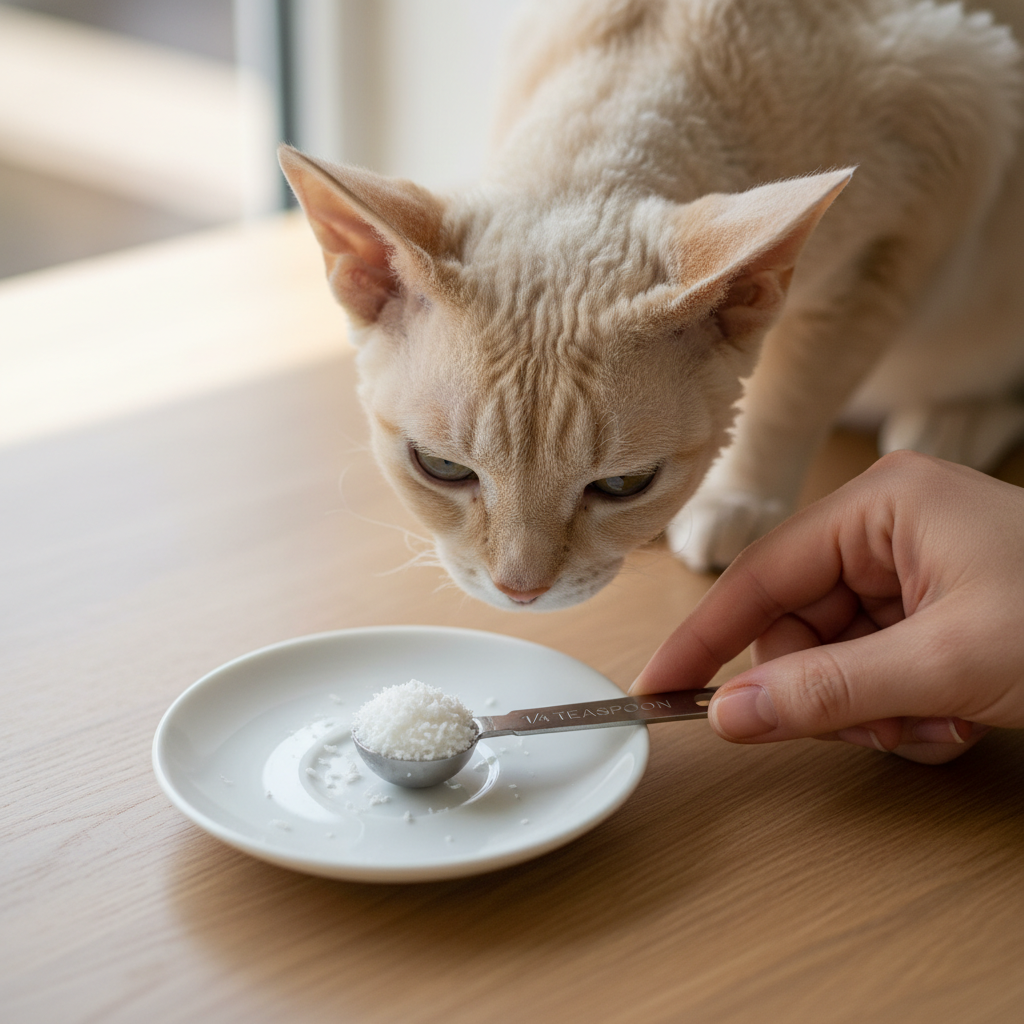
Quick answer: Cats can have small amounts of coconut flesh or oil occasionally, but the high fat content can cause digestive issues. Coconut water is not recommended due to potassium levels.
Key Takeaways
- Small amounts of coconut flesh are safe for cats
- High in saturated fat – feed sparingly
- Coconut oil may help with hairballs in small amounts
- Coconut milk and cream are too rich for cats
- Coconut water contains too much potassium
Safety Overview
Coconut is not toxic to cats according to the ASPCA. Small amounts of fresh coconut flesh or a tiny amount of coconut oil are generally safe. However, coconut is high in saturated fats which can cause digestive upset, including diarrhea and stomach cramps. Some cats may also be allergic to coconut. Coconut products like milk, cream, and water are not recommended due to their richness and mineral content.
Nutrition Facts (per 100g coconut flesh)
| Nutrient | Amount |
|---|---|
| Calories | 354 kcal |
| Fat | 33g |
| Saturated fat | 30g |
| Carbohydrates | 15g |
| Fiber | 9g |
| Manganese | 1.5mg |
| Copper | 0.44mg |
Potential Benefits
- Hairballs: Small amount of oil may help lubricate
- Skin and coat: Oil may improve coat condition externally
- Lauric acid: Has antimicrobial properties
Risks and What to Avoid
- High fat: Can cause diarrhea and pancreatitis
- Coconut milk/cream: Too rich for cats
- Coconut water: High potassium can affect kidneys
- Dried coconut: Often contains added sugar
- Allergies: Some cats may be sensitive
Serving Size Guide
| Product | Maximum | Frequency |
|---|---|---|
| Fresh coconut flesh | 1/2 teaspoon | Rarely |
| Coconut oil | 1/4 teaspoon | Weekly max |
When to Avoid
- Cats with pancreatitis history
- Cats with sensitive digestion
- Overweight cats
- Cats with kidney disease