
Key Takeaways
- Plain cucumber flesh is non-toxic and safe for cats in small quantities.
- Cucumber is about 96% water — a great hydrating treat for cats who eat primarily dry food.
- Remove the peel and seeds before serving, as these are harder to digest and may carry pesticide residue.
- Never offer pickled cucumber (pickles) — the vinegar, salt, garlic, and spices are harmful to cats.
- Many cats are startled by cucumbers (a well-known internet phenomenon), so introduce calmly and gently.
Is Cucumber Safe for Cats?
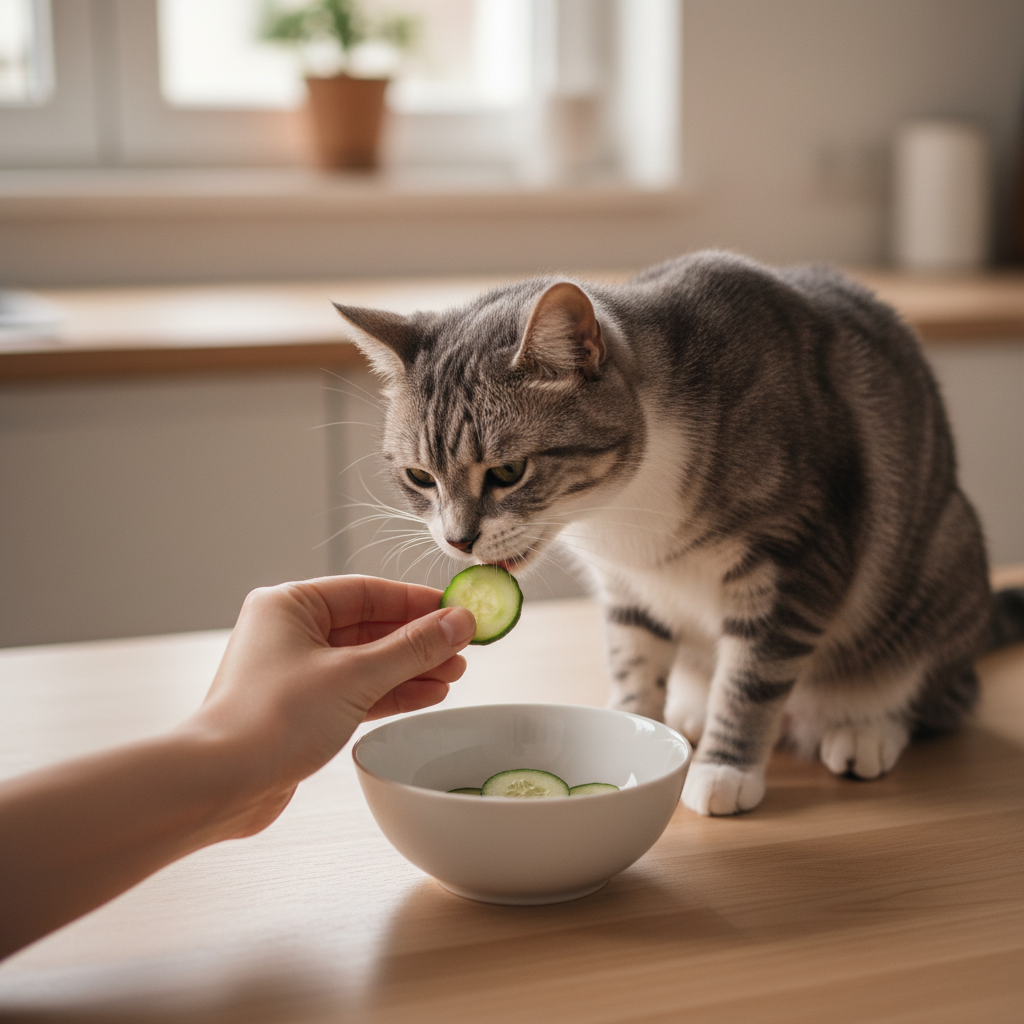
Plain cucumber is one of the safest vegetables you can offer a cat. The ASPCA lists cucumber as non-toxic to cats, and it contains no compounds that are harmful to feline physiology. At about 96% water with very low calorie content, cucumber is a particularly attractive treat option for cats who eat primarily dry kibble and need extra hydration in their diet.
That said, there are some important preparation notes. The cucumber peel (skin) can carry pesticide residues if the cucumber is not organic, and it may be harder to digest than the flesh. Seeds, while not harmful, can cause minor digestive irritation in some cats. It’s best to peel the cucumber and scoop out the seeds, then cut the flesh into small, bite-sized pieces appropriate for your cat’s size.
A cultural side note: the internet is full of videos showing cats leaping in fright when they discover a cucumber placed silently behind them. This reaction stems from the sudden appearance of an unfamiliar object (possibly triggering a snake-like response), not from cucumber being dangerous. When introducing cucumber as a food, offer it gently and calmly in a familiar context — your cat’s reaction to cucumber as food will likely be calm curiosity or indifference rather than fear.
Nutritional Value
Cucumber is extremely low in calories — a 1-inch slice contains only 2–4 calories. It provides vitamin K, vitamin C, magnesium, potassium, and silica, along with its primary benefit: high water content (~96%). Cats don’t require vitamin C from food (they synthesize it), and the other micronutrients are covered by a complete commercial cat food. The main value of cucumber for cats is hydration rather than significant nutritional supplementation. Its very low calorie density also makes it a guilt-free treat option for weight-conscious cats.
Benefits for Cats
The primary benefit is hydration. Cats evolved in desert environments with low natural thirst drives, and domestic cats — especially those eating primarily dry kibble — often suffer from chronic mild dehydration. This is associated with urinary tract disease (FLUTD), kidney disease, and bladder stones. Wet, hydrating foods like cucumber can contribute to overall fluid intake, though they should complement water consumption rather than replace it. Cucumber is also a very low-calorie treat option for overweight cats who need something to snack on. The crunchy texture may provide minor dental scraping benefit, though purpose-designed dental treats are far more effective.
Risks and What to Avoid
Pickled cucumber (pickles): Pickles are completely inappropriate for cats. The brine contains large amounts of salt, vinegar, and typically garlic and dill — garlic being toxic to cats. Even a small amount of pickle juice can cause digestive upset and potential toxicity. Never offer pickles to your cat.
Cucumber peel: The skin may harbor pesticide residues (especially on non-organic cucumbers) and is harder to digest. Always peel before serving.
Seeds: Cucumber seeds are not toxic but may cause mild digestive upset in some cats. Scoop out the seedy center and offer only the firm flesh.
Seasoned cucumber: Cucumber salads and dips (tzatziki, raita) contain dairy, garlic, salt, and herbs — all inappropriate for cats. Only plain, unadorned cucumber flesh is suitable.
Overfeeding: Large amounts of cucumber can cause loose stools due to the high water content and added fiber. Keep portions small.
How Much Can a Cat Eat?
| Cat Size | Max Serving | Frequency |
|---|---|---|
| Small (under 8 lbs) | 1 thin slice (peeled, seeded) | A few times per week |
| Medium (8–12 lbs) | 2 thin slices (peeled, seeded) | A few times per week |
| Large (12+ lbs) | 3 thin slices (peeled, seeded) | A few times per week |
Always peel and deseed before serving. Offer at room temperature or slightly chilled (not frozen). Plain only — no salt, dressing, or seasoning of any kind.
When to Call Your Vet
Plain cucumber is very unlikely to require a vet visit. Contact your vet if your cat ate cucumber that was seasoned with garlic or dill, or consumed pickle brine — both can cause toxicity. If your cat develops persistent diarrhea or vomiting after eating cucumber, discontinue and consult your vet if symptoms last more than 24 hours.