
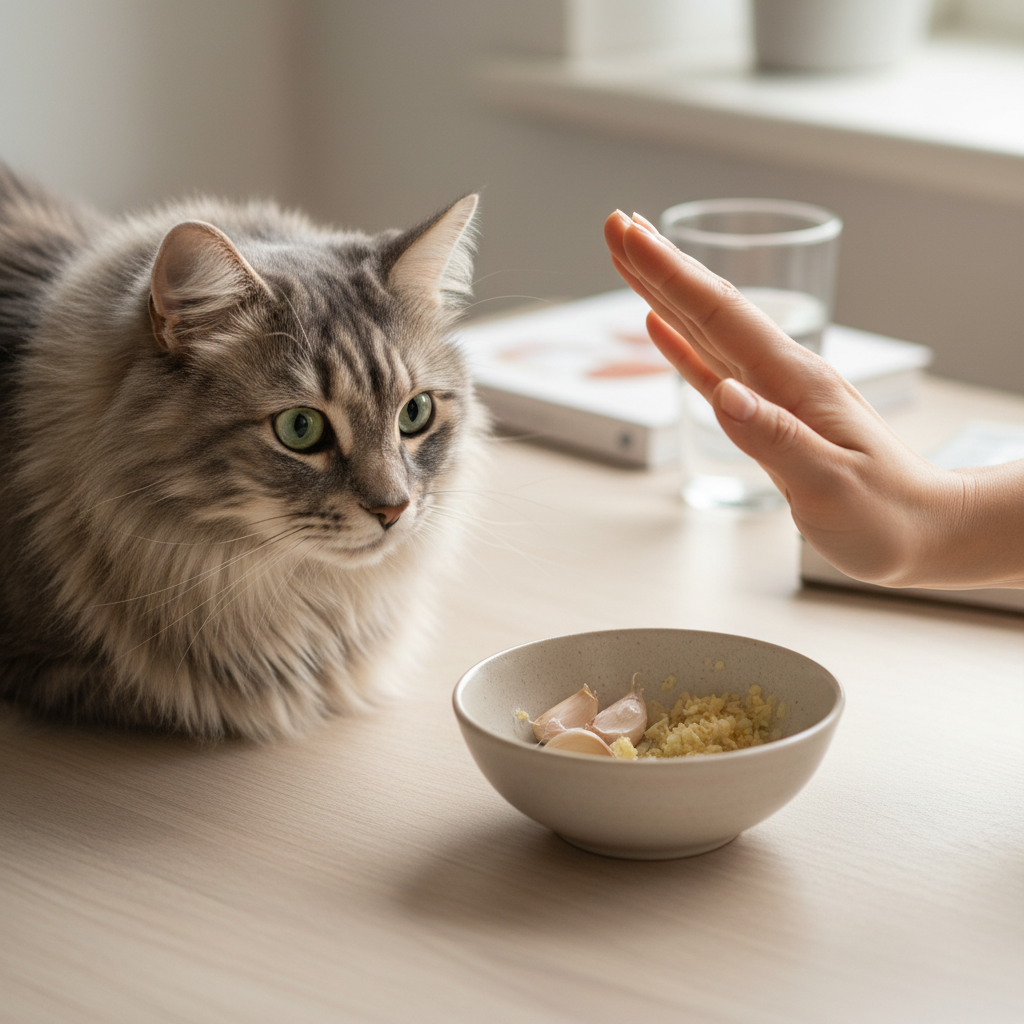
Quick answer: No, cats should never eat garlic. Garlic is highly toxic to cats and can cause life-threatening anemia, even in small amounts.
Key Takeaways
- Garlic is toxic to cats – avoid completely
- Contains compounds that damage red blood cells
- More toxic than onions (5x more potent)
- Cooked, raw, powdered, and all forms are dangerous
- Can cause Heinz body anemia
Safety Overview
Garlic is extremely toxic to cats and belongs to the Allium family along with onions, leeks, and chives. It contains thiosulfate compounds that damage red blood cells, leading to Heinz body anemia. Unlike humans, cats lack the enzymes needed to process these compounds. Even small amounts – such as garlic powder in seasoned foods – can cause serious harm. The toxicity is cumulative, meaning small amounts over time can be just as dangerous as a single large dose.
Why Garlic Is Dangerous
- Thiosulfates: Destroy red blood cells
- Heinz body anemia: Red blood cells become fragile and burst
- Organosulfur compounds: Cause oxidative damage
- Delayed symptoms: Signs may not appear for days
- Cumulative effect: Small repeated doses add up
Symptoms of Garlic Toxicity
- Vomiting and diarrhea
- Lethargy and weakness
- Pale gums
- Rapid breathing or panting
- Increased heart rate
- Dark-colored urine (reddish-brown)
- Collapse (in severe cases)
Common Sources of Hidden Garlic
| Foods to Avoid | Products to Check |
|---|---|
| Garlic bread | Commercial baby food |
| Seasoned meats | Broths and stocks |
| Pasta sauce | Pet treats with garlic |
| Marinades | Some flea products |
| Soups and stews | Seasoning mixes |
What to Do If Your Cat Eats Garlic
Contact your vet immediately – this is an emergency.
- Do not wait for symptoms to appear
- Note the amount consumed and time
- Contact ASPCA Poison Control: (888) 426-4435
- Your vet may induce vomiting if caught early
- Blood tests may be needed to check for anemia
When to Call a Veterinarian
Immediately if your cat has eaten any amount of garlic, garlic powder, or foods containing garlic.