
Key Takeaways
- Most adult cats are lactose intolerant — they lack sufficient lactase to digest dairy milk.
- Cow’s milk commonly causes diarrhea, vomiting, gas, and stomach cramps in cats.
- The “cats love milk” image is a cultural myth — it causes more harm than good.
- Cats get all the hydration they need from fresh water and wet food; milk is unnecessary.
- If you want a dairy treat, lactose-free “cat milk” products are a safer alternative in very small amounts.
Is Milk Safe for Cats?
The image of a cat lapping up a saucer of milk is deeply embedded in popular culture — and deeply misleading from a nutritional standpoint. The truth is that most adult cats are lactose intolerant. While kittens produce the enzyme lactase to digest their mother’s milk, this production decreases significantly as they wean and reach adulthood. When adult cats consume cow’s milk, the undigested lactose passes into the large intestine, where gut bacteria ferment it, producing gas, bloating, diarrhea, and abdominal discomfort.
Cow’s milk is also nutritionally quite different from cat milk (queen’s milk). Cat milk is higher in protein and fat and lower in lactose than cow’s milk. Cow’s milk is simply not formulated for feline digestion. Even if a particular cat does not show immediate obvious symptoms of lactose intolerance, the dairy can still cause low-grade gastrointestinal inflammation or contribute to loose stools without the owner connecting it to the milk.
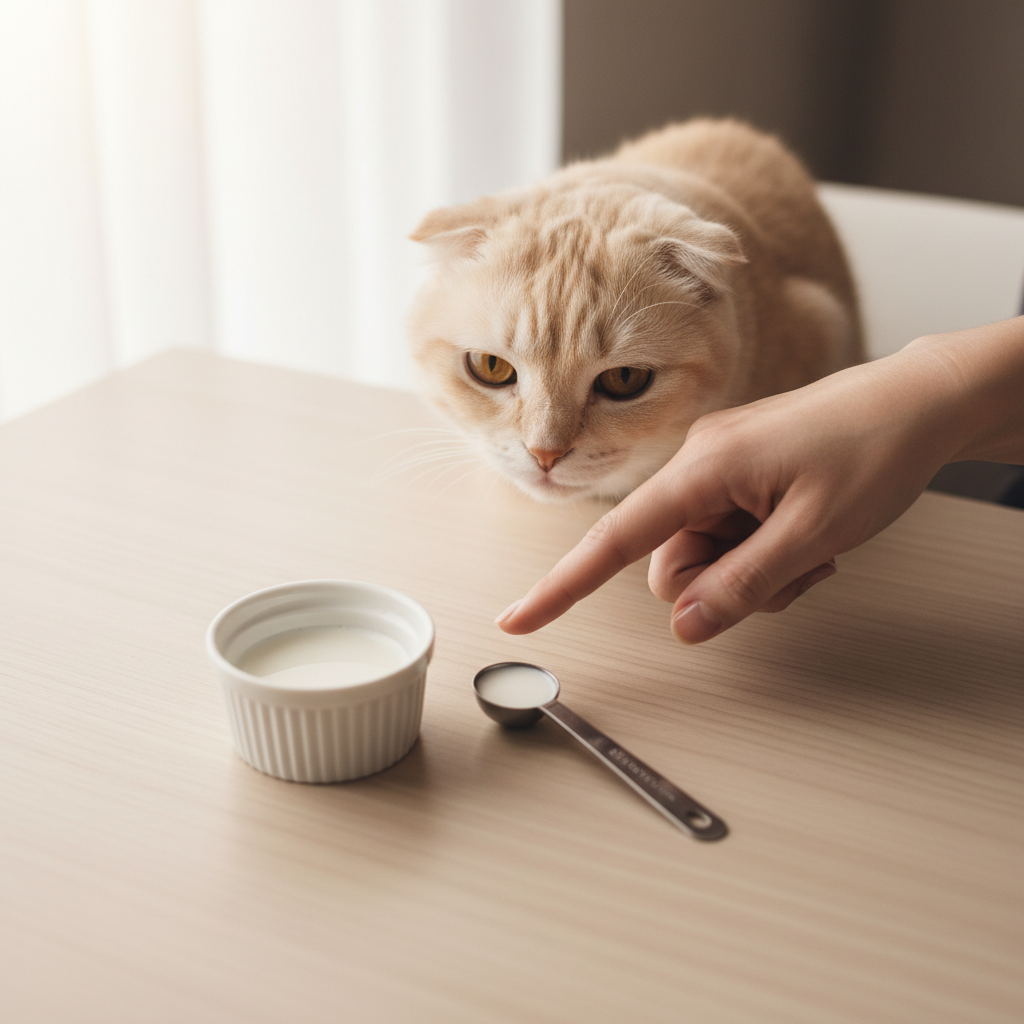
It’s worth noting that the degree of lactose intolerance varies between individual cats. Some cats may tolerate very small amounts without obvious distress, while others will have immediate and severe diarrhea from even a teaspoon. Since there’s no nutritional need for milk in a cat’s diet, the risk-benefit calculation is clear: skip the regular cow’s milk.
Nutritional Value
Whole cow’s milk contains protein, calcium, fat, and various vitamins — but cats do not require dairy to meet any of their nutritional needs. A complete and balanced commercial cat food provides all the protein, calcium, and micronutrients a cat needs. Cow’s milk also contains lactose, which is difficult for most cats to process, and its fat content can add unnecessary calories. Importantly, cow’s milk is not a good source of taurine — an essential amino acid that cats cannot synthesize adequately on their own and must obtain through their diet.
Risks and What to Avoid
Lactose intolerance: The primary risk is gastrointestinal distress — diarrhea, loose stools, vomiting, gas, and abdominal pain. Even if symptoms are mild, repeated exposure to lactose creates ongoing digestive disruption.
Unnecessary calories and fat: Whole milk is calorie-dense. Regular consumption contributes to obesity, which is associated with diabetes, arthritis, liver disease, and reduced lifespan in cats.
Dehydration from diarrhea: Cats who drink milk and develop diarrhea risk becoming dehydrated — the opposite of the intended hydration benefit. Diarrhea in cats, especially seniors or kittens, can rapidly become serious.
Not a substitute for water: Milk should never be used as a substitute for fresh water. Cats are already prone to dehydration (they evolved in arid environments and have low thirst drives), and diarrhea-inducing milk makes this worse.
Plant-based milks: Almond milk, oat milk, soy milk, and other plant-based milks are not appropriate for cats either. Many are sweetened (some with xylitol, which is toxic), contain added salt, and offer no nutritional value to a carnivore. Macadamia milk is particularly dangerous as macadamia nuts are toxic to cats.
How Much Can a Cat Eat?
| Cat Size | Max Serving | Frequency |
|---|---|---|
| Small (under 8 lbs) | Not recommended | Avoid |
| Medium (8–12 lbs) | Not recommended | Avoid |
| Large (12+ lbs) | Not recommended | Avoid |
If your cat has shown a demonstrated tolerance for dairy with no adverse effects, a teaspoon of whole milk very occasionally is unlikely to be harmful — but there is no nutritional reason to offer it. Choose fresh water instead. If you want a dairy treat, look for commercially formulated lactose-free “cat milk.”
When to Call Your Vet
Contact your vet if your cat develops diarrhea that persists more than 24 hours, shows blood in the stool, becomes lethargic, or appears to be in abdominal pain after consuming milk. Kittens and senior cats dehydrate more quickly — seek prompt care if diarrhea is significant in these age groups.