
Key Takeaways
- Onions are toxic to cats in all forms: raw, cooked, powdered, dehydrated, and in sauces or broths.
- Onion toxicity causes hemolytic anemia — destruction of red blood cells — which can be life-threatening.
- All members of the Allium family are dangerous: onions, garlic, leeks, chives, shallots, scallions.
- Symptoms may be delayed 2–5 days after ingestion, making early detection difficult.
- There is no safe amount of onion for cats — even small repeated exposures accumulate toxicity.
Is Onion Safe for Cats?
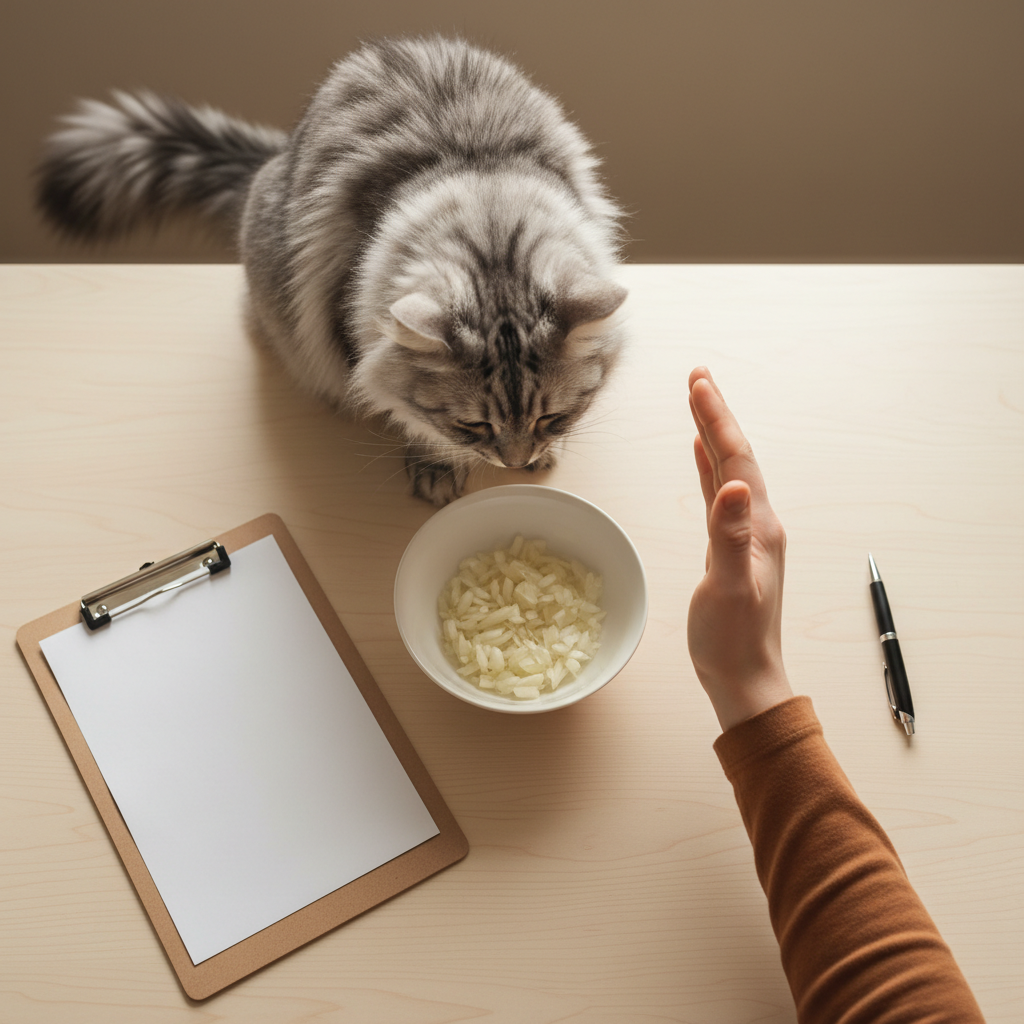
No. Onions are one of the most important foods to keep completely away from cats. Onions — and all other members of the Allium family (garlic, leeks, chives, shallots, scallions, ramps) — are genuinely toxic to cats and can cause life-threatening illness. This is not a matter of portion size or preparation method: cooked onions are just as toxic as raw onions. Powdered or dehydrated onion (found in seasonings, broths, soups, and many processed foods) is actually more concentrated and dangerous per gram than fresh onion because the water has been removed while the toxic compounds remain.
The toxic components in onions are organosulfur compounds — specifically N-propyl disulfide and other thiosulfates. Cats (along with dogs) lack sufficient levels of the enzymes needed to break down these compounds. When absorbed, these thiosulfates bind to hemoglobin in red blood cells, causing oxidative damage. The damaged red blood cells develop structures called Heinz bodies (visible under a microscope) and are destroyed prematurely by the spleen — a condition called hemolytic anemia. The result is a reduction in functional red blood cells, impairing the body’s ability to transport oxygen to organs and tissues.
Critically, cats are more sensitive to onion toxicity than dogs. What might cause only mild illness in a dog can cause severe anemia in a cat. Cats have red blood cells that are particularly prone to oxidative damage from thiosulfates. Additionally, toxicity is cumulative — small repeated exposures over time can add up to a dangerous total dose. This means even a cat that doesn’t eat a whole onion but regularly licks food cooked with onion powder may develop chronic, progressive anemia.
Nutritional Value
Onions have no nutritional value for cats that isn’t already present in a complete commercial cat food — and their toxicity makes any purported nutritional benefit irrelevant. Cats are obligate carnivores who have no biological need for any plant in the Allium family. Onions are never appropriate as food, flavor additives, or supplements for cats.
Risks and What to Avoid
Hemolytic anemia: The primary and most serious risk. Symptoms include pale or yellowish gums (jaundice), weakness, lethargy, rapid breathing, elevated heart rate, and collapse. Without treatment, severe anemia can be fatal. Blood transfusions may be required in serious cases.
All Allium family members: Garlic, leeks, chives, shallots, scallions, ramps, and wild onion are all toxic via the same mechanism. Garlic is approximately 5× more toxic per gram than onion in cats — meaning much smaller amounts are needed to cause harm.
All preparation methods are toxic: Raw, cooked, sautéed, caramelized, pickled, powdered, dehydrated, and freeze-dried onions all retain their toxic compounds. There is no way to “cook out” onion toxicity. This includes onion powder in seasonings, broths, soups, baby food, and processed human foods.
Indirect exposure: Baby food (some varieties use onion powder), broth, gravy, soups, and seasoned meats may contain onion or garlic. Never feed human-prepared food to cats without checking ingredients — this is a common source of unintentional onion exposure.
Cumulative toxicity: Repeated small exposures — even tiny amounts from shared food — accumulate over time and can cause progressive anemia. Chronic exposure is as dangerous as a single large dose.
Onion plants: If you grow onions or garlic in a garden that cats can access, the plants — including leaves and roots — are also toxic. Keep vegetable gardens securely fenced or inaccessible to cats.
How Much Can a Cat Eat?
| Cat Size | Max Serving | Frequency |
|---|---|---|
| Small (under 8 lbs) | None — all onion is toxic | Never |
| Medium (8–12 lbs) | None — all onion is toxic | Never |
| Large (12+ lbs) | None — all onion is toxic | Never |
There is no safe serving size of onion for cats. Even small amounts — as little as a gram per kilogram of body weight — can cause clinically significant toxicity. Onion powder is even more concentrated. Avoid completely and in all forms.
When to Call Your Vet
Contact your veterinarian or the ASPCA Animal Poison Control Center (888-426-4435) immediately if you suspect your cat has eaten any form of onion, garlic, or other Allium. Do not wait for symptoms — hemolytic anemia may take 2–5 days to become clinically apparent, and early intervention produces far better outcomes. Your vet may induce vomiting if ingestion was very recent, and will monitor red blood cell counts over the following days. Severe cases may require IV fluids, oxygen support, or blood transfusions.