
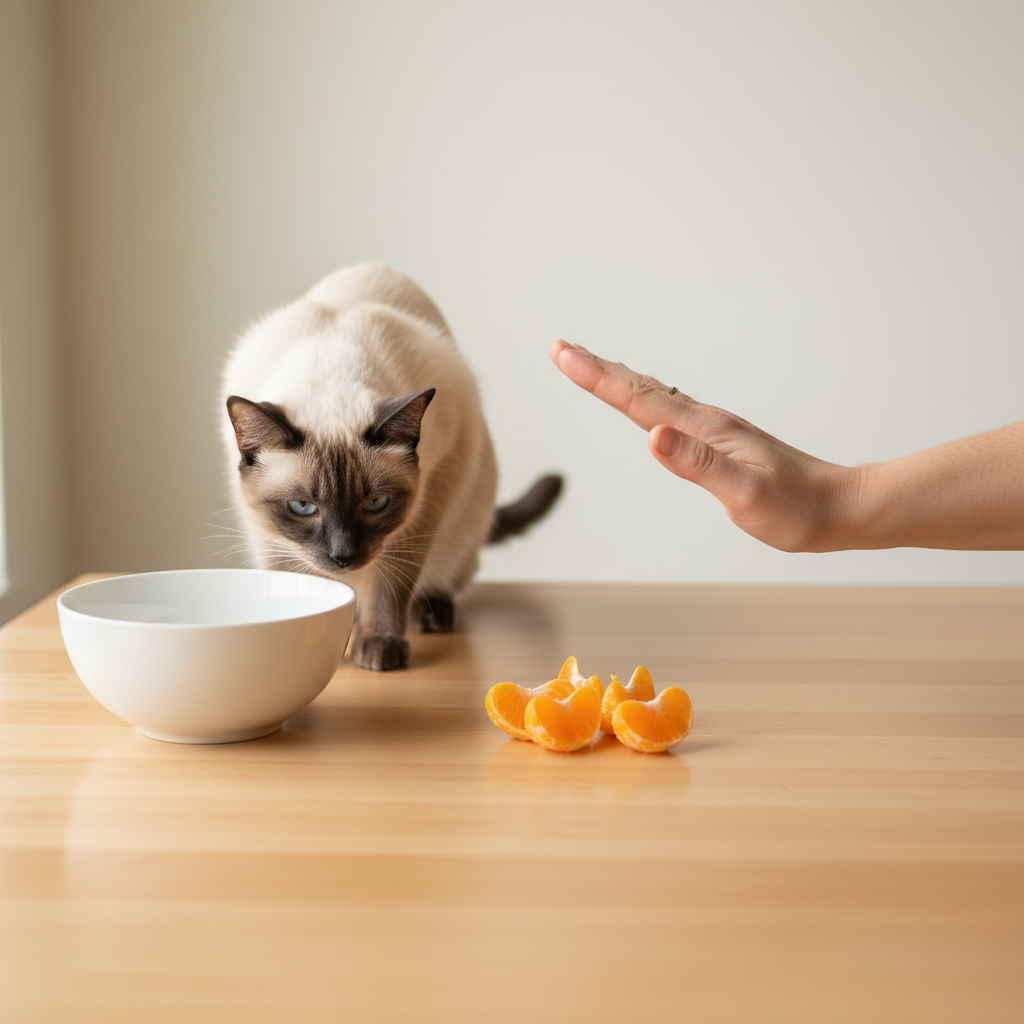
Quick answer: No, cats should not eat oranges or other citrus fruits. Citrus contains essential oils and psoralens that are toxic to cats and can cause digestive upset, vomiting, and photosensitivity.
Key Takeaways
- Oranges and citrus fruits are toxic to cats
- Essential oils (limonene, linalool) and psoralens cause harm
- All parts of the orange are unsafe: flesh, peel, seeds, and juice
- Symptoms include vomiting, diarrhea, and skin irritation
- Keep all citrus products away from cats
Safety Overview
Oranges and all citrus fruits are toxic to cats according to the ASPCA. The toxicity comes from essential oils (limonene and linalool) and psoralens present in all parts of the fruit. While a small lick may not cause severe harm, ingestion of orange flesh, peel, or juice can cause significant gastrointestinal distress. Cats are particularly sensitive to citrus oils, which their livers cannot effectively metabolize. The strong scent of oranges is also naturally repellent to most cats.
Why Oranges Are Dangerous
- Limonene: Essential oil that causes liver toxicity
- Linalool: Aromatic compound toxic to cats
- Psoralens: Can cause photosensitivity and skin reactions
- Citric acid: Causes stomach irritation and vomiting
- High sugar: Contributes to obesity and diabetes risk
Symptoms of Citrus Toxicity
- Vomiting and diarrhea
- Drooling and excessive salivation
- Skin irritation or redness (if contact with oils)
- Photosensitivity (skin reactions to sunlight)
- Lethargy and weakness
- Loss of appetite
- Tremors (in severe cases)
All Citrus Fruits to Avoid
| Fruits | Products to Avoid |
|---|---|
| Oranges | Orange juice |
| Lemons | Lemonade |
| Limes | Lime juice |
| Grapefruit | Citrus essential oils |
| Tangerines | Citrus-scented cleaners |
| Clementines | Marmalade or preserves |
What to Do If Your Cat Eats Orange
If your cat consumes a small amount of orange flesh, monitor them closely. If they eat peel, seeds, or a larger amount:
- Contact your veterinarian immediately
- Call ASPCA Animal Poison Control: (888) 426-4435
- Remove any remaining orange from reach
- Watch for vomiting, diarrhea, or unusual behavior
Safe Alternatives
Instead of oranges, offer these cat-safe treats:
- Commercial cat treats
- Cooked plain chicken or turkey
- Small pieces of cooked fish
- Cat grass or catnip
When to Call a Veterinarian
Contact your vet if your cat:
- Eats any part of an orange, especially peel or seeds
- Shows vomiting or diarrhea after citrus exposure
- Has skin irritation after contact with orange oils
- Appears lethargic or unwell
Sources
- ASPCA – Toxic and Non-Toxic Plants for Cats
- PetMD – Citrus Poisoning in Cats
- VCA Hospitals – Orange Poisoning in Cats