
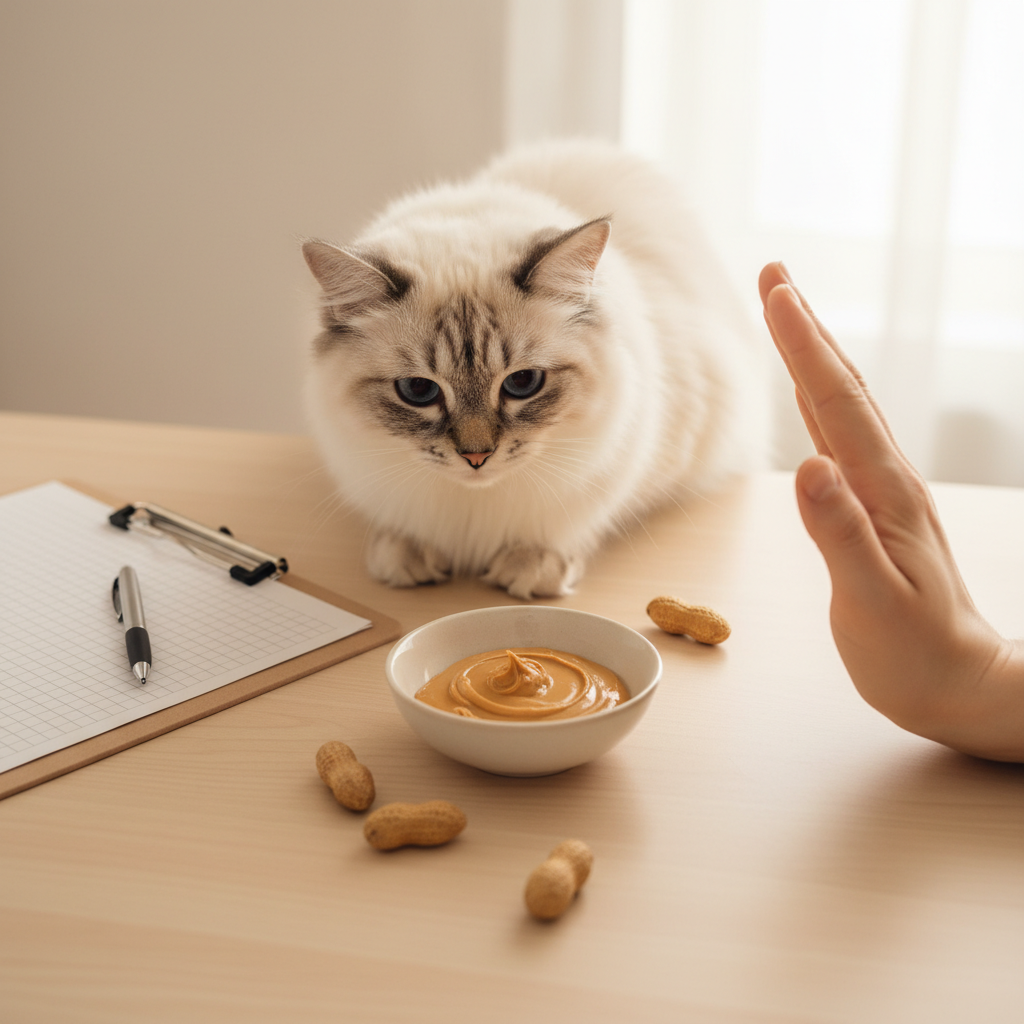
Key Takeaways
- Peanut butter is not species-appropriate for cats — they are obligate carnivores with no dietary need for nuts or legumes.
- Many peanut butter brands contain xylitol (an artificial sweetener) that is toxic to cats.
- Even xylitol-free peanut butter is high in fat, calories, sodium, and may contain aflatoxins from peanuts.
- Cats lack sweet taste receptors and are generally uninterested in peanut butter — unlike dogs.
- There are far safer, more appropriate treat options for cats (plain cooked chicken, shrimp, etc.).
Is Peanut Butter Safe for Cats?
Peanut butter is a topic that comes up frequently because it’s well-known as a dog-safe treat used for medication administration and enrichment. Cats, however, are a very different species with very different nutritional needs. While peanut butter is not immediately and acutely toxic in the same way that onions or grapes are, it is strongly not recommended for cats for several overlapping reasons.
The most urgent concern is xylitol. Many modern peanut butter brands — particularly “natural,” “reduced-sugar,” or “light” varieties — now use xylitol as a sweetener instead of sugar. Xylitol is highly toxic to cats (as it is to dogs), causing dangerous drops in blood sugar (hypoglycemia), liver damage, and potentially fatal outcomes. Because labeling varies and brands change their formulations, there is no reliably safe way to be certain a given peanut butter is xylitol-free without reading the full ingredient list every single time. Given the risk and the complete absence of nutritional need, the safest recommendation is simply to avoid peanut butter for cats entirely.
Beyond xylitol, even “natural” peanut butter without sweeteners poses issues for cats. It is high in fat (16g per 2-tablespoon serving), which cats metabolize differently than dogs or humans. High-fat foods can cause digestive upset, contribute to pancreatitis, and promote obesity in cats. Peanut butter also commonly contains added salt (sodium), which is problematic for cats’ kidneys. And unlike dogs, most cats don’t even find peanut butter appealing — they lack sweet taste receptors and the nutty, starchy flavor profile is not naturally attractive to a carnivore.
Nutritional Value
From a feline nutrition perspective, peanut butter offers nothing cats need. It contains plant-based protein, fat, and carbohydrates — all in forms that are not optimally processed by obligate carnivores. The protein in peanut butter is not complete for cats (it lacks taurine and is low in several essential amino acids cats need from animal sources). The fat content, while not harmful in tiny amounts, is unnecessary and excessive given what is available in a complete commercial cat food. Cats do not require the vitamins and minerals in peanut butter that they cannot already obtain from a balanced feline diet.
Risks and What to Avoid
Xylitol toxicity: This is the most serious risk. Xylitol is found in many commercial peanut butter brands, particularly “no added sugar” or “natural” varieties. Even a small amount can cause life-threatening hypoglycemia and liver failure in cats. Signs include weakness, vomiting, seizures, and collapse — often within 30–60 minutes of ingestion. This is a veterinary emergency.
High fat and obesity: Regular peanut butter is calorie-dense and high in fat. Cats have lower daily caloric requirements than dogs or humans, and even a small amount of peanut butter represents a significant caloric addition. Regular consumption contributes to obesity — a major driver of feline diabetes, arthritis, and liver disease.
High sodium: Most commercial peanut butters contain added salt. Excess sodium intake strains the kidneys and can exacerbate hypertension — both serious concerns for cats, especially seniors.
Aflatoxins: Peanuts are susceptible to mold contamination by Aspergillus fungi, which produce aflatoxins — carcinogenic compounds. While levels in commercial products are regulated, long-term exposure is a concern with repeated peanut product consumption.
Choking hazard: Peanut butter’s thick, sticky texture can be difficult for cats to swallow and may adhere to the mouth and throat, creating a choking or aspiration risk.
Peanut allergies: Though less common than in humans, cats can develop food allergies. Peanut exposure could theoretically trigger an allergic response.
How Much Can a Cat Eat?
| Cat Size | Max Serving | Frequency |
|---|---|---|
| Small (under 8 lbs) | Not recommended | Avoid |
| Medium (8–12 lbs) | Not recommended | Avoid |
| Large (12+ lbs) | Not recommended | Avoid |
The xylitol risk alone makes peanut butter a food to avoid for cats. There are no nutritional benefits to justify offering it. For medication administration, ask your vet for cat-appropriate alternatives — small amounts of plain tuna, cooked chicken, or commercial pill pockets designed for cats are safer choices.
When to Call Your Vet
If your cat ate any amount of peanut butter, check the label immediately for xylitol (also listed as “sugar alcohol” or “birch sugar”). If xylitol is present, contact your veterinarian or the ASPCA Animal Poison Control Center (888-426-4435) immediately — this is an emergency. If the peanut butter is xylitol-free, monitor for vomiting, diarrhea, lethargy, or signs of pancreatitis (hunching, reluctance to move, loss of appetite) and contact your vet if any symptoms develop.