
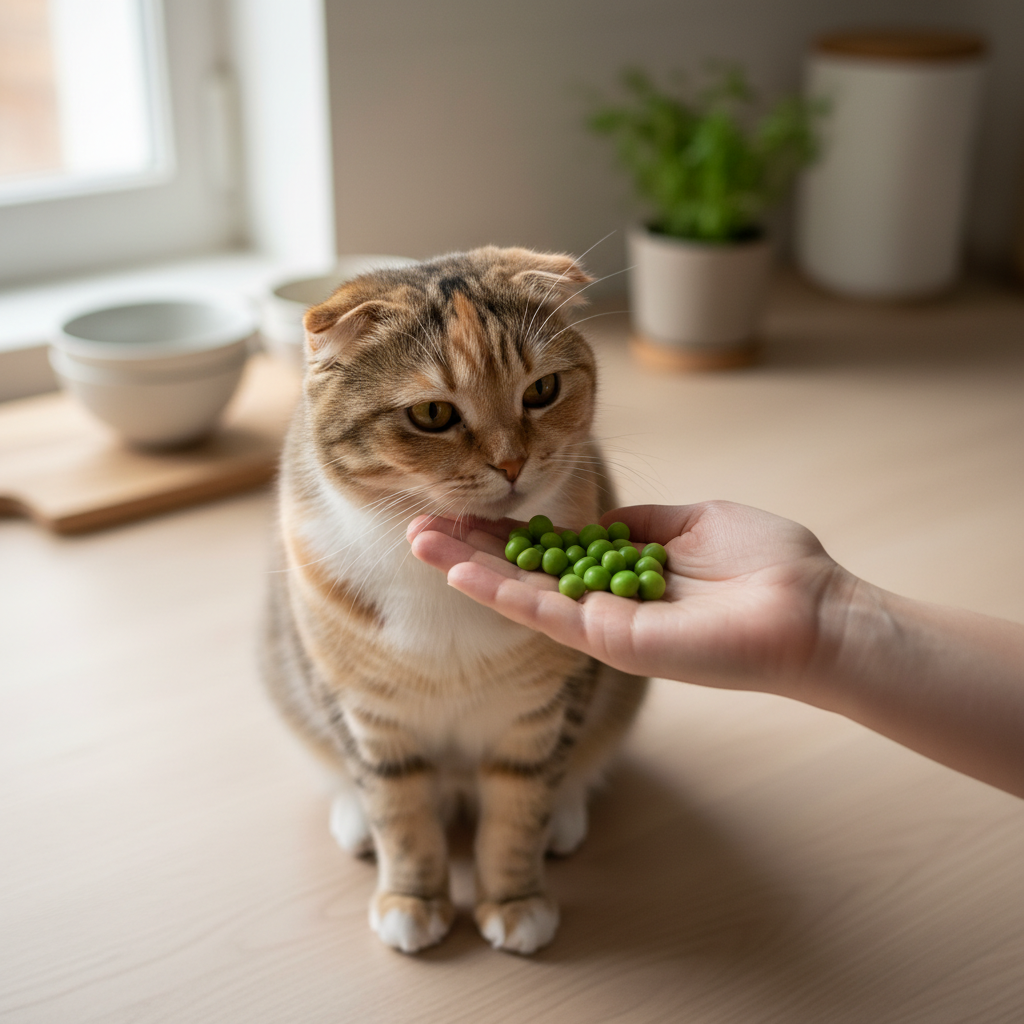
Quick answer: Yes, cats can eat peas in moderation. Peas are non-toxic, low in calories, and provide fiber and some vitamins.
Key Takeaways
- Peas are safe and non-toxic for cats
- Provide fiber, vitamins A, B, and K
- Fresh, frozen, or cooked peas are all safe
- Avoid canned peas with added salt
- Feed as an occasional treat only
Safety Overview
Peas are considered safe for cats according to the ASPCA. These small green vegetables are low in calories and provide beneficial nutrients including fiber, vitamins A and K, and some plant protein. Many commercial cat foods include peas as a carbohydrate source and binder. Fresh, frozen, or cooked peas are all safe options, though fresh or frozen (thawed) peas retain more nutrients than overcooked ones.
Nutrition Facts (per 100g peas)
| Nutrient | Amount |
|---|---|
| Calories | 81 kcal |
| Protein | 5.4g |
| Carbohydrates | 14g |
| Fiber | 5.7g |
| Vitamin A | 765 IU |
| Vitamin K | 24.8µg |
| Folate | 65µg |
| Manganese | 0.41mg |
Potential Benefits
- High fiber: Aids digestion and may help with hairballs
- Low calorie: Good treat for overweight cats
- Vitamins: Contains A, K, and B vitamins
- Protein: Higher protein than most vegetables
Risks and What to Avoid
- Canned peas: Often contain added salt
- Butter or seasonings: Unhealthy additions
- Choking hazard: Whole peas for very small kittens
- Digestive upset: Too many peas can cause gas or diarrhea
Serving Size Guide
| Cat Size | Maximum | Frequency |
|---|---|---|
| Small | 3-4 peas | 2x weekly |
| Medium | 5-6 peas | 2x weekly |
| Large | 7-8 peas | 2x weekly |
When to Call a Vet
Contact your vet if your cat shows vomiting, diarrhea, or signs of allergic reaction after eating peas.