
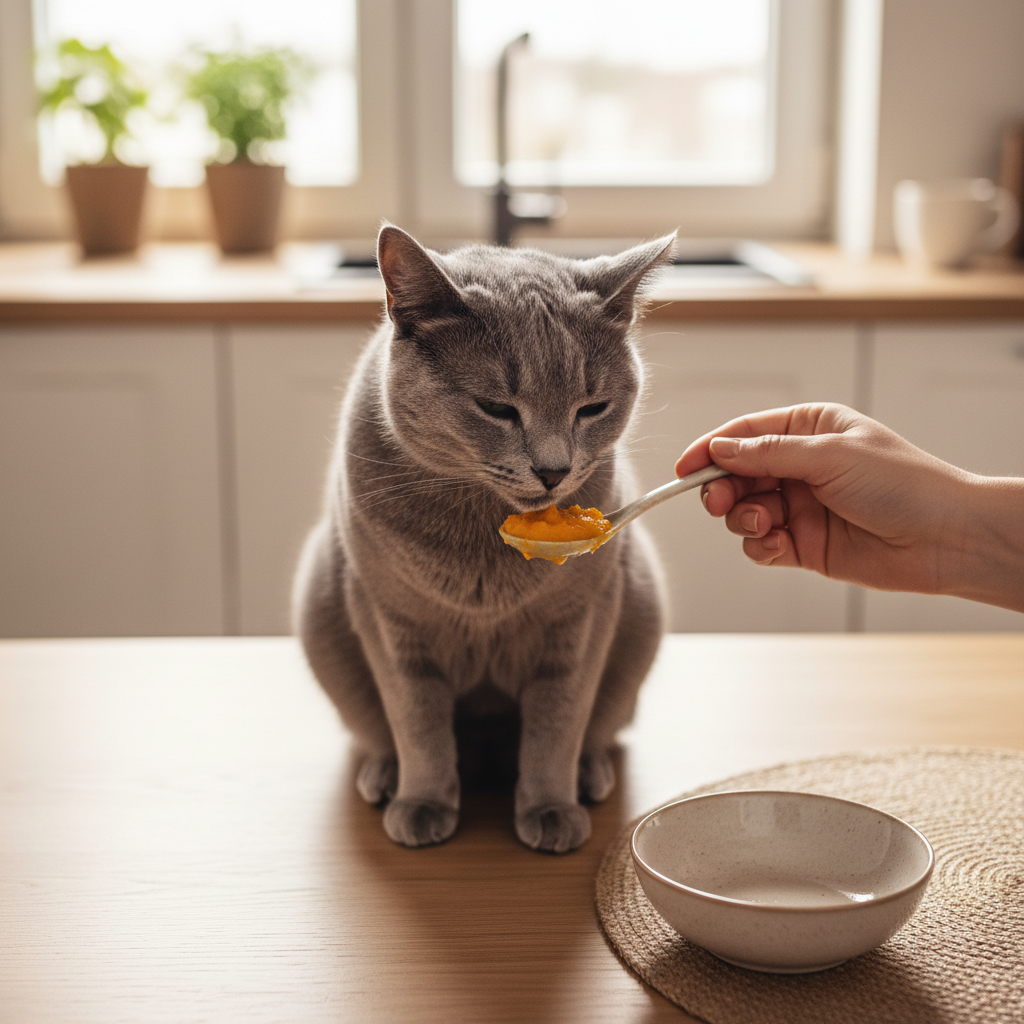
Key Takeaways
- Plain, cooked or canned pumpkin (100% pure pumpkin, not pie filling) is safe and beneficial for cats.
- Pumpkin is high in soluble fiber, which helps regulate digestion — relieving both constipation and mild diarrhea.
- Many vets recommend a small amount of plain pumpkin as a first-line remedy for minor digestive issues.
- Pumpkin pie filling contains spices, sugar, and sometimes xylitol — never feed this to cats.
- Pumpkin seeds (plain, ground) can also help with hairball and intestinal worm issues in small amounts.
Is Pumpkin Safe for Cats?
Plain pumpkin is one of the safest and most beneficial human foods you can offer a cat. Unlike many people foods that are merely “not harmful,” pumpkin actually provides a genuine health benefit: its high content of soluble fiber helps regulate gastrointestinal motility. This makes it useful for both constipated cats (where the fiber adds bulk and draws water into the stool) and cats with mild diarrhea (where the fiber helps absorb excess water and firms up loose stools). It’s this dual-action property that makes pumpkin a go-to recommendation from many feline veterinarians.
Pumpkin is also easy for cats to eat — it has a mild flavor that most cats accept without fuss, and its soft texture makes it easy to mix into wet food. Many commercial cat foods already incorporate pumpkin or pumpkin powder as a digestive aid ingredient, validating its safe use in the feline diet.
The critical distinction is between plain canned pumpkin and pumpkin pie filling. The label should read “100% pure pumpkin” with pumpkin as the sole ingredient. Pumpkin pie filling is sweetened, spiced with cinnamon, nutmeg, and cloves, and may contain xylitol — all of which are harmful to cats. Always check the label carefully before opening a can. Fresh, plain cooked pumpkin (baked or steamed, without any added seasoning or butter) is also an excellent option.
Nutritional Value
Pumpkin is nutrient-dense relative to its low calorie count. A 2-tablespoon serving of plain canned pumpkin contains approximately 10 calories, 0.5g of protein, minimal fat, 2.5g of carbohydrates, and nearly 1g of fiber. It provides beta-carotene (which cats convert to vitamin A, though less efficiently than omnivores), vitamin C, potassium, and antioxidants. The high moisture content (about 90% water) also contributes to overall hydration, which benefits cats — a species prone to low-grade chronic dehydration when eating primarily dry food.
Benefits for Cats
Digestive regulation: Pumpkin’s soluble fiber is the star benefit. It helps resolve both constipation and mild diarrhea by normalizing stool consistency and supporting healthy gut motility.
Hairball management: The fiber in pumpkin can help move swallowed hair through the digestive tract, reducing the frequency and discomfort of hairball regurgitation — a very common feline problem.
Weight management: The fiber and low calorie count make pumpkin a useful filler for overweight cats. Adding a small amount of pumpkin to meals increases the sense of fullness without adding significant calories.
Hydration support: Pumpkin’s high moisture content adds water to the diet, which is especially beneficial for cats who eat primarily dry kibble and struggle to drink enough water.
Urinary health: Better hydration and lower stress on the urinary tract may benefit cats prone to feline lower urinary tract disease (FLUTD) or urinary crystals.
Risks and What to Avoid
Pumpkin pie filling: This is the most important thing to avoid. It contains sugar, spices (nutmeg can be mildly toxic to cats in large quantities), and potentially xylitol. The label difference matters enormously.
Too much fiber: Excessive fiber intake can interfere with nutrient absorption and cause loose stools, gas, or bloating. The serving amounts recommended below are appropriate — more is not better.
Pumpkin seeds: Plain, raw, unsalted pumpkin seeds (cucurbitacins) ground into a powder have traditionally been used as a mild anti-parasitic, but any use for deworming should be discussed with a veterinarian first. Whole seeds could be a choking hazard.
Seasonings: Fresh pumpkin should always be prepared plain — no butter, salt, cinnamon, nutmeg, or other spices. These are harmful to cats.
How Much Can a Cat Eat?
| Cat Size | Max Serving | Frequency |
|---|---|---|
| Small (under 8 lbs) | ½ teaspoon plain canned pumpkin | Daily (for digestive support) or a few times a week |
| Medium (8–12 lbs) | 1 teaspoon plain canned pumpkin | Daily (for digestive support) or a few times a week |
| Large (12+ lbs) | 1–2 teaspoons plain canned pumpkin | Daily (for digestive support) or a few times a week |
For acute constipation, your vet may recommend slightly higher amounts temporarily. Open a fresh can and refrigerate unused portions in an airtight container for up to 5 days. Freeze in ice cube trays for longer storage.
When to Call Your Vet
Pumpkin can help with mild, transient digestive issues, but it is not a cure for underlying medical conditions. Contact your vet if your cat’s constipation lasts more than 48–72 hours, if you see blood in the stool, if your cat is straining repeatedly without producing stool (potential obstruction or megacolon), or if diarrhea persists beyond 24 hours. These signs require professional veterinary evaluation rather than dietary management alone.