
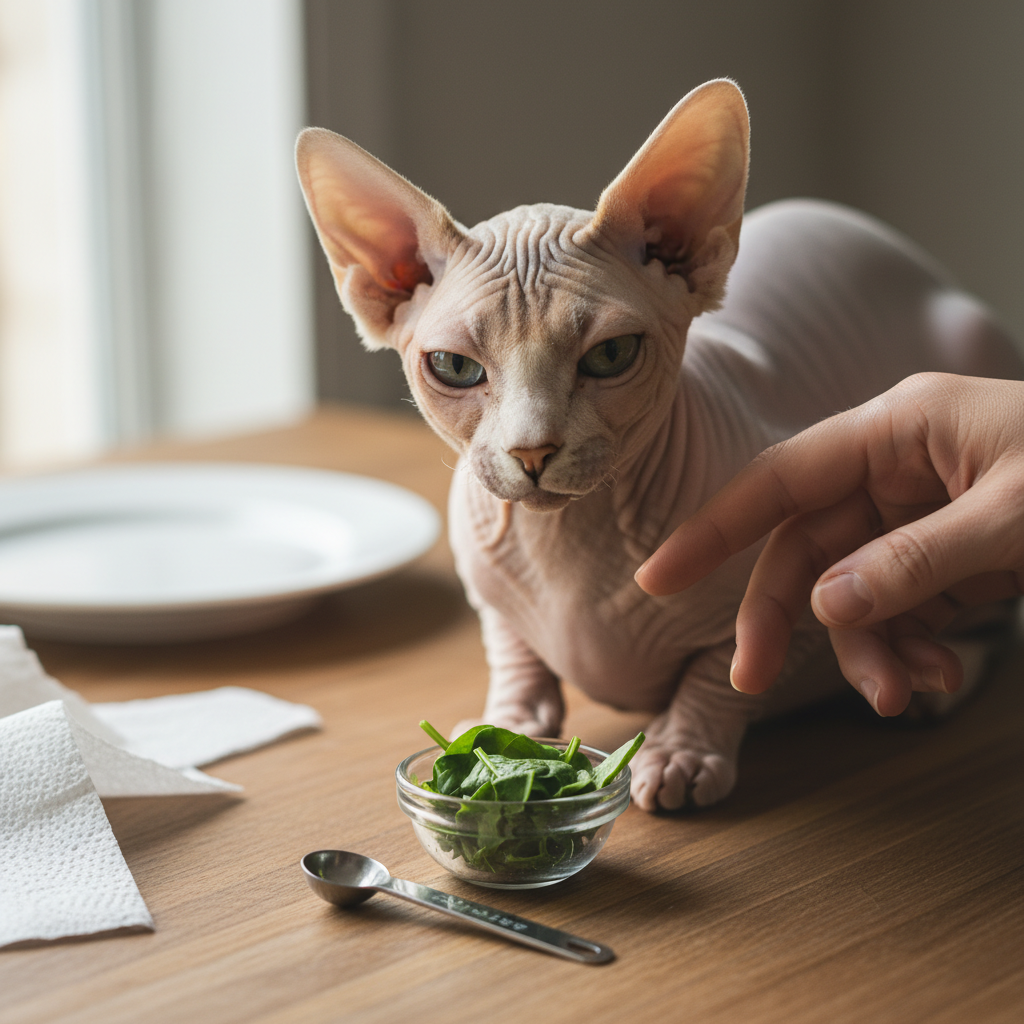
Quick answer: Cats can eat small amounts of cooked spinach occasionally, but should avoid raw spinach in large quantities due to oxalates which can contribute to kidney problems.
Key Takeaways
- Cooked spinach is safe in small amounts
- Contains oxalates that may affect cats with kidney issues
- Raw spinach is harder to digest
- Rich in vitamins A, C, and K
- Avoid if your cat has urinary or kidney problems
Safety Overview
Spinach is generally safe for healthy cats when fed in moderation and cooked. However, spinach contains oxalates, compounds that can contribute to the formation of calcium oxalate crystals and stones in susceptible cats. Cats with a history of urinary tract issues or kidney disease should avoid spinach entirely. For healthy cats, small amounts of cooked spinach as an occasional treat are unlikely to cause problems.
Nutrition Facts (per 100g cooked spinach)
| Nutrient | Amount |
|---|---|
| Calories | 23 kcal |
| Protein | 2.9g |
| Fiber | 2.2g |
| Vitamin A | 5240 IU |
| Vitamin K | 483µg |
| Folate | 146µg |
| Iron | 2.7mg |
| Calcium | 136mg |
Potential Benefits
- Vitamin A: Supports vision and immune health
- Low calorie: Good for weight management
- Iron content: May help with blood health
- Antioxidants: Contains beneficial plant compounds
Risks and What to Avoid
- Oxalates: Can contribute to urinary crystals and kidney stones
- Raw spinach: Harder to digest and higher oxalate content
- Cats with kidney disease: Should avoid completely
- Seasonings: Onions, garlic, salt are toxic
Serving Size Guide
| Cat Size | Maximum | Frequency |
|---|---|---|
| Small | 1 teaspoon | Once weekly |
| Medium | 1-2 teaspoons | Once weekly |
| Large | 1 tablespoon | Once weekly |
When to Avoid
Do not feed spinach to cats with:
- History of urinary crystals or stones
- Kidney disease or reduced kidney function
- Urinary tract infections