
Key Takeaways
- Tuna is safe for cats in small, infrequent amounts — but not as a regular meal replacement.
- Too much tuna can cause mercury poisoning and thiamine (vitamin B1) deficiency.
- Always offer plain, cooked or canned tuna in water — never in oil or with added salt/seasonings.
- Commercial “tuna-flavored” cat foods are formulated to be nutritionally balanced; plain tuna is not.
Is Tuna Safe for Cats?
Tuna has an almost mythic reputation as a cat food, popularized by decades of cartoons and advertising. The truth is more nuanced. Plain, cooked or water-packed canned tuna is not toxic to cats, and most cats find the strong smell and flavor irresistible. An occasional small piece as a treat is generally safe for healthy adult cats.
However, tuna should never become a dietary staple. Cats are obligate carnivores and need a precisely balanced diet — one that includes adequate taurine, vitamin A, arachidonic acid, and other nutrients that plain tuna cannot provide in correct proportions. Feeding tuna too often can actually displace these necessary nutrients and lead to serious health problems over time.
The two biggest risks associated with regular tuna consumption are mercury accumulation and thiamine deficiency. Tuna, especially albacore (white) tuna, is a larger predatory fish that accumulates mercury in its tissues. Cats metabolize mercury poorly, so repeated exposure can lead to toxicity. Additionally, raw tuna contains an enzyme called thiaminase that breaks down thiamine (vitamin B1) — an essential nutrient for cats. Even cooked canned tuna can contribute to thiamine deficiency if given in excess because cats require notably high dietary thiamine levels.
Nutritional Value
Tuna is a lean protein source rich in omega-3 fatty acids (DHA and EPA), which support coat health, joint function, and cognition. A 3-oz serving of light canned tuna in water contains roughly 20g of protein, 1g of fat, and minimal carbohydrates. It also provides selenium, niacin, and vitamin B12. However, tuna lacks sufficient taurine, calcium, and other micronutrients cats need in their complete diet, making it unsuitable as a sole protein source.
Benefits for Cats
When given sparingly, tuna can serve as a high-value treat that encourages a picky eater or helps administer medication. The omega-3 fatty acids in tuna may support a healthy, glossy coat and reduce inflammation. The strong aroma is also useful for stimulating appetite in cats recovering from illness (under veterinary guidance). Some senior cats or cats with poor appetites may accept tuna-flavored foods when they refuse other options.
Risks and What to Avoid
Mercury poisoning: Albacore tuna carries higher mercury levels than light (skipjack) tuna. Chronic exposure can cause neurological symptoms in cats, including loss of balance, difficulty walking, and tremors — a condition sometimes called “yellow fat disease” or steatitis when associated with high-tuna diets.
Thiamine deficiency: Feeding raw tuna regularly destroys thiamine. Even with cooked tuna, heavy reliance on it crowds out properly balanced foods. Signs of thiamine deficiency include dilated pupils, loss of appetite, seizures, and neurological dysfunction.
Steatitis (Yellow Fat Disease): A diet excessively high in unsaturated fats (as found in tuna) without sufficient vitamin E can lead to painful inflammation of body fat. This is more common with diets centered on canned fish.
Sodium and additives: Tuna canned for humans often contains added salt. Always choose tuna canned in water with no salt added for your cat. Never offer tuna packed in oil, or tuna seasoned with onion, garlic, or spices — all of which are toxic to cats.
Addiction: Cats can become “tuna-addicted,” refusing other foods. This is a real behavioral and nutritional risk. Keep tuna as a rare treat, not a daily offering.
How Much Can a Cat Eat?
| Cat Size | Max Serving | Frequency |
|---|---|---|
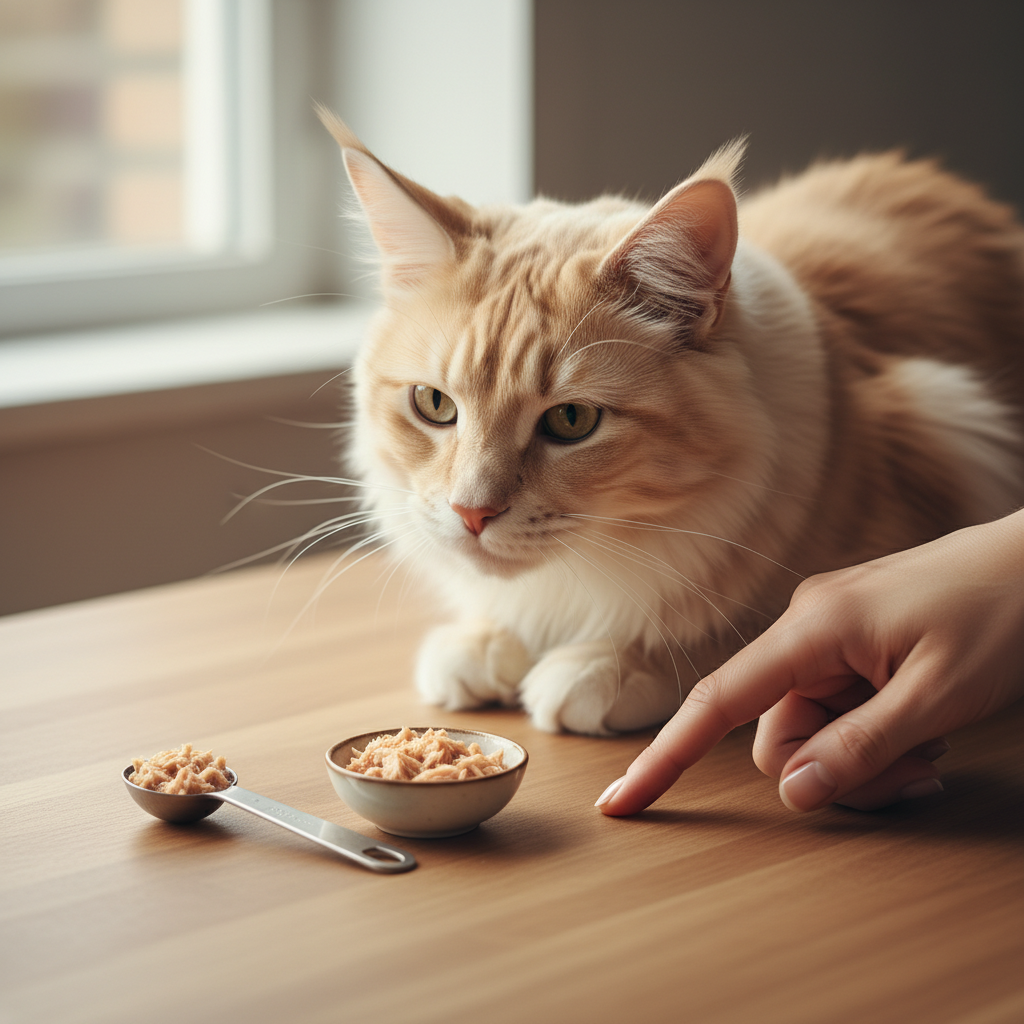
| Small (under 8 lbs) | ½ teaspoon | Once a week or less |
| Medium (8–12 lbs) | 1 teaspoon | Once a week or less |
| Large (12+ lbs) | 1–2 teaspoons | Once a week or less |
Treats (including tuna) should make up no more than 10% of a cat’s total daily caloric intake. Always choose light canned tuna in water, no salt added.
When to Call Your Vet
Contact your veterinarian if your cat has been eating tuna frequently and shows any of the following signs: loss of balance or coordination, difficulty walking, muscle weakness, tremors, seizures, loss of appetite, vomiting, or weight loss. These may indicate mercury toxicity or thiamine deficiency, both of which require prompt veterinary attention. Steatitis (yellow fat disease) may present as painful sensitivity when touched along the abdomen or back.