
Key Takeaways
- The pink flesh of seedless watermelon is safe for cats in small quantities.
- Always remove seeds completely — seeds can cause intestinal blockage or digestive upset.
- Never feed the rind — it’s tough, hard to digest, and may cause gastrointestinal distress.
- Watermelon is high in water content (~92%), making it a hydrating summer treat for cats.
- The natural sugar in watermelon means diabetic or obese cats should avoid it.
Is Watermelon Safe for Cats?
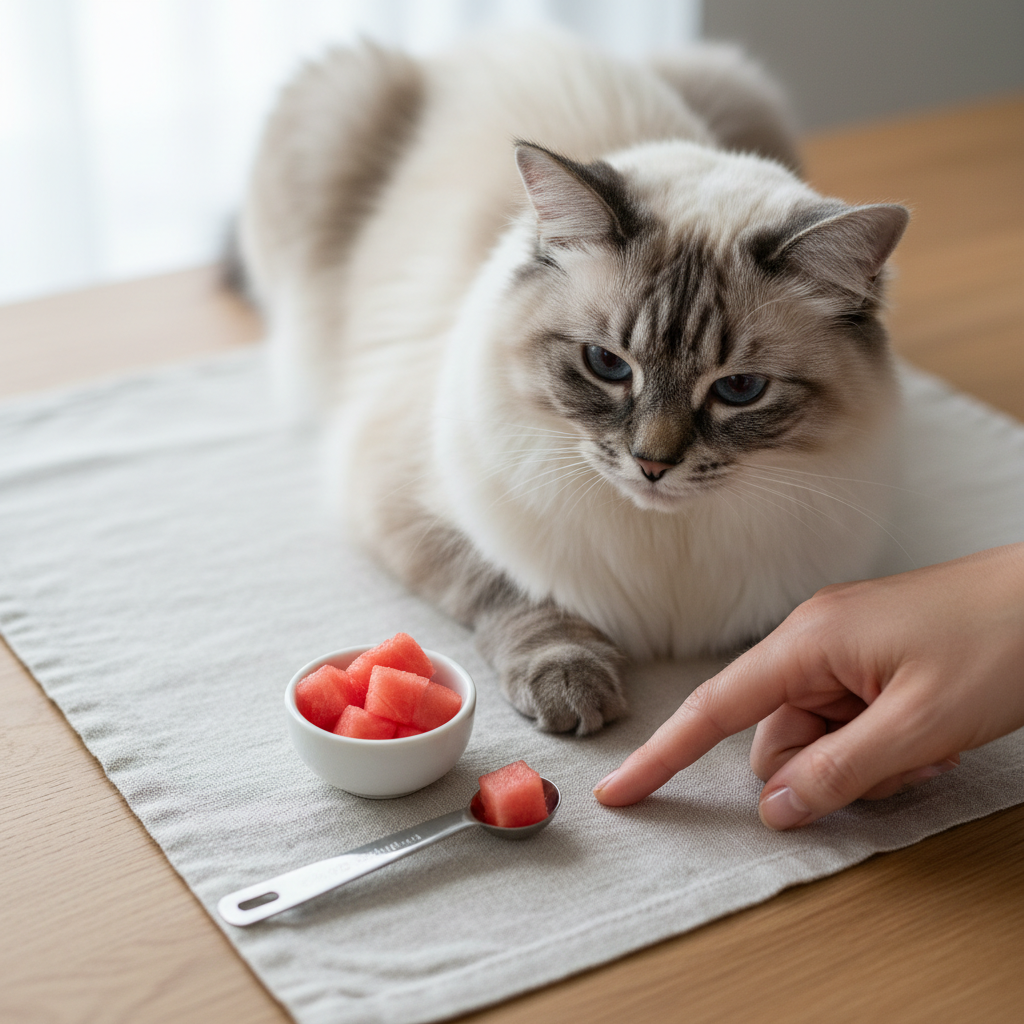
Watermelon flesh — particularly seedless varieties — is non-toxic to cats and safe in small amounts as an occasional warm-weather treat. The ASPCA does not list watermelon as toxic to cats, and the main component of watermelon (water, at 92% of its composition) is genuinely beneficial for a species that is prone to low-grade dehydration. Many cats enjoy the cool, moist texture of watermelon on hot days, and a small cube can serve as a hydrating treat.
However, there are important preparation steps before offering watermelon to your cat. Seeds are a significant concern — even small, white “immature” seeds can accumulate in the digestive tract and cause intestinal blockages or diarrhea. Always remove all seeds, or use commercially grown seedless varieties and check the flesh carefully. The rind is another issue: watermelon rind is tough, fibrous, and difficult for cats to digest. It can cause vomiting, diarrhea, or constipation. The outer green skin of the rind may also contain trace pesticide residues. Remove the rind completely and offer only the inner pink flesh.
Like all fruits, watermelon contains natural sugars. While the glycemic impact of a few small cubes is minimal for a healthy cat, cats with diabetes, obesity, or insulin resistance should not have watermelon at all without veterinary guidance.
Nutritional Value
Watermelon is approximately 92% water, making it an excellent source of hydration. The flesh contains lycopene (a potent antioxidant), vitamin A (in the form of beta-carotene, which cats cannot efficiently convert), vitamin C, and potassium. A 1-inch cube of watermelon contains only about 4–5 calories and less than 1g of sugar. While cats don’t taste sweetness, the moisture and mild flavor may be appealing. As with other plant foods, the nutritional benefits of watermelon’s antioxidants are less significant for obligate carnivores than for omnivores.
Benefits for Cats
The primary benefit of watermelon for cats is hydration. Cats have evolved with a naturally low thirst drive (their wild ancestors obtained most moisture from prey), which means domestic cats — especially those eating primarily dry kibble — often don’t drink enough water. A few cubes of watermelon on a hot day can contribute to overall moisture intake in a palatable way. The low calorie count also makes it a guilt-free treat for cats on weight management programs. Some cats enjoy the cool, wet texture, particularly during hot weather.
Risks and What to Avoid
Seeds: Watermelon seeds (both black mature seeds and smaller white seeds) should be removed before feeding. Seeds are hard to digest and may cause blockages or digestive irritation. Purchase seedless varieties and still check the flesh carefully.
Rind: The white and green rind is fibrous and indigestible for cats. It can cause gastrointestinal distress and may harbor pesticides on the outer skin. Always remove completely.
Natural sugar: Watermelon does contain fructose. While a small cube is low-impact, avoid giving watermelon to diabetic cats or cats prone to weight gain.
Watermelon-flavored products: Watermelon candy, juice, sorbet, or other flavored products intended for humans contain added sugar, artificial flavors, and possibly xylitol. Never substitute these for fresh watermelon.
Portion size: Even though watermelon is mostly water and low in calories, large amounts can still cause loose stools due to the high water and sugar content. Keep portions small.
How Much Can a Cat Eat?
| Cat Size | Max Serving | Frequency |
|---|---|---|
| Small (under 8 lbs) | ½-inch cube of seedless flesh | Occasional treat (a few times a week) |
| Medium (8–12 lbs) | 1-inch cube of seedless flesh | Occasional treat (a few times a week) |
| Large (12+ lbs) | 1–2 inch cube of seedless flesh | Occasional treat (a few times a week) |
Serve fresh, chilled watermelon flesh. Remove all seeds and rind. Cats with diabetes should avoid watermelon entirely. Don’t exceed 10% of daily caloric intake with all treats combined.
When to Call Your Vet
Contact your vet if your cat ate watermelon seeds and develops signs of intestinal distress: persistent vomiting, constipation, straining to defecate, or loss of appetite. Signs of intestinal obstruction (sustained vomiting, lethargy, abdominal pain) require emergency care. For diabetic cats who accidentally ate watermelon, monitor blood glucose and consult your vet if concerned.