
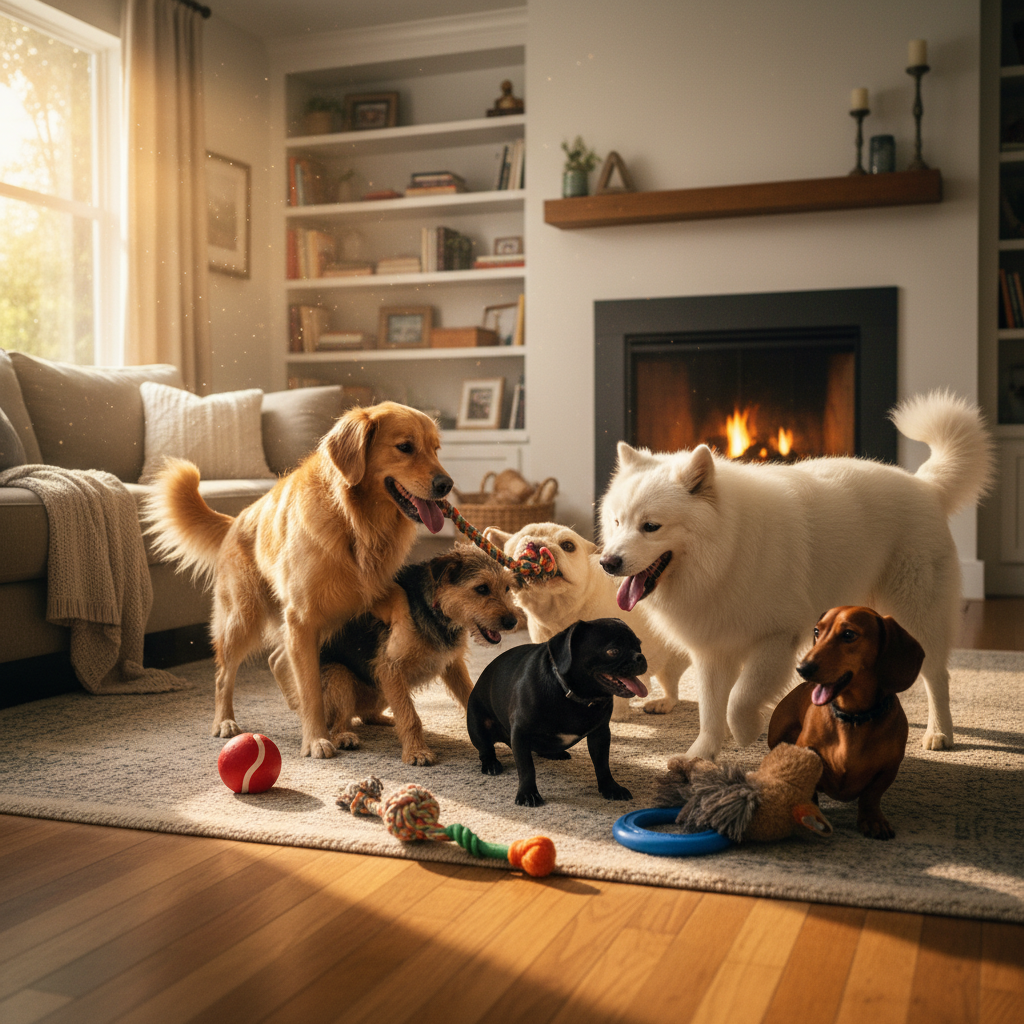
Chewing furniture. Barking at nothing. Zoomies at 2am. If your dog is doing any of these, they’re not being bad — they’re bored. Here’s how to fix that without leaving the house.
Mental stimulation tires dogs out faster than physical exercise alone. A 15-minute puzzle session can exhaust a dog more than a 30-minute walk — because problem-solving burns real brain energy, and a mentally tired dog is a calm, happy dog.
Signs Your Dog Is Under-Stimulated
- Destructive chewing on furniture or shoes
- Excessive barking or whining at nothing
- Restlessness, pacing, or inability to settle
- Constant attention-seeking or jumping
- Zoomies at completely random times
If two or more of those are regular occurrences, enrichment is the fix — not more discipline.
1. Puzzle Toys & Food Games
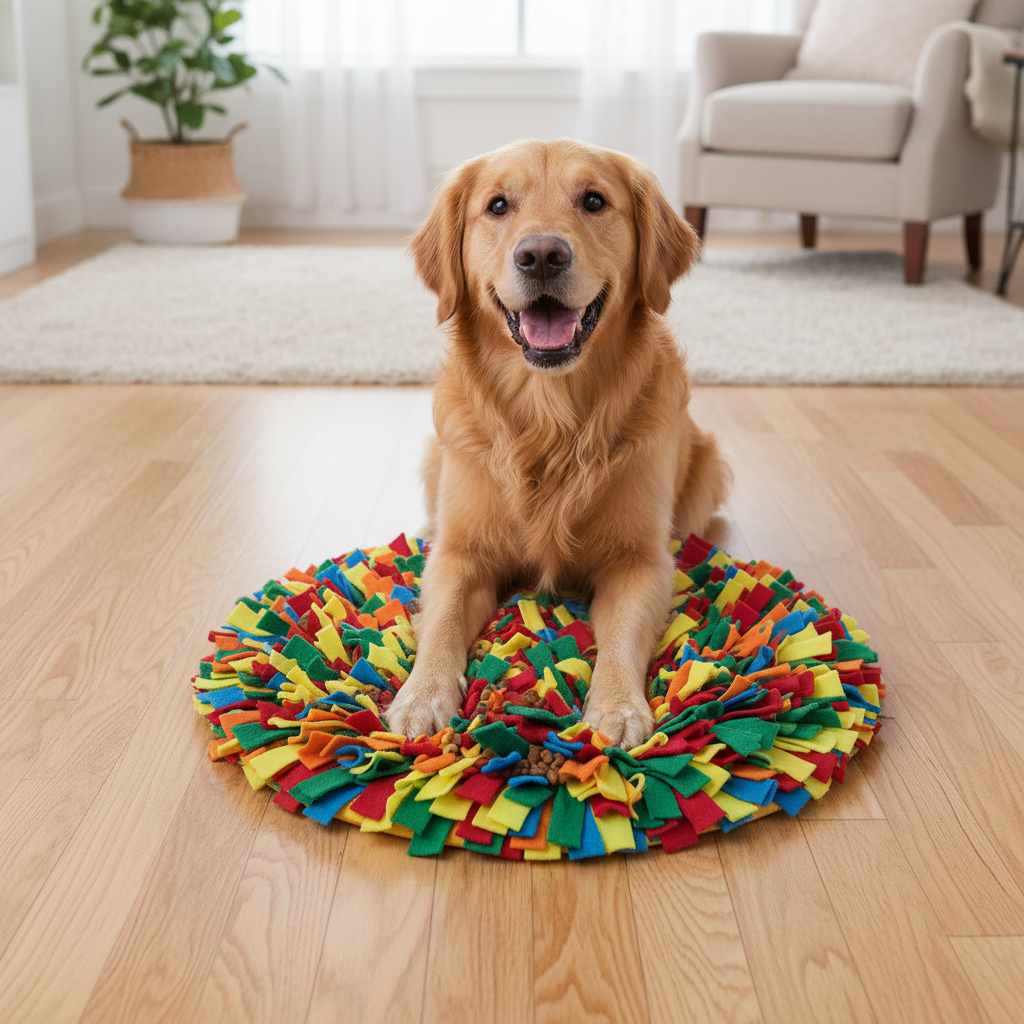
Puzzle toys are the easiest entry point — and one of the most effective. Snuffle mats mimic natural foraging: scatter kibble into the fabric folds and let your dog sniff it out. The searching process activates their instincts and burns a surprising amount of energy.
Frozen KONGs take it further. Stuff with peanut butter, mashed banana, or plain Greek yogurt, freeze overnight, and hand it over. Your dog works at it for 20–30 minutes. You get actual peace and quiet.
For dogs that solve basic puzzles too quickly, the Nina Ottosson Dog Smart is a great starting point — 16 compartments with sliding covers, forces them to think before pawing.
2. Hide & Seek (Treats or You)
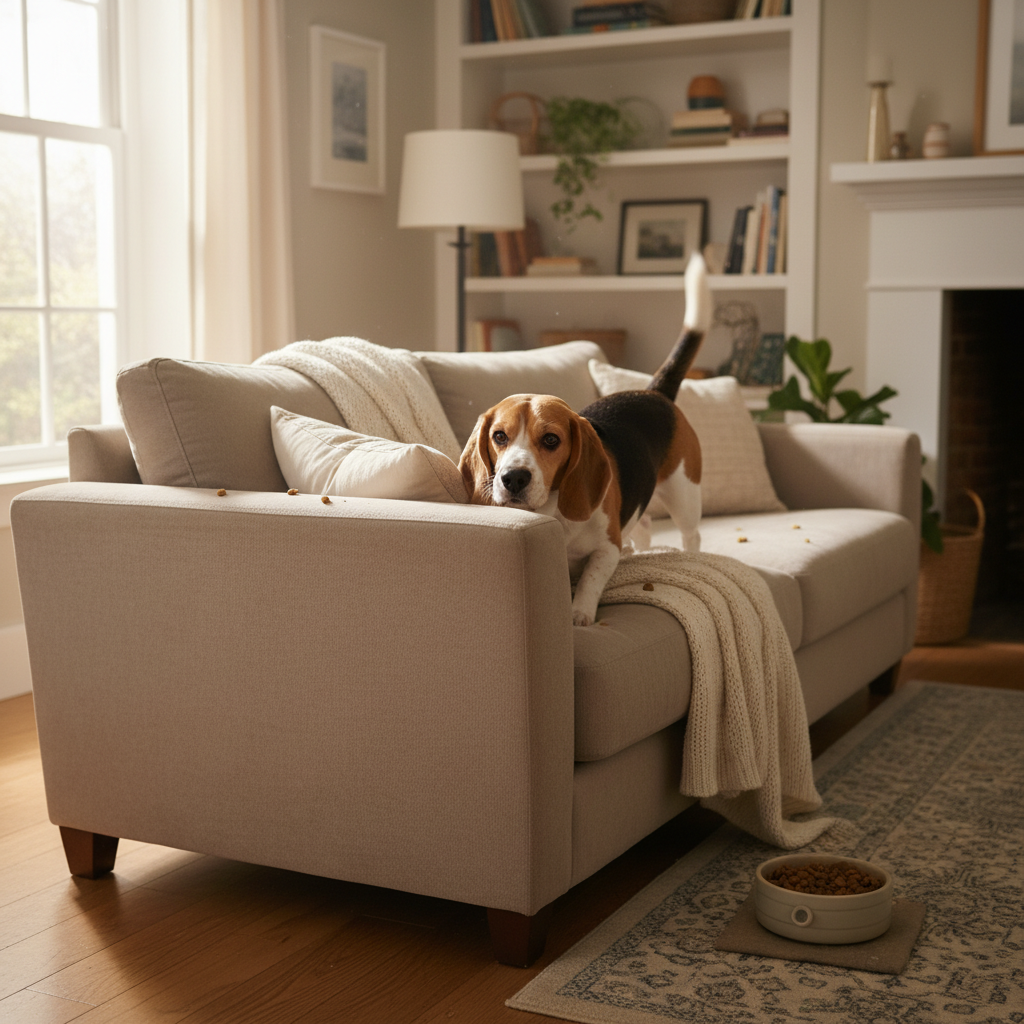
Two versions. Both work.
Treat hide & seek: Ask your dog to sit-stay. Hide small treats around the room — under a cushion, behind the TV stand, on a low shelf. Release with “find it!” Start obvious, get sneakier as their nose improves. A handful of high-value treats like Zuke’s Mini Naturals are perfect for this — small enough to hide anywhere, smelly enough to make the search genuinely challenging.
Human hide & seek: You hide. They find you. Simple, slightly ridiculous, and surprisingly tiring — especially for velcro dogs who track your every move.
3. Trick Training Sessions
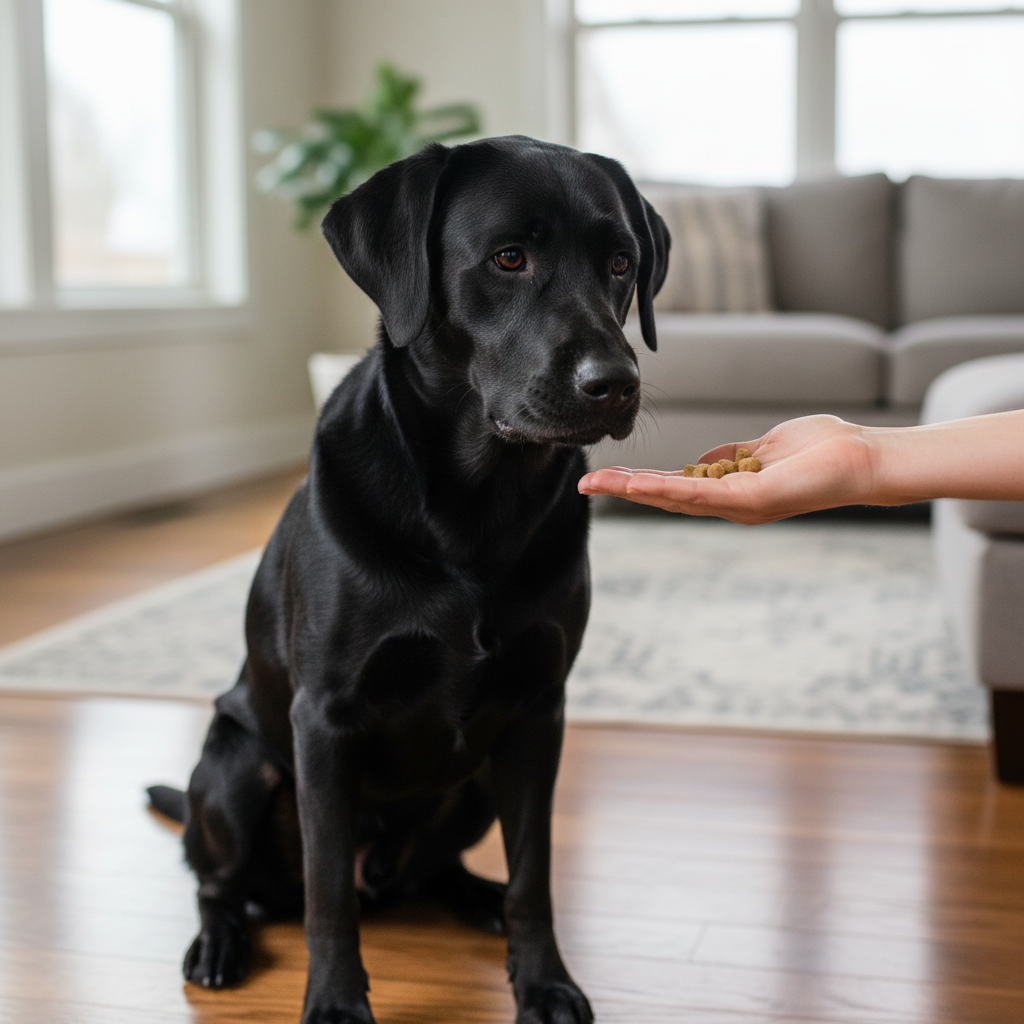
Teaching new tricks is one of the best mental workouts you can give a dog. The focus required to learn something new — and the satisfaction of getting it right — genuinely tires them out in a way that running around doesn’t.
Start with: spin, high five, roll over, bow. Then layer into chains: touch a target, go to mat, tidy toys by name. Keep sessions to 5–10 minutes max — dogs absorb more in short bursts. Always end while they’re still succeeding and engaged, never when they’re frustrated.
A treat pouch keeps training flowing without interruption. The Heouvo treat pouch with clicker clips to your waistband and keeps rewards instantly accessible — no fumbling in pockets mid-session.
4. The Rotating Toy System
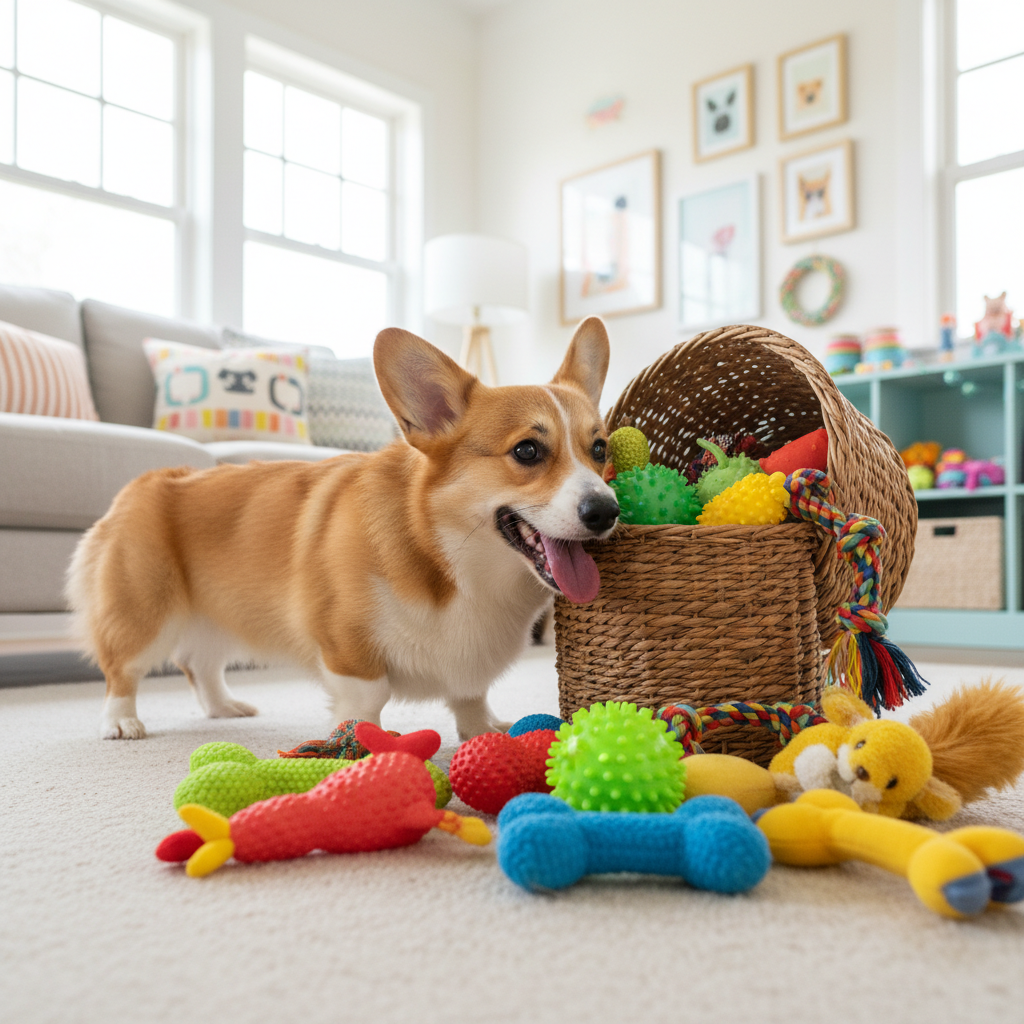
Here’s a free hack that beats buying new toys: stop leaving all the toys out. Dogs habituate fast — what’s always available becomes invisible within days. Store most toys away and rotate 3–4 into the active set every few days.
To your dog, each rotation feels brand new. The act of discovering the toy box — digging through, selecting, carrying something off — is itself enriching. It mirrors foraging and choice-making behavior.
A dedicated toy basket keeps the rotation organized and gives your dog a clear “home base” to return toys to (yes, you can teach that).
5. DIY Indoor Agility Course
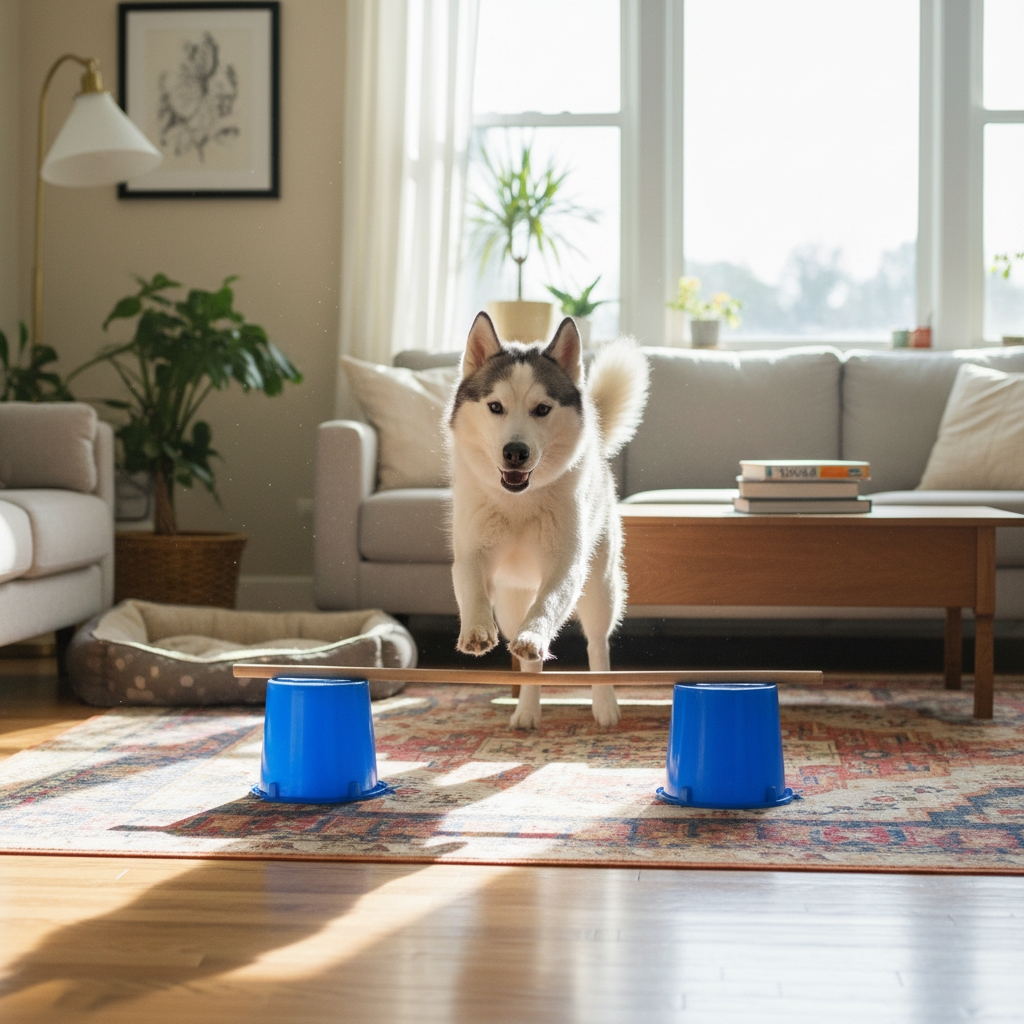
You don’t need a yard. You need creativity and whatever’s in your house.
- Jump: Broomstick balanced between two stacks of books — raise the height as they improve
- Crawl: A low coffee table or chair to army-crawl under
- Weave: Water bottles or chair legs in a line
- Tunnel: A large laundry basket on its side, or a proper dog tunnel
Start by luring each obstacle with treats, reward heavily. Once they know each piece, link them into a mini sequence. The combination of movement and problem-solving is a serious energy drain — better than a walk for a lot of dogs.
The Outward Hound Zip & Zoom Kit includes 6 agility pieces designed for indoor use — poles, jumps, and a tunnel — without needing outdoor space.
6. Long-Lasting Chews
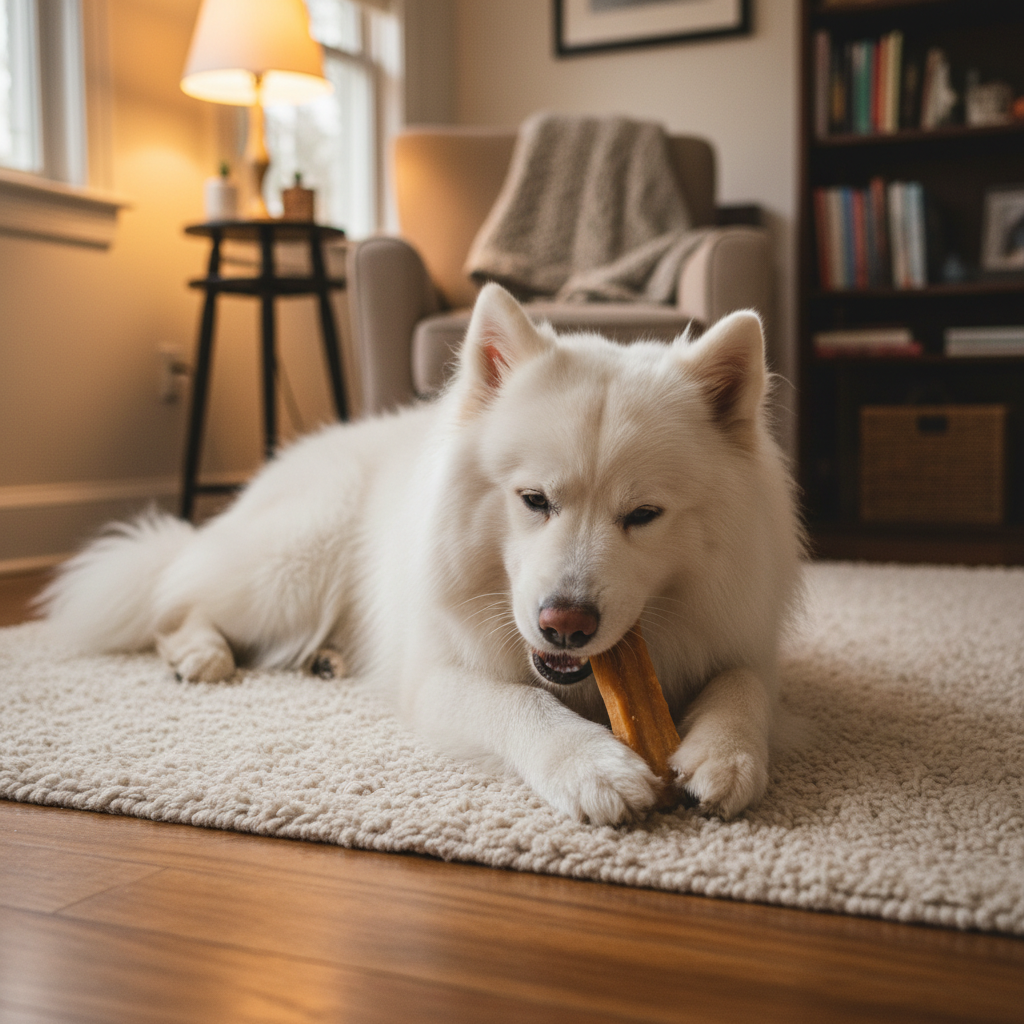
Chewing isn’t a bad habit — it’s a biological need. It releases endorphins, reduces stress, and gives dogs’ jaws the workout they’re wired for. Channel it productively.
Himalayan yak chews are our top pick: long-lasting, low-odor, digestible, and no mess. A large yak chew can keep a medium dog busy for 45–60 minutes. When it gets too small to chew safely, soak the last bit in water, microwave for 30 seconds, and it puffs into a crunchy treat. Zero waste.
Let them chew in their calm spot — a designated bed or mat. Over time, this builds a reliable “settle” cue without any training effort.
7. Frozen Treat Challenges
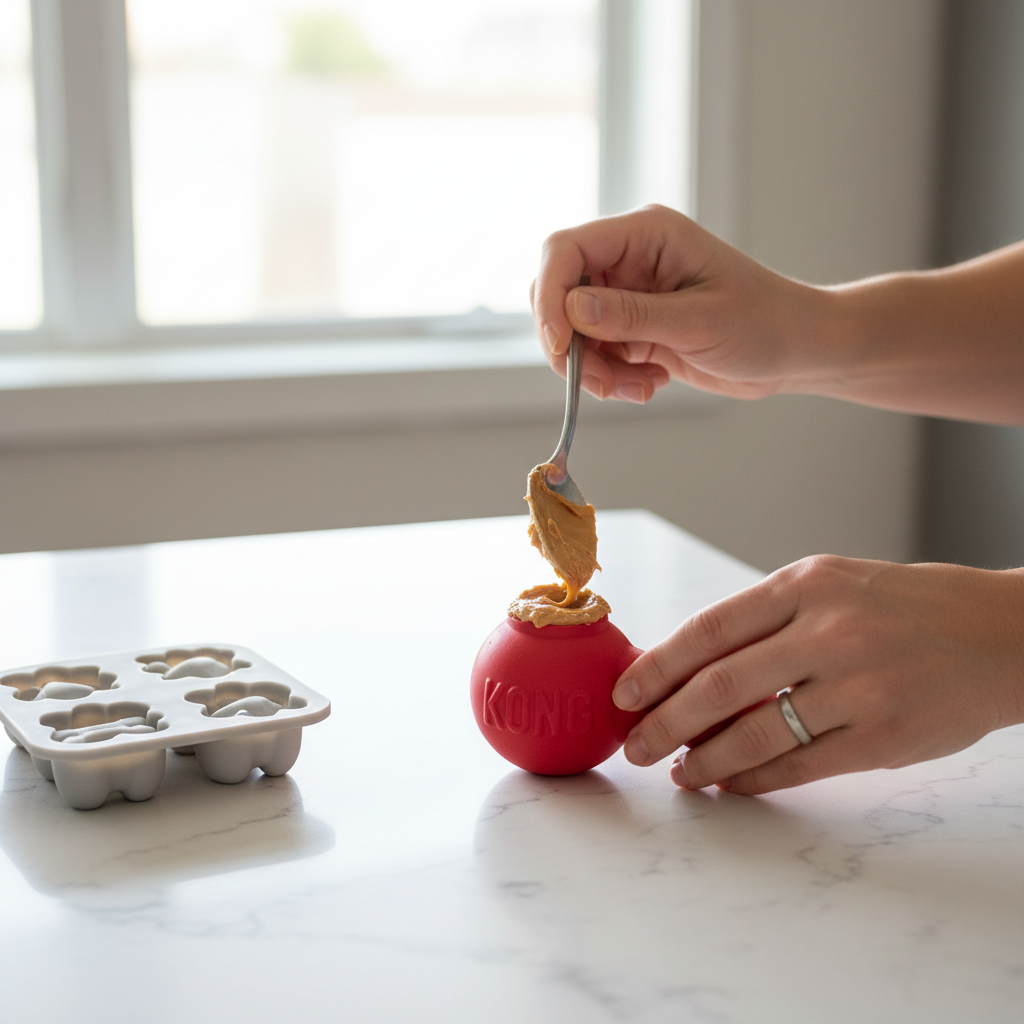
A well-stuffed, frozen KONG is one of the most effective enrichment tools ever made — and it’s been around since 1976 for good reason. Most dogs will work at a frozen KONG for 20–40 minutes straight.
Easy recipes:
- Classic: Peanut butter (xylitol-free) + banana mash, freeze overnight
- Yogurt pops: Plain Greek yogurt + blueberries in silicone molds
- Broth cubes: Low-sodium chicken broth in an ice tray
- Layered KONG: Alternate banana, kibble, and peanut butter in layers — freeze solid
⚠️ Always use dog-safe ingredients — no xylitol, no grapes, no artificial sweeteners.
8. Talking Button Training
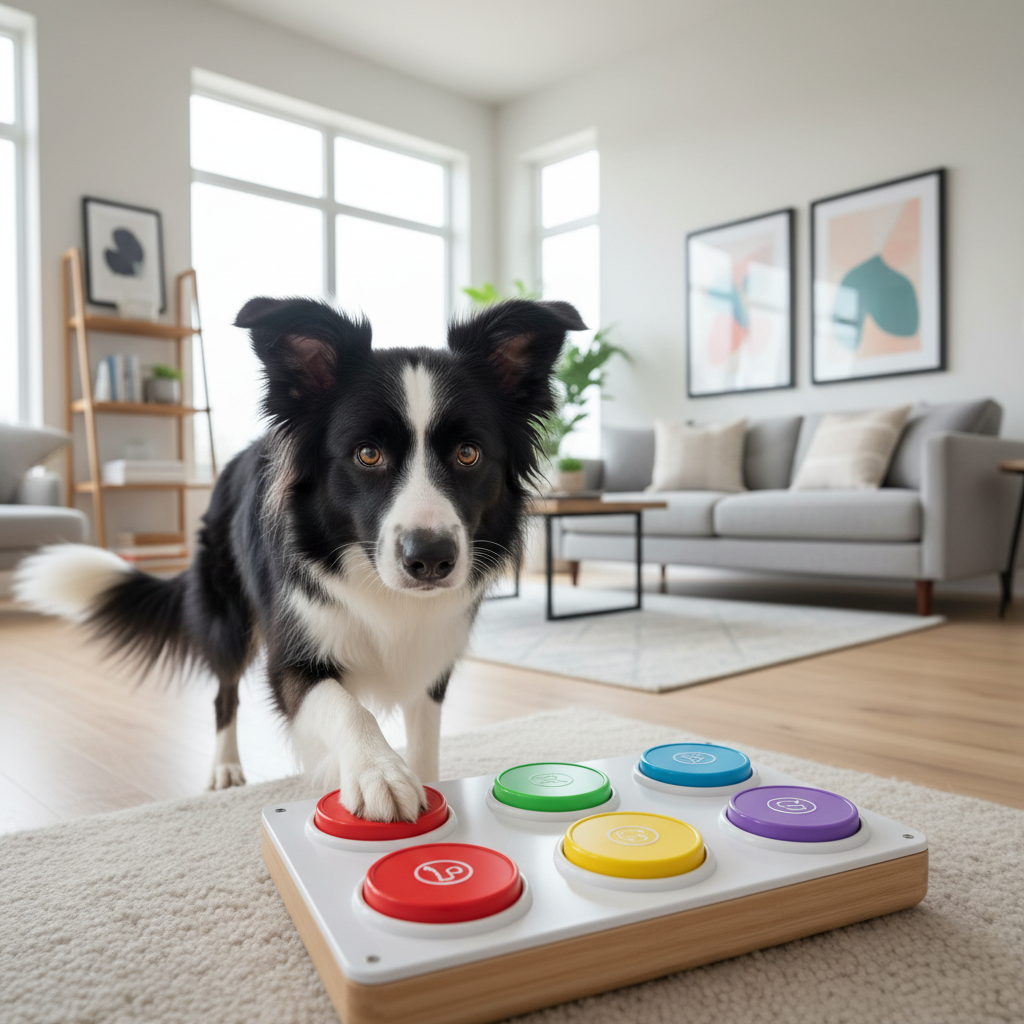
This one’s a longer project — but watching a dog develop a vocabulary is genuinely fascinating. Talking button boards let dogs press pre-recorded words to communicate. Common starters: outside, food, play, water, more, all done.
Expect 2–4 weeks before consistent use. Many dogs reliably use 3–5 buttons with daily 5-minute sessions. The FluentPet Speak Up Kit (6 buttons, pre-recorded) is the most used starter setup — designed by a linguist who studied dog communication for years.
Even without buttons, working on verbal command chains (name → sit → eye contact → target touch) builds vocabulary and impulse control simultaneously.
9. Tug-of-War (Done Right)
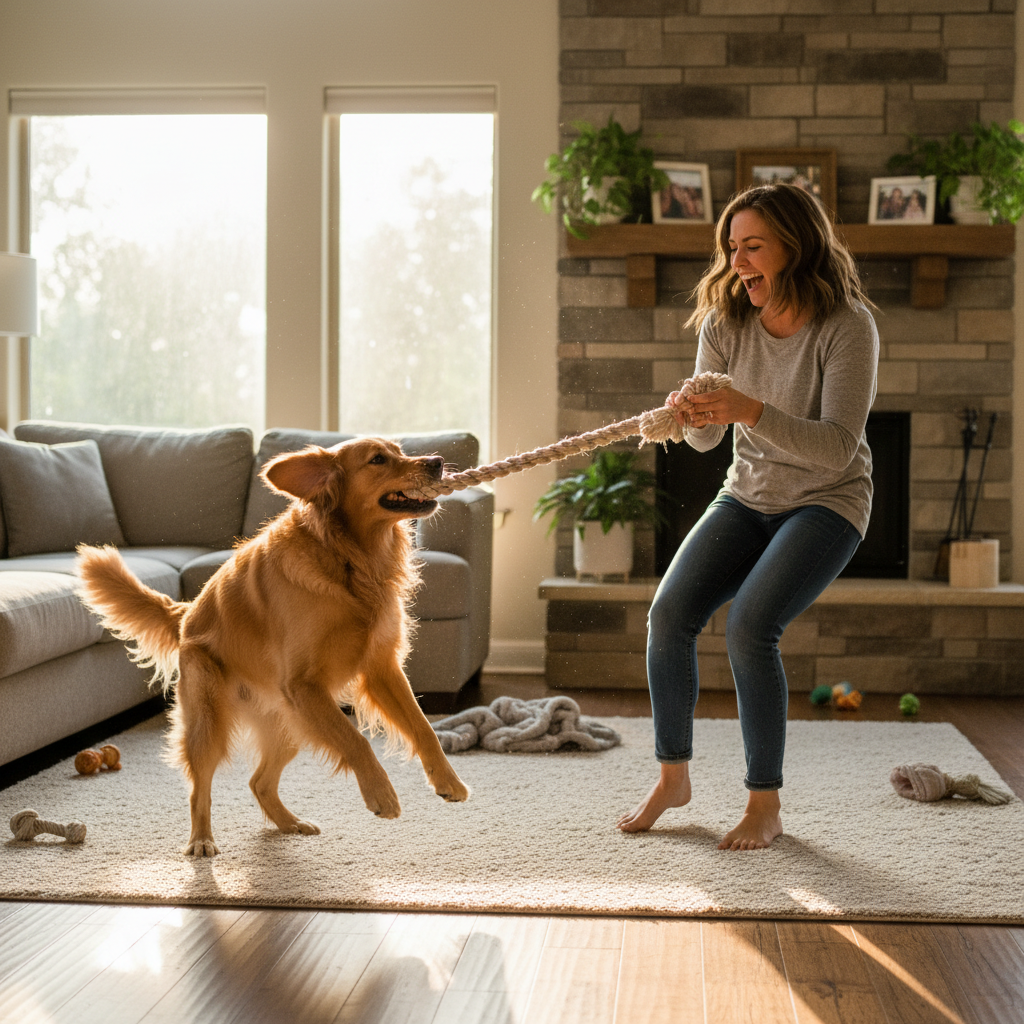
Tug has gotten an unfair reputation. When played with clear rules, it’s one of the best energy outlets available — burns physical energy, builds impulse control, and strengthens your bond at the same time.
The rules:
- You initiate. You end it. Never let the dog demand tug.
- Teach “drop it” before you play — practice with low-value items first
- Use a dedicated tug toy, not hands or clothing
- If teeth touch skin: game pauses immediately, no drama
End every session with “drop it” + “sit.” The structured finish reinforces self-control — exactly what bored dogs need more of. The Mammoth Flossy rope tug holds up to aggressive chewers and the cotton-poly blend is gentle on gums.
10. Read Your Dog’s Drive Type
Not every dog loves every activity — and that’s fine. Matching enrichment to your dog’s natural drive gets you way better results than randomly cycling through activities.
- Nose-first dogs (beagles, hounds, Samoyeds, spaniels): snuffle mats, treat hide & seek, frozen enrichment, yak chews
- Body-first dogs (retrievers, huskies, herding breeds): agility, tug, active training sessions
- Brain-first dogs (border collies, poodles, Aussies): trick chains, talking buttons, Level 3 puzzles
Mix 2–3 activities across a week rather than the same thing daily. Novelty matters — dogs habituate to enrichment the same way they habituate to toys. Rotate both.
Key Takeaways
- Mental stimulation burns energy faster than physical exercise alone
- Destructive behavior is almost always under-stimulation, not a personality problem
- Frozen enrichment and long-lasting chews are the most underused tools in the toolkit
- Rotate toys and activities — novelty is the real secret ingredient
- Short training sessions (5–10 min) outperform long ones every time
- Match activities to your dog’s drive type for maximum engagement