
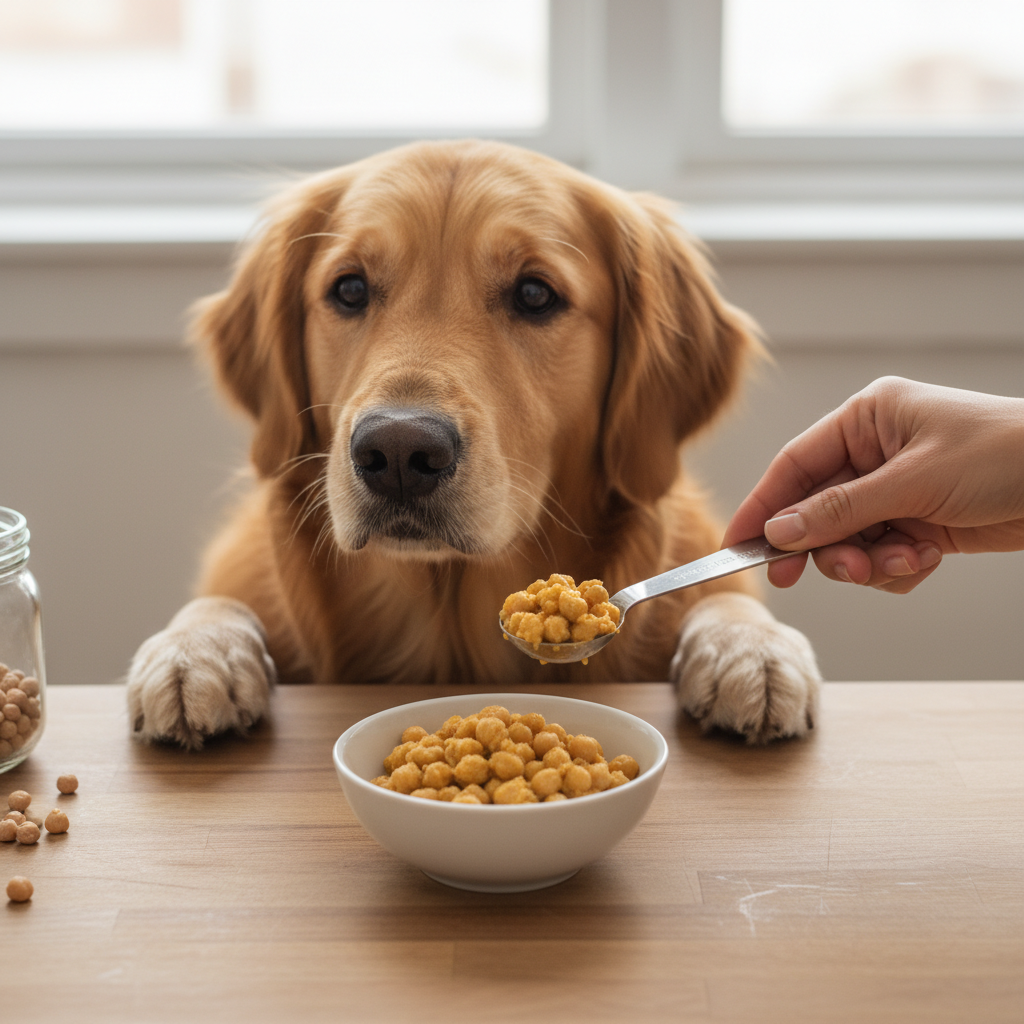
Key Takeaways
- Cooked, plain chickpeas are safe for dogs
- Chickpeas provide protein, fiber, folate, and manganese
- Never feed raw or dried chickpeas — they pose a choking hazard and contain compounds that are hard to digest
- Avoid seasoned, salted, or canned chickpeas with added sodium
- Hummus is not recommended due to garlic, lemon, and tahini content
Is Chickpeas Safe for Dogs?
Cooked chickpeas (garbanzo beans) are safe for dogs when served plain and in moderation. These legumes have been cultivated for thousands of years and are a staple in many human diets. For dogs, they offer a plant-based protein source and dietary fiber that can support digestive health.
According to veterinary nutritionists at PetMD and the American Kennel Club, cooked legumes like chickpeas can be a healthy addition to a dog’s diet. However, they should never replace animal protein as the primary protein source, as dogs are omnivores with a biological need for meat-based amino acids.
Raw or dried chickpeas are problematic. They are hard and pose a choking risk, especially for small dogs. Additionally, raw legumes contain anti-nutrients like phytic acid and lectins that interfere with nutrient absorption and can cause digestive upset.
Nutritional Value
Cooked chickpeas provide several beneficial nutrients for dogs:
- Protein: About 7-8 grams per half-cup cooked — supports muscle maintenance
- Fiber: 6-7 grams per half-cup — aids digestion and promotes satiety
- Folate (B9): Essential for cell growth and DNA synthesis
- Manganese: Supports bone health and metabolism
- Iron: Important for oxygen transport in blood
- Magnesium: Supports muscle and nerve function
However, chickpeas are calorie-dense and relatively high in carbohydrates. They should be considered a treat or supplement, not a dietary staple.
Benefits
When fed appropriately, chickpeas offer several potential benefits:
- Digestive health: The fiber content supports regular bowel movements and gut health
- Weight management: The protein and fiber combination promotes fullness, which can help overweight dogs feel satisfied with fewer calories
- Low glycemic index: Chickpeas don’t cause rapid blood sugar spikes, making them suitable for diabetic dogs in moderation
- Alternative protein: For dogs with certain meat allergies, chickpeas can provide supplemental protein (under veterinary guidance)
Risks and What to Avoid
While cooked chickpeas are generally safe, there are important risks to consider:
Choking and obstruction: Whole chickpeas can be a choking hazard, especially for small breeds. Mash or puree them for safety.
Gastrointestinal upset: The high fiber content can cause gas, bloating, or diarrhea if fed in large quantities or introduced too quickly. Start with small amounts.
Seasonings and additives: Canned chickpeas often contain added salt. Rinse thoroughly if using canned. Never feed chickpeas seasoned with garlic, onion, or heavy spices — these are toxic to dogs.
Hummus: This popular chickpea dip contains garlic (toxic), lemon juice (too acidic), tahini (high fat), and salt. Keep hummus away from dogs.
Raw chickpeas: These are too hard to digest and may contain compounds that interfere with nutrient absorption. Always cook thoroughly.
How Much Can a Dog Eat?
| Size | Max Serving | Frequency |
|---|---|---|
| Small (under 10 lbs) | 1-2 teaspoons mashed | Once or twice per week |
| Medium (10–50 lbs) | 1-2 tablespoons | 2-3 times per week |
| Large (50+ lbs) | 2-4 tablespoons | 2-3 times per week |
These amounts are for cooked, plain chickpeas as a treat, not a meal replacement. Always introduce new foods gradually and monitor for digestive upset.
When to Call Your Vet
Contact your veterinarian if your dog experiences:
- Persistent vomiting or diarrhea after eating chickpeas
- Signs of choking (gagging, pawing at mouth, difficulty breathing)
- Bloating or abdominal pain
- Lethargy or loss of appetite after consumption
ASPCA Poison Control: 888-426-4435