
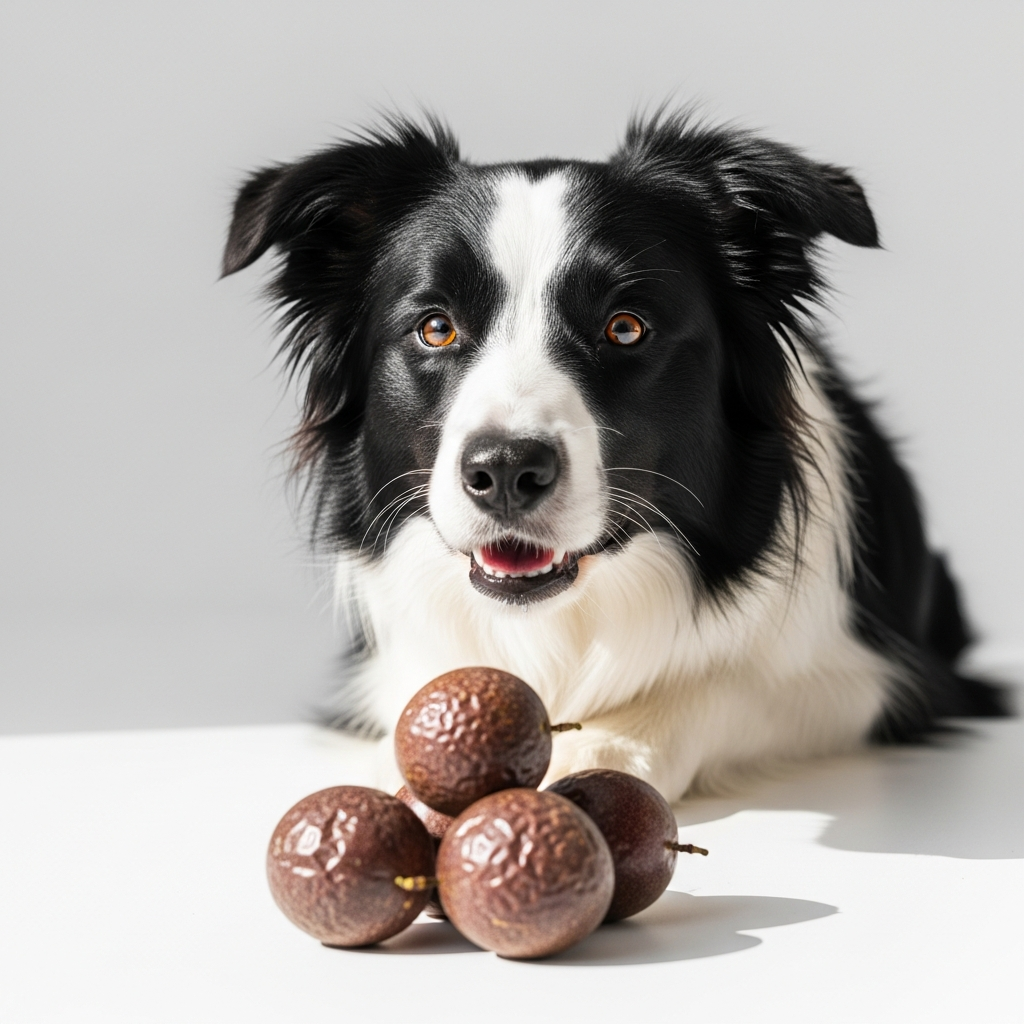
Passion fruit, with its vibrant purple skin and tart, seedy interior, is a popular tropical treat for humans. But can dogs eat passion fruit? This guide explores the safety considerations for sharing this exotic fruit with your canine companion.
Key Takeaways
- Passion fruit seeds contain cyanogenic glycosides (toxic)
- The purple rind is also toxic to dogs
- The juicy pulp is technically safe but impractical to separate from seeds
- Best to avoid feeding passion fruit to dogs entirely
- Contact a vet if your dog consumes any part of the fruit
Is Passion Fruit Safe for Dogs?
Passion fruit is not safe for dogs and should be avoided. While the juicy pulp surrounding the seeds is not inherently toxic, it is nearly impossible to separate from the dangerous components. For safe alternatives, visit our dog nutrition hub.
The seeds and rind of passion fruit contain cyanogenic glycosides, which can release cyanide when digested. This poses a serious toxicity risk that outweighs any potential nutritional benefits.
Why Passion Fruit is Dangerous
Cyanogenic Compounds
The seeds and rind contain glycosides that convert to cyanide in the digestive system. Even small amounts can cause:
- Difficulty breathing
- Dilated pupils
- Shock
- In severe cases, death
Impossible to Prepare Safely
Unlike some fruits where toxic parts can be easily removed, passion fruit seeds are embedded throughout the edible pulp, making safe preparation impractical.
Symptoms of Passion Fruit Toxicity
If your dog consumes passion fruit, watch for:
- Vomiting
- Diarrhea
- Lethargy
- Difficulty breathing
- Dilated pupils
- Weakness or collapse
When to Call Your Veterinarian
Contact your vet immediately if your dog consumes any part of a passion fruit – seeds, rind, or pulp. Early intervention is critical with cyanide toxicity.
For safe fruit alternatives, explore our complete guide to foods dogs can eat.
Frequently Asked Questions
Can dogs eat passion fruit pulp?
While the pulp itself is not toxic, it is not recommended because it is impossible to separate from the toxic seeds.
What if my dog ate a small amount of passion fruit?
Contact your veterinarian immediately, even for small amounts, due to the cyanide risk.
Are there any safe tropical fruits for dogs?
Yes, mangoes and papayas (without seeds) are safer options in moderation.