
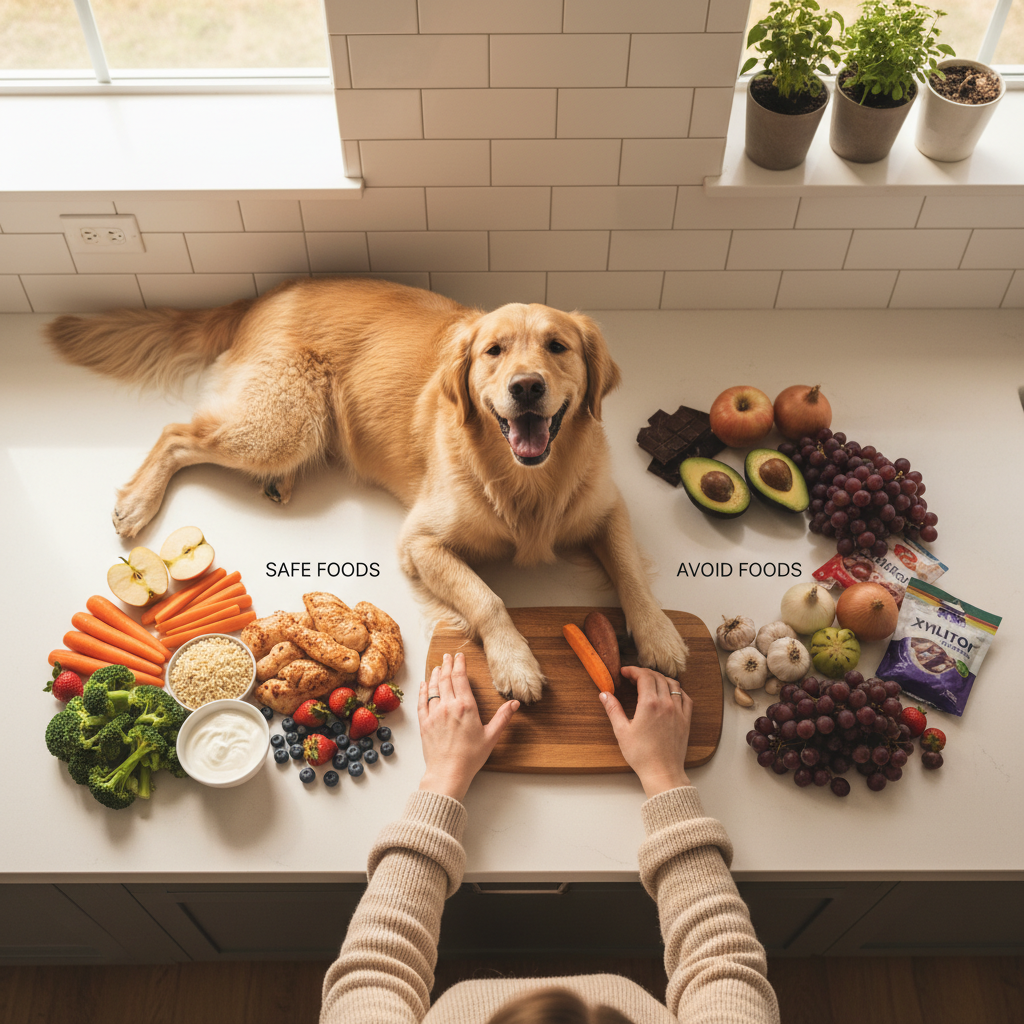
Every dog owner has been there — your pup gives you those irresistible eyes while you’re eating, and you wonder: can I share this? With thousands of foods out there, figuring out what’s safe and what’s dangerous for your dog can feel overwhelming. That’s exactly why we created this complete dog food safety guide.
We’ve reviewed 70+ common foods using the simple YES / SOMETIMES / NO framework, so you always know what to reach for — and what to keep far away from your dog’s bowl. Whether you’re dealing with a curious puppy or a seasoned food-thief, this guide has everything you need to make smart, safe feeding decisions.
Understanding Dog Nutrition Basics
Dogs are omnivores — unlike cats, they can digest both animal and plant-based foods. But “can digest” doesn’t mean “should eat.” A dog’s digestive system evolved primarily around protein and fat, with limited need for carbohydrates. This means:
- Protein should make up the bulk of their diet (chicken, beef, fish, eggs)
- Fats are essential for energy and coat health
- Carbohydrates are tolerated but not required in large amounts
- Many human foods contain compounds dogs can’t process safely
For a deep dive into how much to feed your dog based on their weight and activity level, check out our practical dog feeding guide. And if you want the best commercial options, see our vet-recommended dry dog food picks for 2026.
The YES / SOMETIMES / NO Framework
Before diving into specific foods, here’s how to use this guide:
- ✅ YES — Generally safe in appropriate portions for most healthy dogs
- ⚠️ SOMETIMES — Safe in small amounts or under specific conditions; use caution
- ❌ NO — Toxic or seriously harmful; never feed these
Always introduce new foods slowly. Even “safe” foods can cause stomach upset if fed in large quantities or introduced too quickly. When in doubt, ask your vet.
Safe Foods for Dogs (YES List)
These foods are generally safe for most healthy adult dogs when fed in appropriate portions:
Fruits Dogs Can Eat
| Food | Safety Rating | Notes |
|---|---|---|
| Apple | ✅ YES | Remove seeds and core — seeds contain cyanide compounds |
| Banana | ✅ YES | High in sugar — treat only, not daily staple |
| Blueberries | ✅ YES | Antioxidant-rich superfood for dogs |
| Watermelon | ✅ YES | Remove seeds and rind first |
| Strawberries | ✅ YES | Great treat, limit due to sugar content |
| Mango | ✅ YES | Remove pit and skin; high in natural sugar |
| Papaya | ✅ YES | Remove seeds and skin; offers digestive enzymes |
| Pineapple | ✅ YES | Fresh only; remove core and skin |
Vegetables Dogs Can Eat
| Food | Safety Rating | Notes |
|---|---|---|
| Carrots | ✅ YES | Excellent low-calorie snack; good for teeth |
| Cucumber | ✅ YES | Hydrating and low calorie — great summer treat |
| Green Beans | ✅ YES | Plain only; no salt, seasonings, or onions |
| Sweet Potatoes | ✅ YES | Cooked only; high in fiber and vitamins |
| Pumpkin | ✅ YES | Great for digestion; plain cooked or canned |
| Broccoli | ⚠️ SOMETIMES | Small amounts only — florets can cause gas |
| Baby Corn | ✅ YES | Plain, cooked; avoid canned with added sodium |
| Lotus Root | ✅ YES | Cooked only; high in fiber |
Proteins and Dairy
| Food | Safety Rating | Notes |
|---|---|---|
| Eggs | ✅ YES | Cooked only; excellent protein source |
| Salmon | ✅ YES | Cooked, boneless only — raw salmon can carry dangerous parasites |
| Tuna | ⚠️ SOMETIMES | Occasional only; mercury content is a concern |
| Tilapia | ✅ YES | Cooked, boneless; lean protein |
| Sea Bass | ✅ YES | Cooked, plain, boneless only |
| Venison | ✅ YES | Cooked, plain; excellent lean protein |
| Peanut Butter | ⚠️ SOMETIMES | Natural only — must be xylitol-free |
| Yogurt | ⚠️ SOMETIMES | Plain, unsweetened only; some dogs are lactose intolerant |
| Cheese | ⚠️ SOMETIMES | Low-fat varieties in small amounts; watch for lactose sensitivity |
Grains and Starches
| Food | Safety Rating | Notes |
|---|---|---|
| Rice | ✅ YES | Cooked, plain; white rice is often used for upset stomachs |
| Bread | ⚠️ SOMETIMES | Plain only; no raisins, garlic, onions, or xylitol |
| Corn | ⚠️ SOMETIMES | Off the cob; corn cobs are a choking/obstruction hazard |
| Celery | ✅ YES | Cut into small pieces; freshens breath naturally |
Toxic Foods: The NO List
These foods are dangerous or outright toxic to dogs. Even small amounts of some of these can cause serious illness or death. Keep these away from your dog at all times.
| Food | Danger Level | Why It’s Dangerous |
|---|---|---|
| Grapes & Raisins | 🚨 EXTREMELY TOXIC | Can cause sudden kidney failure; even small amounts are dangerous |
| Onions | 🚨 TOXIC | Damages red blood cells; all forms (raw, cooked, powder) are harmful |
| Garlic | 🚨 TOXIC | More concentrated than onions; causes hemolytic anemia |
| Avocado | ⚠️ HARMFUL | Persin compound causes vomiting and diarrhea; pit is choking hazard |
| Chocolate | 🚨 TOXIC | Theobromine causes seizures, vomiting, heart problems |
| Xylitol (artificial sweetener) | 🚨 EXTREMELY TOXIC | Causes rapid insulin release and liver failure; found in many sugar-free products |
| Macadamia Nuts | 🚨 TOXIC | Causes weakness, tremors, and hyperthermia |
| Alcohol | 🚨 TOXIC | Dogs metabolize alcohol much faster than humans; even small amounts dangerous |
| Raw yeast dough | 🚨 DANGEROUS | Expands in stomach; produces alcohol as it ferments |
| Caffeine | 🚨 TOXIC | Affects heart rate and nervous system; no coffee, tea, or energy drinks |
The “Sometimes” Foods — Use Caution
Some foods fall into a gray area. They’re not inherently toxic, but they come with conditions that matter:
When “Sometimes” Means Preparation Matters
- Tomatoes — Ripe red tomatoes are mostly safe in small amounts, but green tomatoes and tomato plants contain solanine, which is toxic
- Oranges — The fruit flesh is safe, but the peel, pith, and seeds should be removed
- Pineapple — Fresh pineapple is fine, but canned pineapple in syrup has too much added sugar
When “Sometimes” Means Quantity Matters
- High-sugar fruits (bananas, mangoes) should be limited to a few small pieces
- Fatty meats should only be given occasionally to prevent pancreatitis
- Dairy products should be given in small amounts due to lactose sensitivity
Exotic and Unusual Meats: What’s Safe?
With the rise of limited-ingredient and exotic protein dog foods, you may wonder about less common meats. Here’s a quick breakdown:
| Meat | Safety | Notes |
|---|---|---|
| Venison (deer) | ✅ Safe | Lean, nutritious; popular in hypoallergenic diets |
| Goat Meat | ✅ Safe | Good for dogs with beef allergies |
| Wild Boar | ✅ Safe (cooked) | Must be fully cooked to kill parasites |
| Ostrich | ✅ Safe | Very lean, high protein; good for dogs with poultry allergies |
| Crocodile Meat | ✅ Safe | Exotic but nutritious; growing in limited-ingredient foods |
| Skipjack Tuna | ⚠️ Occasionally | Lower mercury than yellowfin; still limit frequency |
How to Read a Dog Food Label
Understanding what’s in your dog’s commercial food is just as important as knowing which table scraps to share. Here are the key things to look for:
Ingredients List
Ingredients are listed by weight before cooking. This means a food listing “chicken” first may have less chicken than it appears once moisture is removed. Look for:
- Named meat sources first (chicken, beef, salmon — not “meat meal”)
- Whole food ingredients
- Minimal artificial preservatives (BHA, BHT are controversial)
Guaranteed Analysis
This shows minimum protein/fat percentages and maximum fiber/moisture. Use this to compare foods on a dry matter basis — remove moisture from the equation for accurate comparison.
AAFCO Statement
Look for: “formulated to meet the nutritional levels established by AAFCO” or “tested using AAFCO feeding trials.” This indicates the food meets basic nutritional standards.
Want help choosing the right commercial food? See our roundup of the best dry dog food for 2026.
Emergency: What to Do If Your Dog Eats Something Toxic
Even with the best precautions, dogs get into things they shouldn’t. Here’s what to do:
Immediate Steps
- Stay calm — panicking won’t help
- Identify what was eaten — how much, how long ago
- Don’t induce vomiting unless directed — for some toxins (like caustic chemicals), vomiting makes it worse
- Call your vet or emergency animal hospital immediately
- Have the ASPCA Poison Control number ready: (888) 426-4435 (US) — there may be a consultation fee
Symptoms of Toxicity to Watch For
- Vomiting or diarrhea
- Lethargy or collapse
- Seizures or tremors
- Excessive drooling or foaming
- Pale or white gums
- Rapid or labored breathing
If you see any of these, don’t wait — get to a vet immediately.
Special Dietary Considerations
Puppies
Puppies have developing digestive systems and are more sensitive to new foods. Stick to puppy-formulated food as the primary diet and introduce any extras slowly and in tiny amounts. For a complete guide to getting started, read our new puppy checklist for the first 30 days.
Senior Dogs
Older dogs may have reduced kidney function, making high-protein snacks riskier. They may also have more sensitive stomachs. Stick to easily digestible options like cooked sweet potato, pumpkin, and lean proteins.
Dogs with Allergies
Common food allergens in dogs include beef, dairy, chicken, and wheat. If your dog is scratching excessively or has recurring ear infections, a food allergy might be the cause. Learn more about dog itching and its causes.
Dogs with Health Conditions
Dogs with kidney disease, diabetes, pancreatitis, or heart disease may have specific dietary restrictions. Always consult your vet before adding new foods if your dog has a known health condition.
Herbs and Spices: What About These?
Many Thai and Southeast Asian households cook with ingredients that may accidentally end up in your dog’s food or be given as treats. Here’s a quick reference for some common ones:
| Herb/Spice | Safety | Notes |
|---|---|---|
| Galangal | ⚠️ SOMETIMES | Very small amounts may be tolerated but generally not recommended |
| Fingerroot | ⚠️ SOMETIMES | No direct toxicity data; avoid as precaution |
| Turmeric | ✅ Safe (small amounts) | Anti-inflammatory; always pair with fat for absorption |
| Ginger | ✅ Safe (small amounts) | Can help with nausea; fresh or powder in tiny doses |
| Garlic | ❌ TOXIC | Even small amounts cause oxidative damage to red blood cells |
| Onion (all forms) | ❌ TOXIC | Includes onion powder — often hidden in broths and sauces |
Frequently Asked Questions
Can dogs eat human food every day?
Human food should never replace a complete, balanced dog food diet. At most, treats and table scraps should make up no more than 10% of your dog’s daily caloric intake. Over-relying on human food risks nutritional imbalances.
Is raw food safe for dogs?
Raw diets are controversial. While some dogs thrive on them, raw meat carries risks of bacterial contamination (Salmonella, Listeria) that can affect both pets and humans in the household. If considering a raw diet, consult your vet first and follow strict food safety practices.
What should I do if my dog ate something I’m not sure about?
When in doubt, call your vet. Don’t wait for symptoms to appear — for many toxins, early treatment is critical. You can also check the ASPCA Animal Poison Control database online.
Are organic fruits and vegetables better for dogs?
Organic produce eliminates pesticide residue, which is worth considering for foods like strawberries or apples where the skin is eaten. However, washing conventional produce thoroughly is also effective for most foods.
Quick Reference Cheat Sheet
| Always Safe | Sometimes Safe | Never Safe |
|---|---|---|
| Carrots, Blueberries, Apples (no seeds) | Peanut butter (xylitol-free), Cheese, Tuna | Grapes, Onions, Garlic |
| Cooked salmon, Eggs, Rice | Bread (plain), Corn (off cob), Yogurt | Chocolate, Xylitol, Macadamia nuts |
| Pumpkin, Sweet potato, Cucumber | Broccoli (small amounts), Oranges | Alcohol, Caffeine, Raw yeast dough |
| Watermelon (no seeds), Green beans | Tomatoes (ripe, small amounts) | Avocado (especially pit and skin) |
Final Thoughts
Sharing food with your dog can be a wonderful way to bond — as long as you know what’s safe. The key rules to remember: keep toxic foods like grapes, onions, garlic, and chocolate completely off the menu; introduce new foods slowly; and always make treats a small portion of a balanced diet.
For more detailed information on any specific food, browse our full library of individual food safety guides. And if your dog has specific nutritional needs or health concerns, your veterinarian is always the best resource.
Looking for the best food to put in your dog’s bowl? Check out our top dry dog food picks — all vet-reviewed and updated for 2026.
Seasonal and Holiday Food Hazards
Certain times of year bring unique food dangers for dogs. Being aware of these seasonal hazards can prevent emergency vet visits:
Holiday Hazards
- Thanksgiving: Turkey skin (too fatty, causes pancreatitis), onion stuffing, raisins in bread or pies, xylitol in sugar-free dishes, alcohol, nutmeg (toxic)
- Christmas/New Year: Chocolate gifts, macadamia nut cookies, alcohol, grapes and raisins, fruit cake
- Halloween: Candy (especially anything sugar-free with xylitol), chocolate, candy wrappers (ingestion risk)
- Easter: Chocolate eggs, xylitol in candy, artificial grass (ingestion risk)
Keeping Dogs Safe at Gatherings
The risk at social gatherings is not just from intentional sharing. Well-meaning guests, dropped food, unsecured trash cans, and unattended plates all create opportunities for toxic ingestion. Stay prepared:
- Brief guests on what dogs cannot eat before the event
- Use a baby gate to keep dogs out of the kitchen during food preparation
- Secure trash cans — one of the most common sources of toxin exposure in dogs
- Create a quiet safe space where your dog can settle during busy gatherings
Foods That Differ in Toxicity Between Dogs and Cats
If you have both dogs and cats, knowing species-specific differences prevents accidental harm when pets share spaces or food:
| Food | Safe for Dogs? | Safe for Cats? | Notes |
|---|---|---|---|
| Dog food (as primary diet) | Yes | No — long term | Cat food has higher taurine and protein; cats on dog food develop deficiencies |
| Cat food (as occasional treat) | Occasionally fine | Yes | Too rich and calorie-dense for dogs long-term |
| Onions and Garlic | Toxic | Toxic | Both species: causes hemolytic anemia |
| Grapes and Raisins | Toxic | Possibly toxic | Kidney failure in dogs; avoid for cats as precaution |
| Tuna (canned in water) | Occasionally | Occasionally | Mercury and sodium concerns for both species |
| Lilies (plant) | Mildly toxic | Extremely toxic | All lily varieties cause fatal kidney failure in cats |
The bottom line: always verify the safety of any food for the specific species eating it. What is safe for a dog is not automatically safe for a cat, and vice versa. When in doubt, offer species-appropriate commercial food and skip the guesswork.