
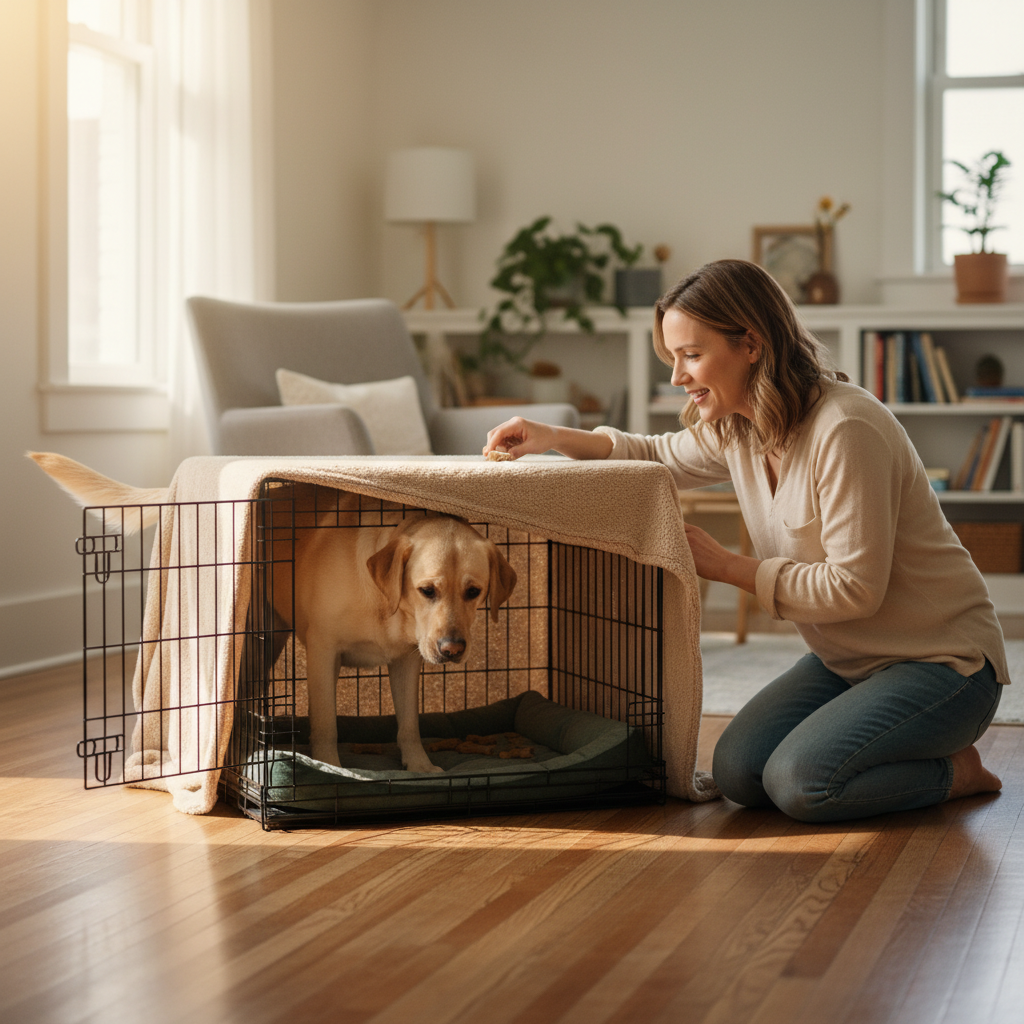
What You’ll Need
- A properly sized dog crate (large enough for your dog to stand, turn, and lie down)
- High-value treats and food-stuffed toys (Kong, Toppl)
- Comfortable bedding that fits in the crate
- A quiet location for the crate (not isolated, but not in high-traffic areas)
- Patience and consistency
Why Crate Training Matters
Crate training, when done correctly, provides your dog with a safe, comfortable den-like space they can call their own. Dogs are naturally den animals, and a crate satisfies their instinct to seek out small, secure spaces for rest and relaxation. A properly crate-trained dog has reduced anxiety, better house training success, and safer travel experiences.
The American Kennel Club and veterinary behaviorists emphasize that crates should never be used as punishment. Instead, they serve as management tools for house training, preventing destructive behavior when unsupervised, and providing a secure space during stressful events like storms or fireworks. For rescue dogs, a crate can be a sanctuary in an overwhelming new environment.
Step-by-Step: How to Crate Train Your Dog
Step 1: Create Positive Associations
Place the crate in a common area where your family spends time. Leave the door open and scatter treats inside. Let your dog explore at their own pace — never force them inside. Feed meals near the crate, gradually moving the bowl closer until it’s just inside the doorway, then fully inside.
Make the crate inviting with comfortable bedding and a cover to create a den-like feel. Add safe chew toys and food-stuffed Kongs to create positive associations. The goal is for your dog to voluntarily enter the crate because good things happen there.
Step 2: Build Duration Gradually
Once your dog willingly enters the crate for treats and meals, begin closing the door briefly. Close it for 5 seconds, open it, and reward. Gradually increase to 10 seconds, 30 seconds, then a minute. Always let your dog out before they become anxious.
Practice having your dog enter the crate, close the door, and sit nearby. Reward calm behavior. Slowly increase the time and begin stepping away briefly. Return before your dog becomes distressed, rewarding quiet behavior.
Step 3: Extend Time and Distance
Once your dog can handle 10-15 minutes in the crate with you nearby, begin leaving the room for short periods. Start with 30 seconds, return, and reward. Gradually build to 5 minutes, 15 minutes, then 30 minutes. Eventually work up to a few hours.
Always provide a food-stuffed toy or safe chew when leaving your dog crated. This creates a positive association with your departure and keeps them occupied. Never make a big deal of departures or arrivals — keep these low-key.
Training Tips
- Never use the crate as punishment: This destroys positive associations
- Keep sessions short initially: Puppies need frequent breaks
- Exercise before crating: A tired dog settles more easily
- Remove collars in the crate: Prevents accidental strangulation
- Make the crate available when home: Let your dog use it voluntarily during the day
Common Mistakes to Avoid
- Rushing the process: Crating an anxious dog too long creates negative associations
- Using the crate as punishment: Your dog should always feel safe in their crate
- Crating too long: Adult dogs shouldn’t be crated more than 4-6 hours; puppies need breaks every 2-3 hours
- Ignoring distress signals: Whining or barking usually means you’ve moved too fast
Troubleshooting
My dog whines in the crate: You may have increased duration too quickly. Go back to shorter periods. Ensure your dog has pottied, exercised, and has something to do. Ignore attention-seeking whining, but respond to genuine distress.
My dog won’t go in the crate: Make it more appealing — better treats, food-stuffed toys, comfortable bedding. Never force them. Some dogs do better with the crate covered; others prefer it open.
My dog has accidents in the crate: The crate may be too large (dogs won’t soil where they sleep). Ensure regular potty breaks. Consult your vet to rule out medical issues.
When to Move On
Your dog is crate trained when they willingly enter on cue, settle quietly for reasonable periods, and view the crate as their safe space. Many dogs continue enjoying their crates throughout life, while others graduate to having free roam when trust is established. The crate remains a valuable tool for travel, vet visits, and emergencies regardless of your dog’s daily freedom.