
What You’ll Need
- A properly fitted collar or harness
- A standard 4-6 foot leash
- High-value treats (small, soft, pea-sized pieces)
- A quiet area for initial training, progressing to busier locations
- Patience and consistency
Why Leash Training Matters
Leash training is fundamental to safe, enjoyable walks with your dog. A dog who pulls, lunges, or refuses to walk makes outings stressful and potentially dangerous. Proper leash manners allow you to navigate urban environments, interact safely with other dogs and people, and provide your dog with necessary exercise and mental stimulation.
The American Kennel Club emphasizes that leash training isn’t just about preventing pulling — it’s about teaching your dog to pay attention to you while moving. A well-leash-trained dog can enjoy more freedom to explore appropriate environments because you’ve established trust and communication. For reactive or anxious dogs, leash skills are essential for managing their world safely.
Step-by-Step: How to Leash Train Your Dog
Step 1: Introduce the Equipment
Before hitting the pavement, let your dog get comfortable wearing the collar/harness and leash indoors. Put the equipment on, give treats, then remove it. Repeat several times until your dog associates the gear with good things. Practice walking around your living room with the leash attached, rewarding your dog for staying near you.
Some dogs need time to accept collar pressure or the sensation of a harness. Go slowly and make it positive. Never drag a hesitant dog — encourage with treats and praise.
Step 2: Teach Loose Leash Walking
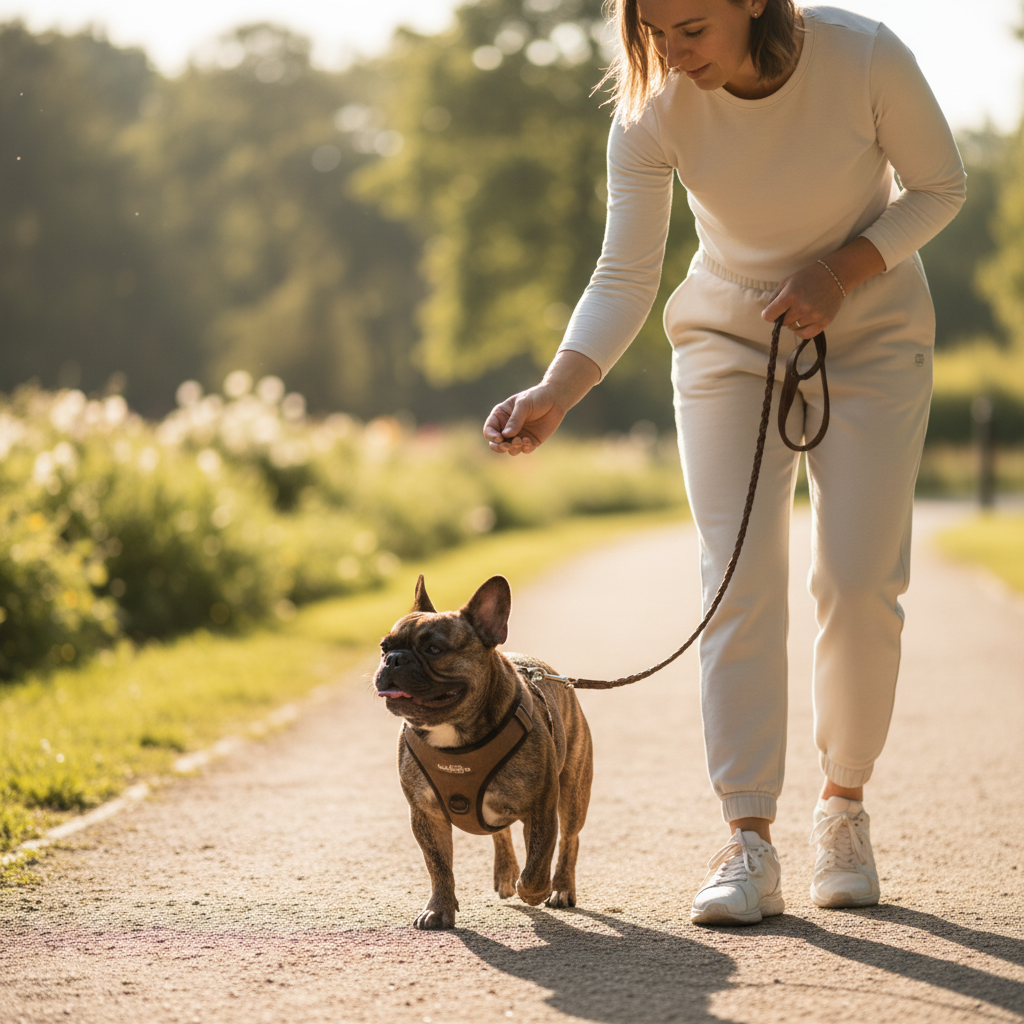
Start in a low-distraction area like your yard or a quiet hallway. Hold the leash with some slack — the goal is a “J” shape, not a straight line from you to your dog. Begin walking. If your dog pulls ahead, stop immediately. Wait for them to turn back toward you or create slack in the leash, then reward and continue.
Alternatively, change direction when your dog pulls. If they surge ahead, turn and walk the opposite way. Reward when they catch up and walk near you. This teaches your dog that pulling gets them further from their goal, while staying near you keeps them moving forward.
Step 3: Add Distractions and Distance
Once your dog walks politely in quiet areas, gradually add distractions. Practice on quiet streets, then busier ones. Use high-value treats to reward attention and good leash manners in challenging environments. Keep sessions shorter when distractions are high.
Practice “auto-check-ins” — reward your dog whenever they voluntarily look at you during walks. This builds engagement and makes you more interesting than the environment.
Training Tips
- Reward frequently: In early training, treat every few steps of good walking
- Use a consistent cue: “Let’s go” or “with me” signals it’s time to walk politely
- Exercise before walks: A tired dog is less likely to pull
- Front-clip harnesses help: These redirect pulling without pain
- Keep sessions short: 10-15 minutes of focused training beats an hour of pulling
Common Mistakes to Avoid
- Allowing pulling sometimes: If pulling works occasionally, dogs keep trying
- Using retractable leashes for training: These teach dogs that tension is normal
- Punishing bad behavior: Jerking or yelling creates negative associations with walks
- Walking too far too soon: Start with short training sessions, not long hikes
Troubleshooting
My dog pulls constantly: Use the stop-and-wait or change-direction methods consistently. Consider a front-clip harness. Ensure your dog gets enough exercise separately from leash training walks.
My dog refuses to walk: Some dogs are anxious or overwhelmed. Start in your yard. Use high-value treats to encourage movement. Never pull — instead, crouch down, call them happily, and reward any forward movement.
My dog lunges at distractions: Create distance from triggers. Reward for calm behavior before your dog reacts. Consider working with a trainer for reactivity issues.
When to Move On
Your dog has good leash manners when they walk with a loose leash, check in with you regularly, and can handle mild distractions without pulling. This foundation makes walks enjoyable and prepares your dog for more advanced skills like heeling or off-leash reliability.