
What You’ll Need
- High-value treats (small, soft, pea-sized pieces)
- A long training leash (15-30 feet) for outdoor practice
- A quiet training area, gradually expanding to outdoor spaces
- 5–15 minutes per session
- Patience and an enthusiastic, encouraging attitude
Why Teaching Recall Matters
The recall command — teaching your dog to come when called — is arguably the most important behavior you can teach. A reliable recall can save your dog’s life in dangerous situations: running toward traffic, encountering aggressive animals, or getting lost. It also provides your dog with the freedom to explore off-leash safely, knowing they’ll return when asked.
Beyond safety, recall strengthens your bond and reinforces that you’re the source of good things. Dogs with solid recalls are more confident, better socialized, and enjoy more freedom in their daily lives. The American Kennel Club notes that recall is often the last command to master because it requires your dog to choose you over the environment — which is why building a strong reinforcement history is essential.
Step-by-Step: How to Teach Recall
Step 1: Build Value for Coming to You
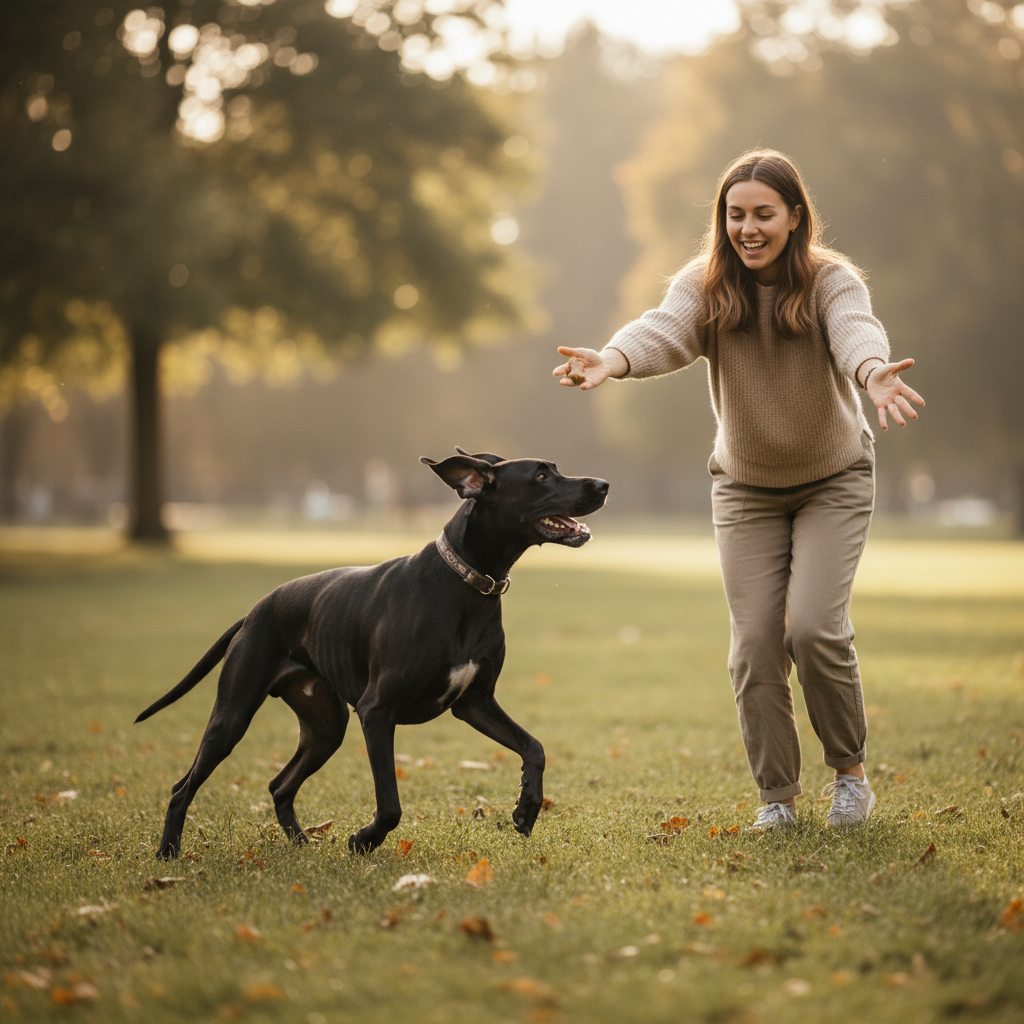
Start indoors with minimal distractions. Say your dog’s name followed by “come!” in an upbeat, excited tone. When they move toward you, back up a few steps to encourage momentum. The moment they reach you, throw a party — multiple treats, praise, petting, and maybe a favorite toy. Make coming to you the best thing that happens all day.
Practice “recall games” like the “ping-pong” game: have two family members sit 10 feet apart, taking turns calling the dog back and forth. Each person rewards generously when the dog arrives. This teaches your dog that coming when called is always rewarding, regardless of who calls.
Step 2: Add Distance and Distraction
Once your dog reliably comes indoors, move to a securely fenced area or use a long training leash. Start close (10-15 feet), gradually increasing distance as your dog succeeds. Call your dog when they’re mildly distracted — sniffing the ground, looking at a bird — but not when they’re intensely focused on something.
Never call your dog for something unpleasant (bath time, leaving the park, going in the crate). Instead, go get them or use a different cue. If you poison your recall cue by associating it with negative outcomes, your dog will start avoiding you when called.
Step 3: Practice and Proof
Practice recall in various locations: different rooms, your yard, quiet parks, then busier areas. Use a long line for safety in unfenced areas. Gradually add distractions: other dogs at a distance, squirrels, food on the ground. Always set your dog up for success — if they ignore your call, you’re too close to the distraction or haven’t built enough value yet.
Practice “surprise recalls” during normal activities — when your dog is playing, sniffing, or walking ahead on leash. Random rewards for checking in or coming when not called build a strong reinforcement history.
Training Tips
- Keep sessions short: 5–10 minutes maximum, but practice frequently throughout the day
- End on a success: Always finish with a successful recall, even if you need to start closer
- Use a special recall word: If “come” has been poisoned, use a new word like “here” or “touch”
- Reward generously: recalls should get jackpots — multiple treats or extended play
- Never punish a slow recall: Even if your dog took 30 seconds, reward them for eventually coming — punishment teaches them not to come at all
Common Mistakes to Avoid
- Calling when you can’t enforce it: Only call when you can make it happen (leash, long line, or confined space)
- Calling for negative outcomes: Never use recall to end fun or deliver bad news
- Repeating the cue: Say it once. If your dog doesn’t come, go get them or reel them in with the long line
- Ending the fun after recall: Call your dog, reward, then release them back to play often
Troubleshooting
My dog ignores me at the park: You’re asking for too much, too soon. Start with a long line and lower-value distractions. Use higher-value rewards. Practice at the park when it’s less busy. Consider that your dog may not be ready for off-leash freedom yet.
My dog comes slowly: The reward isn’t valuable enough or the fun ends after they come. Use better treats, extend play after recalls, and release your dog back to what they were doing.
My dog starts to come then runs away: This is often called the “keep away” game. Don’t chase — turn and run in the opposite direction, making happy noises. Most dogs will chase you. Reward enthusiastically when they catch up.
When to Move On
Your dog has a reliable recall when they consistently come when called in various environments with moderate distractions, and when they’re off-leash at a distance of 50+ feet. A truly reliable recall takes months or years to build — continue practicing regularly even after your dog seems to “know it.”