
What You’ll Need
- Your dog’s favorite fetch toy (ball, frisbee, or plush toy)
- High-value treats (small, soft, pea-sized pieces)
- A secure, enclosed area or long line for training
- Patience and enthusiasm
Why Teaching Fetch Matters
Fetch is more than just a fun game — it’s an excellent way to exercise your dog physically and mentally while reinforcing recall and strengthening your bond. A reliable fetch provides high-intensity exercise in a compact time frame, making it perfect for busy owners. It also teaches your dog to interact with toys appropriately and return to you voluntarily.
The American Kennel Club notes that fetch is a natural behavior for many retrievers and sporting breeds, but any dog can learn it. For high-energy dogs, fetch is an invaluable energy outlet. For dogs with behavior issues, a game of fetch before training or stressful events can help them focus and relax.
Step-by-Step: How to Teach Fetch
Step 1: Build Interest in the Toy
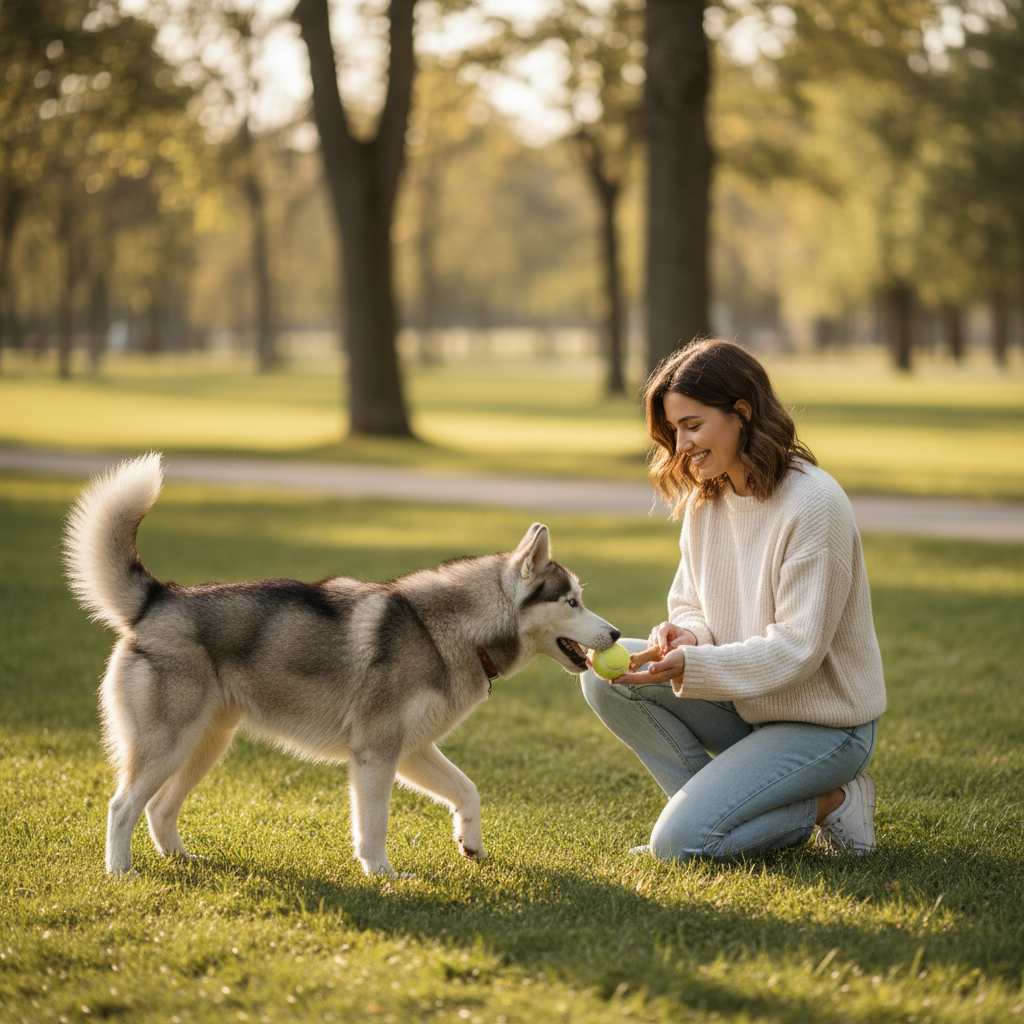
Start with a toy your dog already likes. Get them excited about it by waving it, tossing it a few inches, or playing tug. The goal is to make the toy the most interesting thing in the environment. Reward any interaction with the toy — touching it with their nose, picking it up, or chasing it.
If your dog isn’t interested in toys, try different types (balls, frisbees, squeaky toys) or rub the toy with something smelly like hot dog or cheese. Some dogs prefer food to toys — for these dogs, you can teach fetch using food in a container.
Step 2: Teach the Retrieve
Once your dog is excited about the toy, toss it a short distance (2-3 feet). When your dog goes to the toy, encourage them excitedly: “Get it! Good dog!” If they pick it up, call them to you: “Come! Bring it!” Back away slightly to encourage movement toward you. When they reach you with the toy, celebrate enthusiastically and offer a treat trade or play tug as a reward.
If your dog doesn’t return, use a second toy to entice them — show the exciting second toy and trade when they approach with the first. Never chase your dog — this turns fetch into keep-away.
Step 3: Add the Cue and Build Distance
Once your dog is reliably chasing and returning with the toy, add the verbal cue “fetch” just before you throw. Gradually increase throwing distance. Reward returns with treats, praise, or by throwing again (for many dogs, the next throw is the best reward).
If your dog drops the toy before reaching you, teach “hold” — reward them for carrying the toy a few steps, gradually increasing distance.
Training Tips
- End while they’re interested: Quit before your dog gets bored
- Two-toy method: Use a second toy to trade and keep the game flowing
- Don’t chase: If your dog won’t return, walk away or offer a trade
- Reward returns generously: Make coming back to you the best part
- Limit throws: 10-15 throws prevent exhaustion and keep enthusiasm high
Common Mistakes to Avoid
- Chasing your dog: This turns fetch into keep-away
- Throwing too far: Start close and build distance gradually
- Forcing uninterested dogs: Some dogs don’t enjoy fetch — that’s okay
- Ending on a bad note: Always finish with a successful return
Troubleshooting
My dog chases the toy but won’t pick it up: Use a different toy. Try something softer, squeakier, or scented with food.
My dog picks up the toy but won’t bring it back: Use the two-toy method. Show them a second exciting toy and trade. Never chase.
My dog brings the toy but won’t drop it: Teach “drop it” separately, or use treats to trade. Some dogs prefer tug to fetch — that’s fine too.
When to Move On
Your dog has mastered fetch when they reliably chase, pick up, and return the toy on cue, dropping it for another throw. You can then add variety — different toys, longer throws, or incorporating fetch into agility or flyball training.