
What You’ll Need
- High-value treats (small, soft, pea-sized pieces)
- A quiet training area with minimal distractions
- A comfortable, non-slip surface (avoid slippery floors)
- 5–10 minutes per session
- Patience and a positive attitude
Why Teaching Lie Down Matters
“Down” is an essential command that teaches your dog to settle and relax on cue. Unlike sit, which is a temporary position, down is more committed — a dog in a down is less likely to jump up, bolt, or engage in unwanted behaviors. It’s invaluable for public spaces, veterinary waiting rooms, outdoor dining, and when guests visit your home.
The down position also provides a foundation for extended stays and helps anxious or excited dogs calm themselves. For large or excitable breeds, down is particularly useful for managing greetings and preventing jumping. The American Kennel Club includes down in their Canine Good Citizen test, recognizing it as a fundamental skill for well-mannered dogs.
Step-by-Step: How to Teach Lie Down
Step 1: Lure from Sit
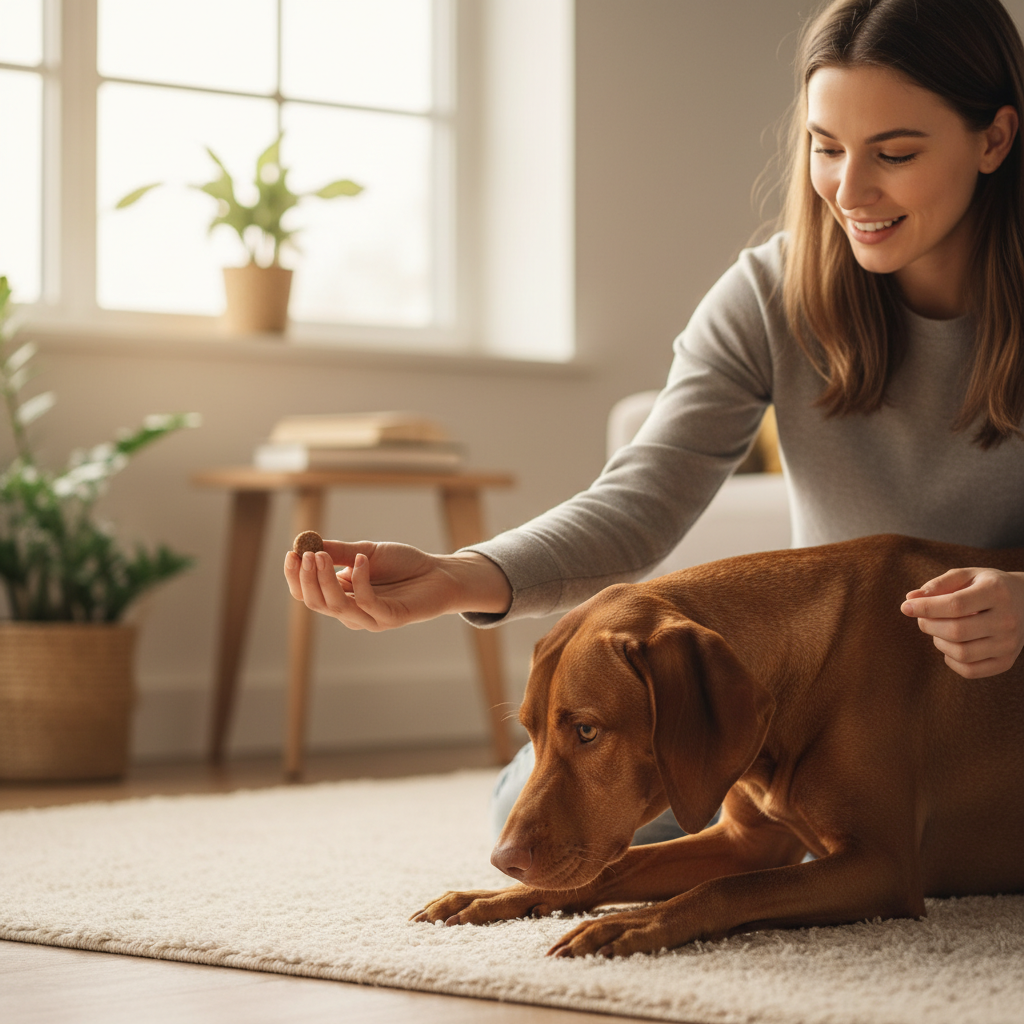
Start with your dog in a sitting position. Hold a treat at their nose, then slowly lower your hand straight down toward the floor, moving the treat between their front paws. Most dogs will follow the treat with their nose, lowering their head and eventually folding into a down position. The moment their elbows and rear touch the ground, mark with “Yes!” and give the treat.
If your dog stands up instead of lying down, try starting from a standing position instead. Some dogs do better if you lure slightly forward and down, creating a stretching motion that naturally leads to lying down.
Step 2: Add the Cue
Once your dog consistently follows the lure into a down (usually 10-15 repetitions), add the verbal cue. Say “down” clearly, then lure. Repeat this pairing until your dog begins to anticipate — you’ll notice them starting to lower their body when they hear the word. After several successful pairings, try saying “down” without the lure motion. Reward generously when they respond correctly.
Step 3: Practice and Proof
Practice down in various locations: different rooms, your yard, on walks. Work on different surfaces: carpet, grass, concrete, and tile. Practice asking for down from different positions: while you’re standing, sitting, or kneeling. Gradually add distractions like toys, food on the ground, or people walking by.
Extend the duration of the down gradually. Ask for a 5-second down, then 10 seconds, building up to 30 seconds or longer. Remember to return to your dog, reward while they’re still in position, then release them.
Training Tips
- Keep sessions short: 5–10 minutes maximum
- End on a success: Finish with a down your dog performs easily
- Use a release word: Teach your dog when the down is over with “okay” or “free”
- Capture downs: Reward your dog when they lie down naturally throughout the day
- Practice “settle”: Once down is reliable, use it to teach your dog to relax in place
Common Mistakes to Avoid
- Forcefully pushing your dog down: This creates resistance and anxiety. Luring always works better.
- Training on slippery surfaces: Dogs are reluctant to lie down where they feel unstable. Use rugs or carpet.
- Repeating the cue: Say “down” once and wait. Repeating teaches your dog to ignore the first command.
- Expecting too much duration too soon: Build duration gradually to prevent frustration.
Troubleshooting
My dog pops right back up: You’re rewarding too slowly. The treat must come while they’re still in the down position. Try rewarding multiple times in position before releasing.
My dog won’t lie down all the way: Some dogs do a “sphinx” down or hover. Reward any lowering at first, gradually requiring more. Higher-value treats often help.
My dog only lies down at home: You need to proof the behavior in new environments. Start in slightly different rooms, then the yard, then gradually more challenging locations.
When to Move On
Your dog has mastered down when they respond to the verbal cue in at least three different locations with mild distractions, and can hold the position for 30+ seconds. Down becomes the foundation for extended stays, place training, and teaching your dog to settle calmly in various situations.