
What You’ll Need
- High-value treats (small, soft, pea-sized pieces)
- A comfortable, non-slip training surface
- A quiet area with minimal distractions
- 5–10 minutes per session
- Patience and a sense of humor
Why Teaching Roll Over Matters
Roll over is a classic dog trick that impresses friends, provides mental stimulation, and builds your dog’s flexibility and confidence. While not as practical as sit or stay, it’s a fun way to bond with your dog and keep training sessions enjoyable. Many dogs find rolling onto their back naturally comfortable, making this an accessible trick for most.
The American Kennen Club includes roll over in their trick dog titles, recognizing it as a behavior that demonstrates body awareness and handler cooperation. For dogs who enjoy physical contact, roll over can lead to teaching “play dead,” a crowd-pleasing variation. Plus, the process of learning rollover strengthens your communication and builds your dog’s enthusiasm for training.
Step-by-Step: How to Teach Roll Over
Step 1: Start from Down
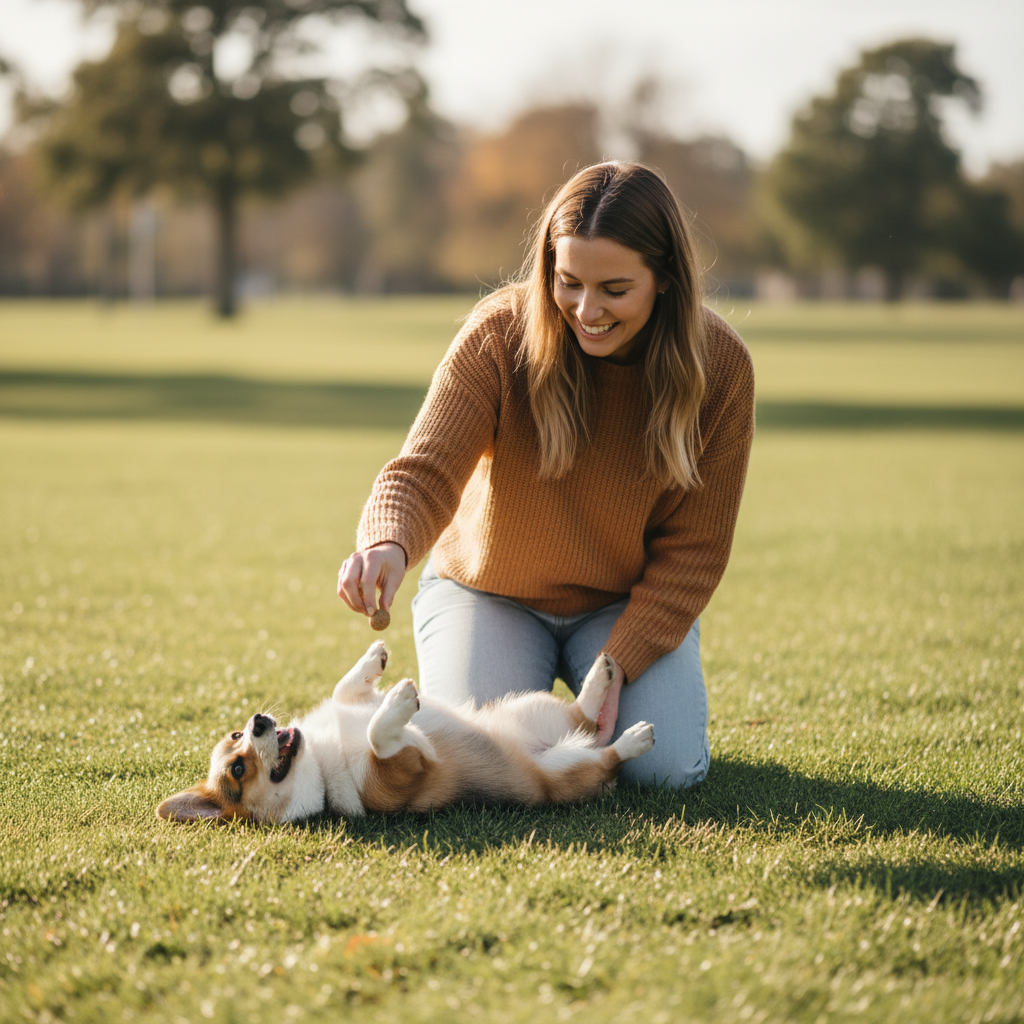
Your dog should know “down” reliably before attempting roll over. Ask for a down, then kneel beside your dog. Hold a treat at their nose and slowly lure their head toward their shoulder. Most dogs will flop onto their side to follow the treat. Mark “Yes!” and reward.
Practice this “play dead” position first — lying on the side with head down. Once your dog is comfortable on their side, you’re ready for the full roll.
Step 2: Complete the Roll
With your dog on their side, continue the treat lure over their shoulder and across their body. Most dogs will follow the treat, rolling onto their back and then the other side. Mark and reward the moment they complete the roll. Some dogs need to roll completely over to their other side; others do well with just the back exposure.
If your dog gets stuck on their back, help them by luring the rest of the way. Reward any progress — rolling halfway is still progress!
Step 3: Add the Cue and Fade the Lure
Once your dog follows the lure smoothly, add the verbal cue “roll over” just before you start the lure motion. Repeat until your dog associates the cue with the behavior. Then begin fading the lure — make the hand motion smaller and smaller until your dog rolls over with just a verbal cue and minimal hand signal.
Practice in both directions if your dog is comfortable. Some dogs have a preferred direction, which is fine.
Training Tips
- Keep sessions short: Rolling can be disorienting — 5 minutes max
- Use a soft surface: Carpet or grass is more inviting than hard floors
- Reward immediately: Timing matters — mark the completed roll
- Break it down: If your dog struggles, reward lying on side first
- Make it fun: Roll over is a party trick — keep the energy light
Common Mistakes to Avoid
- Rushing the process: Some dogs find rolling scary or uncomfortable
- Forcing the roll: Never physically push your dog over
- Training on hard surfaces: This makes rolling uncomfortable
- Getting frustrated: Some dogs take weeks to learn this trick
Troubleshooting
My dog won’t go onto their back: Some dogs find this position vulnerable. Go slowly, reward lying on their side generously, and don’t force the full roll. Some dogs may never be comfortable rolling completely over.
My dog pops back up immediately: Reward while they’re still on their back or side. Have treats ready to deliver quickly in that position.
My dog only rolls one direction: This is perfectly fine. Most dogs have a preferred direction. You can try teaching the other direction, but it’s not necessary.
When to Move On
Your dog has mastered roll over when they perform smoothly on verbal cue, rolling completely onto their back (or fully over) in one fluid motion. From here, you can teach “play dead” (staying on the side), or chain roll over with other tricks for a routine.