
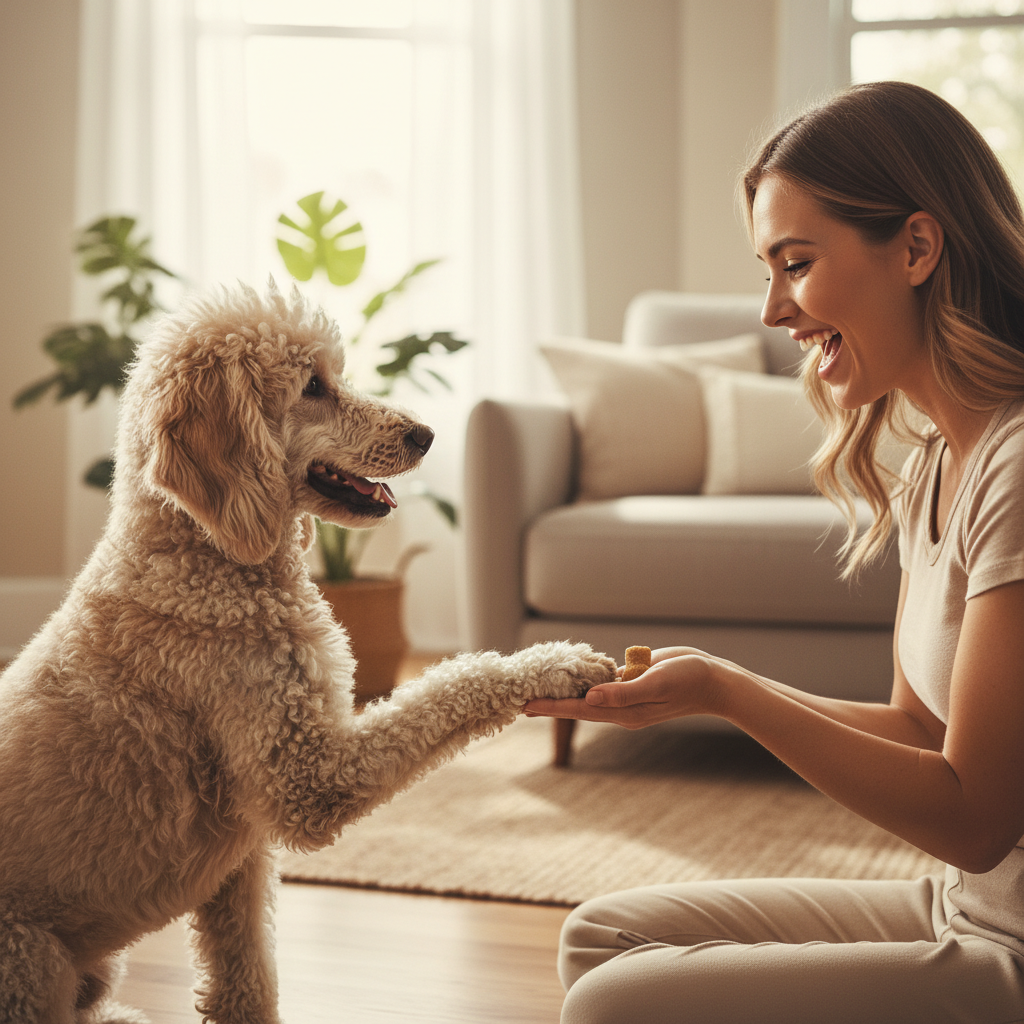
What You’ll Need
- High-value treats (small, soft, pea-sized pieces)
- A quiet training area with minimal distractions
- 5–10 minutes per session
- Patience and enthusiasm
Why Teaching Shake Matters
Shake (or “give paw”) is often one of the first tricks owners teach their dogs — and for good reason. It’s cute, impresses guests, and serves practical purposes like nail trim cooperation, vet examinations, and wiping muddy paws. Plus, it’s an easy win that builds your dog’s confidence and strengthens your training relationship.
The American Kennel Club includes shake in their list of fun, useful tricks that enhance the human-canine bond. While not essential like sit or stay, shake provides mental stimulation and gives your dog a way to interact positively with people. For shy dogs, offering a paw can be a great icebreaker with strangers.
Step-by-Step: How to Teach Shake
Step 1: Capture the Behavior
Many dogs naturally lift a paw when sitting and wanting something. Watch for this behavior throughout the day — when your dog lifts a paw, mark with “Yes!” and reward. This “capturing” method often produces shake quickly if your dog already offers the behavior.
If your dog doesn’t naturally lift their paw, hold a treat in your closed fist at their nose level. Most dogs will sniff, then lick, then paw at your hand trying to get the treat. The moment their paw touches your hand, mark and reward. Repeat until your dog consistently paws at your hand.
Step 2: Add the Cue
Once your dog reliably paws at your hand, add the verbal cue. Say “shake” (or “paw”), present your hand, and when they lift their paw, mark and reward. Repeat until your dog associates the cue with the behavior. Then try saying “shake” with your hand extended but not touching their paw — they should lift their paw to meet your hand.
Shape the behavior by rewarding only clean paw touches, not swipes or claws. Gradually require your dog to hold their paw in your hand for a moment before rewarding.
Step 3: Practice and Polish
Practice shake in various positions: while your dog is sitting, standing, or even lying down. Ask for the opposite paw by using a different cue like “other paw” or “left.” Practice with different people so your dog generalizes the behavior.
Add duration by holding the paw shake for a second, then two seconds, before rewarding. Eventually, your dog will offer a polite, sustained paw shake on cue.
Training Tips
- Keep sessions short: 5–10 minutes maximum
- Reward quickly: Timing matters — mark the exact moment the paw touches
- Use an open palm: Present your hand at your dog’s chest level, palm up
- Teach both paws: Many dogs favor one paw — teach the other for symmetry
- Make it fun: Shake is a trick — keep the energy light and positive
Common Mistakes to Avoid
- Lifting the paw yourself: Let your dog offer the behavior voluntarily
- Rewarding scratching: Only reward clean paw placements, not clawing
- Moving too fast: Ensure your dog understands before adding difficulty
- Forcing interaction: Some dogs dislike paw handling — go slowly
Troubleshooting
My dog uses their mouth instead of paw: Your hand is too high or the treat is too visible. Close your fist tighter and keep it lower. Be patient — eventually they’ll try a paw.
My dog only gives one paw: This is normal. To teach the other paw, start by touching that leg gently while saying your cue. Reward any lift. Be consistent — use “shake” for one paw and “other” or “left” for the other.
My dog won’t shake with strangers: Some dogs are paw-shy with new people. Have friends practice with high-value rewards. Never force the interaction.
When to Move On
Your dog has mastered shake when they reliably offer their paw on verbal cue, hold it briefly in your hand, and can perform for various people in different locations. From here, you can teach high-five (raising the paw higher) or wave (lifting the paw without touching).