
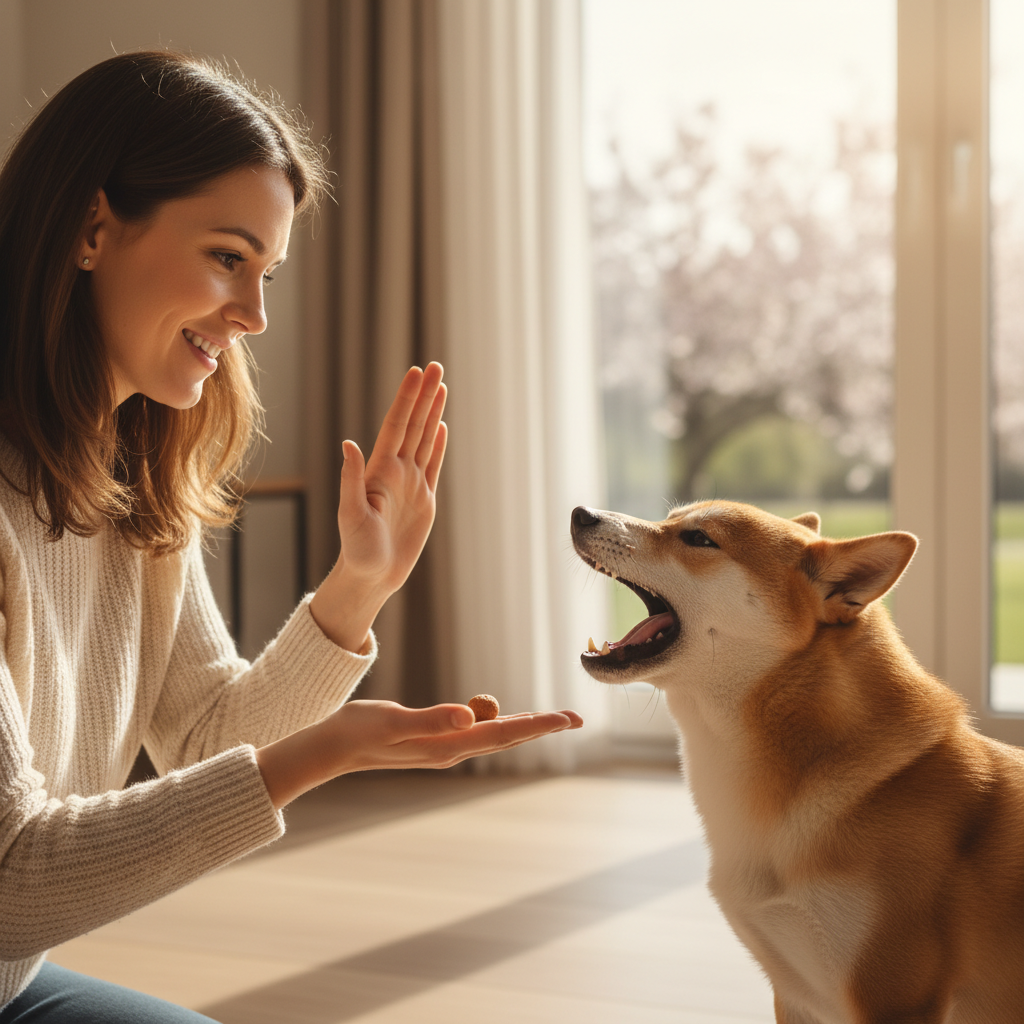
What You’ll Need
- High-value treats (small, soft, pea-sized pieces)
- A quiet training area with minimal distractions
- A treat pouch or pocket for easy access
- 5–10 minutes per session
- Patience and enthusiasm
Why Teaching Speak Matters
Teaching your dog to bark on command — “speak” — might seem counterintuitive if you’re trying to keep them quiet, but it’s actually a valuable tool for controlling vocalization. Dogs who understand “speak” can also learn “quiet,” giving you an off-switch for barking. It’s also useful for building confidence in shy dogs and providing mental stimulation through training.
The American Kennel Club includes speak in their trick dog programs, recognizing it as a behavior that demonstrates communication and control. For dogs who bark excessively, teaching speak on cue paradoxically helps reduce unwanted barking by giving them an outlet and clarifying when barking is appropriate. Plus, it’s an entertaining trick that impresses guests.
Step-by-Step: How to Teach Speak
Step 1: Find Your Trigger
Most dogs have something that reliably makes them bark: the doorbell, a knock, a favorite toy held just out of reach, or excitement before a walk. Identify your dog’s trigger and use it to elicit a bark. The moment your dog barks, mark with “Yes!” and reward.
If your dog doesn’t bark much, try getting them excited with a toy or treat held just above their reach. Some dogs need to hear another dog barking (recordings work) to get started.
Step 2: Add the Cue
Once your dog is reliably barking for the trigger, add the verbal cue “speak” just before triggering the bark. Say “speak,” trigger the bark, then mark and reward. Repeat until your dog associates the cue with the behavior. Eventually, try saying “speak” without the trigger — many dogs will bark in anticipation of the reward.
Reward only one bark at first. If your dog strings multiple barks together, wait for a pause, then reward the first bark of the next sequence. You want single, controlled barks on cue.
Step 3: Build Reliability
Practice speak in various locations and with different levels of excitement. Ask for speak before meals, before walks, or before play. Vary your rewards — sometimes treats, sometimes the activity they were anticipating (opening the door, throwing the ball).
Once speak is reliable, you can teach “quiet” by rewarding silence after a bark. This gives you complete vocal control.
Training Tips
- Keep sessions short: Barking is exciting — 5 minutes max
- Reward single barks: Don’t reinforce excessive barking
- Use natural triggers: Doorbells, knocks, or exciting toys
- Be consistent: Only reward barking after the cue
- Have an off-switch: Teach “quiet” alongside speak
Common Mistakes to Avoid
- Rewarding excessive barking: This reinforces the wrong behavior
- Using speak as the main trick: For problem barkers, focus more on quiet
- Training when neighbors are sleeping: Be considerate of timing
- Getting frustrated with quiet dogs: Some breeds rarely bark — that’s okay
Troubleshooting
My dog won’t bark: Some breeds (Basenjis, Whippets, some Retrievers) are naturally quiet. Try different triggers — excitement, play, or other dogs barking. If your dog truly doesn’t bark, focus on other tricks.
My dog won’t stop barking: You’re rewarding too many barks or getting them too excited. Wait for a pause, then reward a single bark. Teach “quiet” immediately.
My dog barks at everything now: You’ve created a monster! Go back to basics — only reward barking after the cue. Ignore demand barking completely.
When to Move On
Your dog has mastered speak when they offer a single, controlled bark on verbal cue in various situations. At this point, teach “quiet” by rewarding silence after the bark. Together, these cues give you complete control over your dog’s vocalizations.