
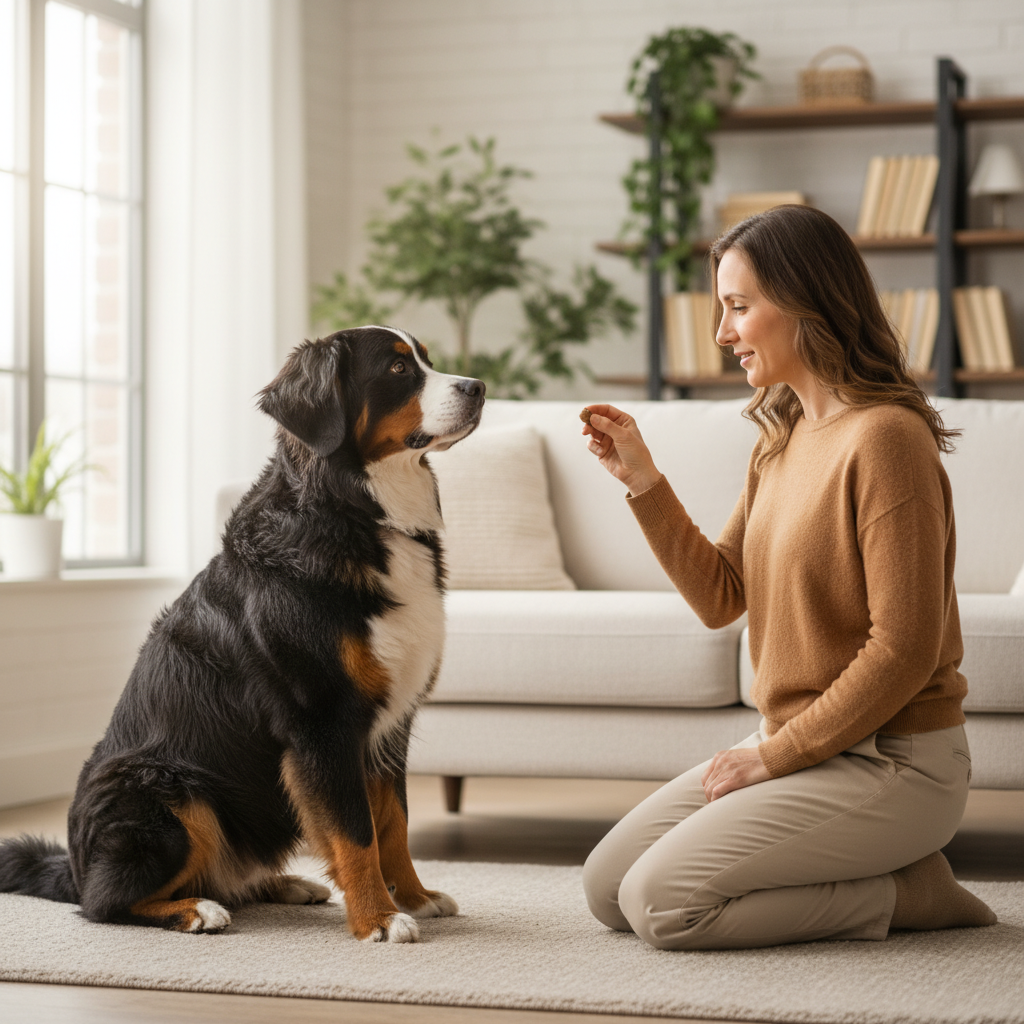
What You’ll Need
- High-value treats (small, soft, pea-sized pieces)
- A quiet training area with minimal distractions
- 5–10 minutes per session
- Patience and a positive, encouraging attitude
Why Teaching Stay Matters
The “stay” command is one of the most valuable safety behaviors you can teach your dog. Unlike sit or down, which are positions, stay is about impulse control and self-restraint. A reliable stay can prevent your dog from bolting into traffic, running toward aggressive animals, or charging through open doors. It’s also essential for veterinary visits, grooming appointments, and everyday situations like answering the door or setting down their food bowl.
Stay builds your dog’s confidence and strengthens your communication. Dogs who understand stay are calmer, more patient, and better equipped to handle exciting or stressful situations. The American Kennel Club emphasizes that stay is particularly important for high-energy breeds and dogs with prey drive. Mastering this command takes time, but the safety benefits and improved manners make it well worth the investment.
Step-by-Step: How to Teach Stay
Step 1: Teach the Hand Signal
Start with your dog in a sitting position. Hold your palm out toward them like a stop sign and say “stay” in a calm, firm voice. Wait 2-3 seconds, then return to your dog, mark the behavior with “Yes!” or a clicker, and reward them. The key is returning to your dog — don’t call them to you during early training, as this creates confusion between “stay” and “come.”
Gradually increase the duration: 5 seconds, 10 seconds, 15 seconds, then 30 seconds. If your dog breaks position, calmly return them to the original spot and try again with a shorter duration. Never scold or punish — just make it easier.
Step 2: Add Distance
Once your dog can hold a 30-second stay, begin adding distance. Ask for stay, take one step back, immediately return, and reward. Slowly increase to two steps, three steps, and eventually across the room. Move slowly — if your dog gets up when you’re 10 feet away, go back to 8 feet and build from there.
Always return to your dog to release them, especially in early training. Using a release word like “free” or “okay” signals that the stay is over. This prevents confusion and teaches your dog to wait for permission rather than making their own decisions.
Step 3: Practice and Proof
Combine duration and distance in training sessions. Ask for a stay, walk to another room briefly, return and reward. Practice with mild distractions: drop a treat nearby, have a family member walk past, or practice near an open door. Always set your dog up for success — if distractions are too high, reduce duration or distance.
Proof stay in different locations: your yard, on walks, at pet-friendly stores. The goal is a stay that works anywhere, anytime, regardless of what’s happening around your dog.
Training Tips
- Keep sessions short: 5–10 minutes maximum, 2-3 times daily. Stay is mentally challenging and can be frustrating for dogs.
- End on a success: Always finish with a stay your dog can complete successfully.
- Reward for duration, not release: Return to your dog and reward while they’re still holding position, not after they’ve gotten up.
- Use a consistent release cue: “Free,” “okay,” or “break” — pick one and stick with it.
- Practice “invisible” stays: Ask for stay, then go about normal activities (folding laundry, washing dishes) while your dog holds position.
Common Mistakes to Avoid
- Moving too fast: Adding distance or duration too quickly causes failure. Increase one variable at a time gradually.
- Calling your dog from a stay: This confuses stay with come. Always return to your dog during early training.
- Getting frustrated: Stay requires impulse control that some dogs struggle with. Patience and consistency win over force.
- Training when distracted yourself: Stay requires your attention — don’t multitask during early sessions.
Troubleshooting
My dog gets up immediately: The duration is too long. Start with 1-2 second stays and build slowly. Some dogs do better starting from a down position, which is more stable than sit.
My dog only stays when I’m watching: Practice “out of sight” stays gradually. Step behind a wall for 1 second, return and reward. Slowly increase time out of sight.
My dog breaks stay when they see distractions: Move further from distractions or reduce the difficulty. High-value rewards help — use something extra special when practicing around distractions.
When to Move On
Your dog has mastered stay when they hold position for 2-3 minutes with you 20+ feet away or briefly out of sight, in at least three different locations. They should respond to the verbal cue and hand signal without hesitation. Once reliable, stay becomes a safety tool for real-world situations and a foundation for advanced obedience.