
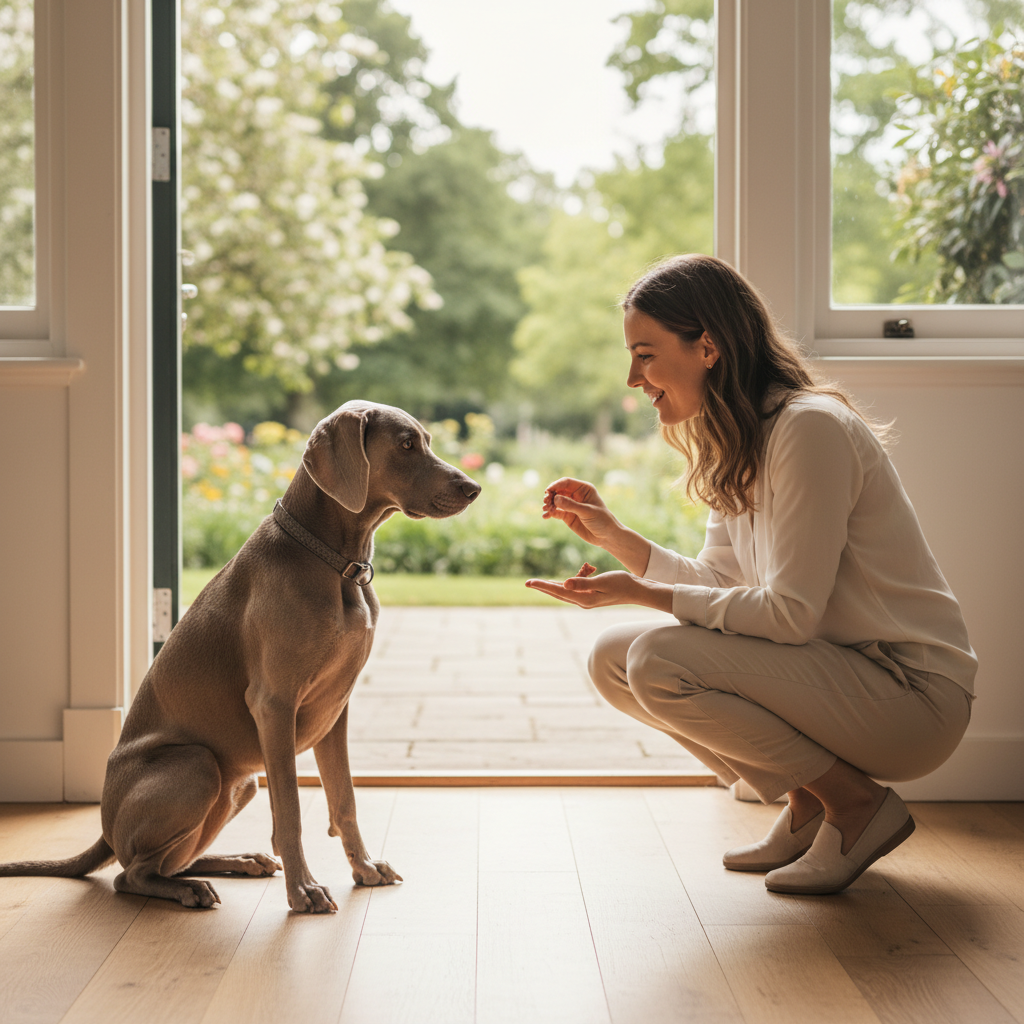
What You’ll Need
- High-value treats (small, soft, pea-sized pieces)
- A quiet training area with minimal distractions
- Doorways or food bowls for real-life practice
- 5–10 minutes per session
- Patience and a calm, consistent approach
Why Teaching Wait Matters
“Wait” is a versatile command that teaches your dog impulse control and patience in everyday situations. Unlike “stay,” which typically means “freeze in position,” wait is a temporary pause — your dog can move around but shouldn’t proceed forward until given permission. It’s incredibly practical for daily life: waiting before going through doors, waiting for food bowls, waiting to exit the car, or waiting before greeting people.
Wait is particularly valuable for safety. A dog who waits before going through doors is less likely to bolt into traffic or run off. For high-energy or impulsive dogs, learning wait provides structure and helps them develop self-control. The American Kennel Club emphasizes that impulse control exercises like wait are fundamental to raising a well-mannered, safe companion.
Step-by-Step: How to Teach Wait
Step 1: Teach the Door Wait
Start at an interior door your dog wants to go through. Put your dog on leash for control. Approach the door and say “wait” in a calm voice. Begin to open the door. If your dog moves toward it, close the door immediately. Wait for your dog to pause, then try again. When you can open the door a few inches and your dog doesn’t move forward, say “Yes!” and reward.
Gradually open the door wider while your dog waits. When you can fully open the door and your dog remains in position, give your release cue (“okay” or “free”) and let them go through. Practice until your dog automatically pauses at closed doors, waiting for permission.
Step 2: Add Food Bowl Wait
With your dog sitting, hold their food bowl. Say “wait” and begin to lower it. If they move toward the bowl, lift it back up. When they pause, continue lowering. If they stay still until the bowl touches the ground, say “Yes!” and release them to eat. This builds impulse control around food and prevents bowl rushing.
Step 3: Practice and Proof
Apply wait to other situations: waiting before getting out of the car, waiting before jumping out of the crate, waiting before chasing a thrown toy. Practice at exterior doors, gates, and in new locations. Gradually add distractions: other people nearby, other dogs at a distance, or exciting environments.
Training Tips
- Keep sessions short: 5–10 minutes maximum, integrated into daily routines
- End on a success: Always release your dog successfully after a wait
- Be consistent: Use wait at every door, every mealtime, every car exit
- Use your body: Block forward movement with your body or the door rather than verbal corrections
- Reward generously: Impulse control is hard — make waiting worthwhile with great treats
Common Mistakes to Avoid
- Inconsistent application: If you sometimes let your dog bolt through doors, they’ll never learn to wait
- Using wait and stay interchangeably: Keep them distinct — stay means “freeze,” wait means “pause before proceeding”
- Waiting too long: Keep waits short at first (3-5 seconds), gradually building duration
- Getting frustrated: Impulse control is challenging — patience and consistency work better than frustration
Troubleshooting
My dog pushes past me: Use a leash or position your body to block them. Close the door when they move. Make waiting more rewarding than rushing through.
My dog only waits when they see the treat: Phase out visible treats gradually. Sometimes reward, sometimes just release with praise. The real-life reward (going through the door, getting food) should become motivating enough.
My dog waits but then bolts: You’re waiting too long or the release cue isn’t clear. Shorten the wait and make your release cue obvious and consistent.
When to Move On
Your dog understands wait when they automatically pause at doorways, food bowls, and car exits, waiting for your release cue before proceeding. They should wait reliably with mild distractions present. Once mastered, wait becomes an automatic behavior that keeps your dog safe and well-mannered.