
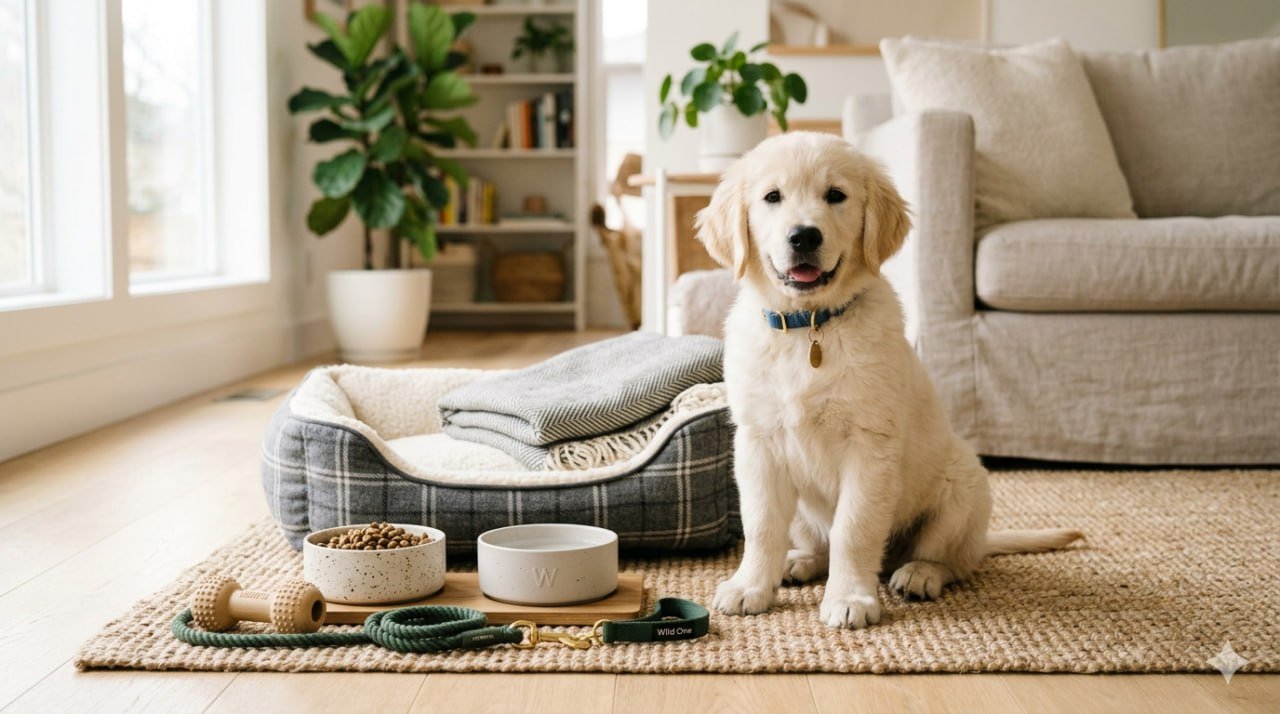
Bringing a new puppy home is one of the most exciting — and overwhelming — experiences you will have as a pet owner. This checklist covers everything you need before your puppy arrives, what to do in the first week, and how to set up routines that last a lifetime.
Before Your Puppy Comes Home
Supplies Checklist
- Crate: Size to your dog’s expected adult size, not current size. Should be large enough to stand, turn, and lie down comfortably
- Dog bed or crate mat: Washable fabric, no stuffing for heavy chewers
- Food and water bowls: Stainless steel or ceramic — avoid plastic
- Puppy food: Ask the breeder or rescue what they were feeding and start there
- Collar + ID tag: Breakaway collar for puppies, engraved with your phone number from day one
- Leash: 4–6 ft standard leash for training; retractable leashes are not recommended for puppies
- Enzymatic cleaner: You will need this. Accidents will happen
- Puppy pads (optional): Useful for apartment living, not recommended if you want outdoor training
- Toys: One chew toy, one tug toy, one puzzle toy — start simple
- Puppy-safe shampoo
- Nail clippers or grinder
- Baby gates: To limit your puppy’s access to rooms during the training period
Puppy-Proof Your Home
- Secure electrical cords and cables
- Remove toxic houseplants (pothos, philodendron, lilies, aloe)
- Lock away cleaning products, medications, and small objects
- Block off stairs if your puppy is too small or young to navigate safely
- Set up a designated “puppy zone” — a crate or pen where your dog sleeps and stays when unsupervised
The First 24 Hours
Your puppy is processing a lot. New smells, new sounds, no familiar siblings or mother. Keep the first day calm.
- Let the puppy explore at their own pace — do not overwhelm with visitors or noise
- Show them their crate, water bowl, and outdoor potty spot immediately
- Begin the potty routine from hour one (see below)
- Feed the same food they were on — switch later, gradually
- Expect whining at night — a warm water bottle wrapped in a towel near the crate helps
Potty Training: The Routine That Works
Puppies need to go outside:
- First thing in the morning
- After every meal (within 15 minutes)
- After naps
- After play sessions
- Before bed
- Every 2 hours in between (a 2-month-old puppy can hold it for about 2 hours)
Always take them to the same spot. Use a simple cue word (“go potty,” “outside”). Reward immediately when they go in the right place. Never punish accidents — just clean them up with enzymatic cleaner.
First Vet Visit: What to Expect
Book your first vet visit within the first week. Bring any health records from the breeder or rescue.
Your vet will:
- Do a full physical examination
- Review vaccination history and schedule next shots
- Discuss deworming and parasite prevention (flea, tick, heartworm)
- Recommend when to spay or neuter
This is also the time to ask about food, growth expectations, and any breed-specific health concerns.
Vaccination Schedule (First Year)
- 6–8 weeks: Distemper, parvovirus (often done by breeder)
- 10–12 weeks: DHPP (distemper, hepatitis, parvovirus, parainfluenza)
- 16–18 weeks: DHPP booster + rabies
- 12–16 months: DHPP booster + rabies booster
Basic Training: Start Week One
The earlier you start, the easier it is. Puppies are learning constantly — what you do not teach intentionally, they learn accidentally.
Priority Commands (in order)
- Name recognition — say their name, treat when they look at you
- Sit — easiest first command, foundation for everything else
- Come — the most important safety command
- Stay — builds impulse control
- Leave it — essential for preventing dangerous item ingestion
Keep sessions short: 3–5 minutes, 3–5 times per day. Always end on a success.
The First 30 Days: Week-by-Week
Week 1
Focus on settling in. Establish the potty routine and crate comfort. No visitors yet.
Week 2
Begin name recognition and sit training. Start leash introduction indoors.
Week 3
Add short outdoor walks if vaccinations allow. Work on come and leave it.
Week 4
Begin socialization — controlled exposure to different people, surfaces, and sounds. Puppy classes are excellent here.
Common Mistakes New Puppy Owners Make
- Letting too much freedom too soon: Unsupervised puppies will chew, soil, and get into everything. Limit access until they are reliably trained
- Skipping crate training: The crate is a tool for safety and housetraining — not punishment. A crate-trained dog is a calmer, safer dog
- Punishing accidents: Dogs do not connect punishment to past behavior. You only create fear
- Inconsistent rules: If jumping is not allowed, it is not allowed from anyone, ever
You Are Ready
The first month is the hardest. Sleep deprivation, accidents, and chewed shoes are part of the deal. But the habits you build now shape who your dog becomes for the next 10–15 years. Start consistent, stay patient, and enjoy it.
PetEditorial may earn a commission from qualifying purchases at no extra cost to you.
Explore More PetEditorial Guides
Build your dog-care plan with these hubs:
Related reading:
- Best Dog Toys in 2026: Tested Picks for Every Play Style
- Dog Vaccination Schedule: What Every Owner Needs to Know
- Best Dry Dog Food in 2026: Vet-Recommended Picks for Every Dog
[pe_key_takeaways points=”Set routines in week 1 for sleep and potty|Socialize safely with controlled exposure|Prioritize vet, vaccines, and basic training early”]
FAQs
How often should I update this advice?
Re-check recommendations every 6 to 12 months or whenever your dog's age, health, or routine changes.
When should I call a vet immediately?
If your dog has severe symptoms like repeated vomiting, breathing trouble, pain, or unusual lethargy, call a licensed vet right away.
Can this replace professional advice?
No. This content is educational and should complement, not replace, veterinary guidance.