
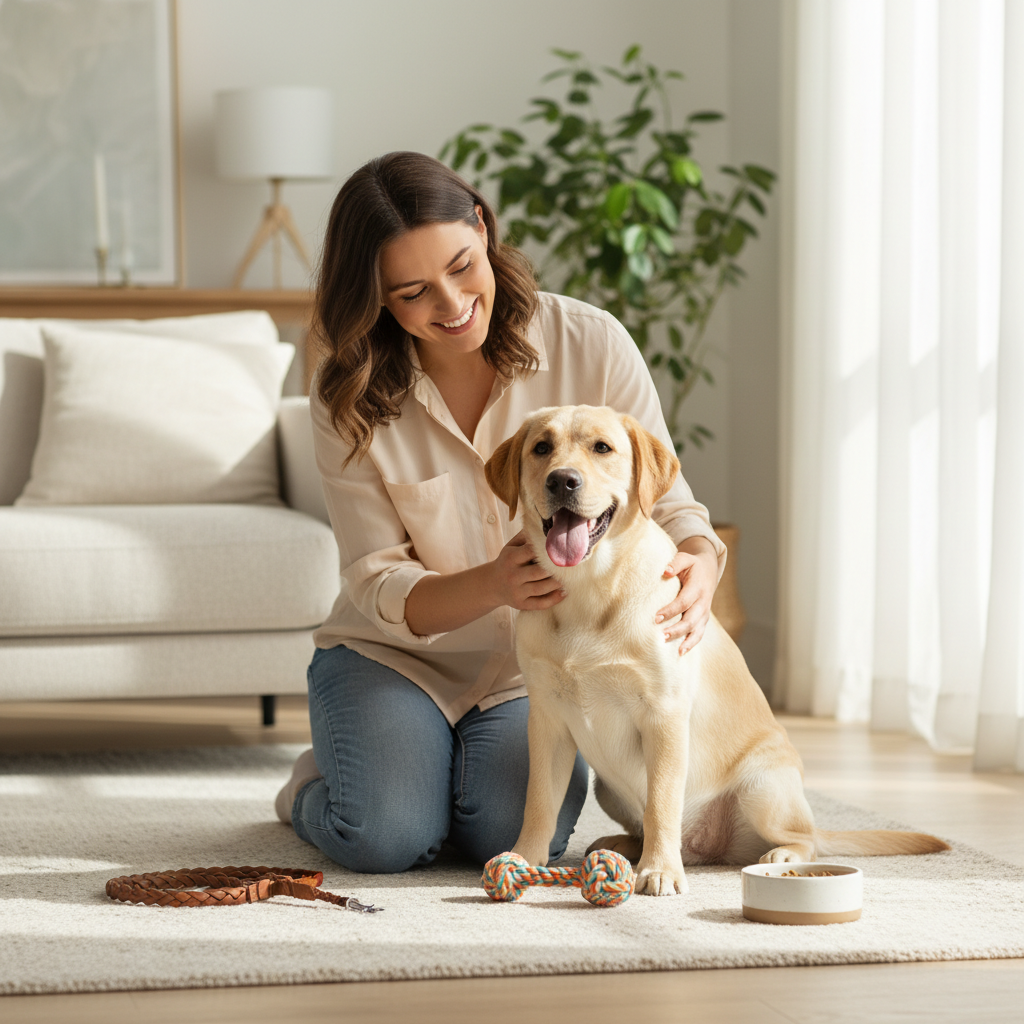
Getting a dog for the first time is one of the most exciting — and overwhelming — things you’ll ever do. Between choosing the right food, setting up your home, finding a vet, and surviving those first sleepless nights, there’s a lot to navigate. This guide covers everything a first-time dog owner needs to know, organized in the order you’ll actually need it.
We’ve drawn on veterinary expertise and real owner experience to cut through the noise and give you a clear, practical roadmap. Whether you’re bringing home a puppy or an adult rescue, this is your complete starting point.
Before Your Dog Comes Home: Setting Up for Success
Puppy-Proofing and Dog-Proofing Your Space
Dogs — especially puppies — are endlessly curious and will chew, swallow, or crash into anything within reach. Before your dog arrives:
- Secure loose wires and cables — cable management solutions or cord covers are essential
- Store toxic household products — cleaning products, medications, and certain plants should be in locked cabinets or out of reach
- Remove houseplants that are toxic to dogs — common culprits include lilies, pothos, sago palm, and azaleas
- Latch lower cabinet doors — dogs are surprisingly good at figuring out handles
- Block off-limit areas — baby gates work well for stairs, kitchens, or rooms you want dog-free
- Check the yard — look for gaps in fencing, toxic plants, and hazardous items
Essential Gear: What You Actually Need
The pet industry will try to sell you everything. Here’s what actually matters in the first month:
| Item | Priority | Notes |
|---|---|---|
| Food and water bowls | 🔴 Essential | Stainless steel or ceramic; avoid plastic (can harbor bacteria) |
| High-quality dog food | 🔴 Essential | Match to age (puppy/adult/senior) and size |
| Collar with ID tag | 🔴 Essential | Have tags made before pickup day |
| Leash (6-foot standard) | 🔴 Essential | Nylon or leather; avoid retractable for training |
| Crate or crate bed | 🔴 Essential | Crates aid in housetraining and provide a safe den |
| Dog bed | 🔴 Essential | Choose washable covers; orthopedic for larger breeds |
| Poop bags | 🔴 Essential | Buy in bulk — you’ll use more than you think |
| Grooming brush | 🟡 Important | Type depends on coat length and type |
| Nail clippers or grinder | 🟡 Important | Start nail handling early to build tolerance |
| Dog toys (2-3 types) | 🟡 Important | Chew toy, interactive toy, tug toy |
| Training treats | 🟡 Important | Small, soft, high-value |
| Puppy gates/exercise pen | 🟡 Helpful | Essential for puppies; useful for adults in new homes |
For a complete room-by-room checklist with specific product recommendations, see our new puppy checklist for the first 30 days.
The First Week: What to Expect
The “3-3-3 Rule”
Whether you’re bringing home a puppy or an adult dog, many trainers and rescues use the 3-3-3 rule as a guide:
- First 3 days: Overwhelmed, may not eat, hide, or be very quiet. Or the opposite — overly excited and into everything. This is normal.
- First 3 weeks: Starting to learn the routine, showing more personality, testing boundaries
- First 3 months: Feeling fully at home, personality fully emerging, bonding solidifying
Sleep Disruption Is Normal
Puppies, especially, will wake up multiple times a night to use the bathroom. Set your alarm for every 2-3 hours at first. Adult dogs may also take a few days to settle into your household’s sleep schedule. Plan for this and be patient.
Separation Anxiety Can Start Immediately
Avoid being home 24/7 from day one. Dogs that never learn to be alone develop severe separation anxiety. Practice leaving for short periods even in the first week — 10 minutes, then 20, then an hour. Crate training helps enormously here.
Feeding Basics for New Dog Owners
Choosing the Right Food
Dog food quality varies enormously. Look for:
- AAFCO nutritional adequacy statement
- Named protein source as the first ingredient (chicken, beef, salmon — not “poultry meal” as the first item)
- Life stage appropriate formulation (puppy, adult, all life stages)
- No artificial preservatives or excessive fillers
Our 2026 guide to the best dry dog food compares the top options across price ranges and dietary needs.
How Much to Feed
Overfeeding is one of the most common mistakes new dog owners make. A general rule: follow the feeding guide on your dog food bag, then adjust based on body condition. You should be able to feel (but not easily see) your dog’s ribs.
For a detailed breakdown by weight and activity level, use our dog feeding guide.
Feeding Schedule
| Age | Meals Per Day | Notes |
|---|---|---|
| 8-12 weeks | 4 meals/day | Small stomach, needs frequent feeding |
| 3-6 months | 3 meals/day | Transition toward adult schedule |
| 6 months – 1 year | 2 meals/day | Morning and evening |
| Adult (1+ year) | 2 meals/day | Consistency is key |
| Senior (7+ year) | 2 meals/day | May need adjusted portions and senior formula |
What Not to Feed Your Dog
Many human foods are toxic to dogs. The biggest dangers: grapes/raisins (kidney failure), onions and garlic (red blood cell damage), chocolate (neurological effects), and xylitol (found in many sugar-free foods). For a complete guide, see our dog food safety guide covering 70+ foods.
Vet Visits and Preventive Healthcare
The First Vet Visit
Schedule your first vet appointment within 48-72 hours of bringing your dog home. At this visit:
- Get a general health assessment
- Confirm or establish a vaccination schedule
- Discuss parasite prevention (fleas, ticks, heartworm)
- Talk about spay/neuter timing if applicable
- Ask about microchipping if not already done
Vaccination Schedule
Vaccines protect your dog from serious, preventable diseases. The core vaccines include:
- DHPP (Distemper, Hepatitis, Parvovirus, Parainfluenza) — started at 6-8 weeks, boosted every 3-4 weeks until 16 weeks
- Rabies — typically at 12-16 weeks, then every 1-3 years depending on local law
- Bordetella (kennel cough) — recommended if your dog socializes with other dogs
For a complete schedule by age, read our dog vaccination schedule guide.
Pet Insurance: Should You Get It?
Veterinary care can be expensive — a single emergency can cost thousands of dollars. Pet insurance is worth considering, especially for puppies (premiums are lower and pre-existing conditions won’t be excluded). See our comparison of the best pet insurance plans for 2026 before choosing.
Training Fundamentals
Start on Day One
Training isn’t something you start “when the dog is older.” Every interaction is a training opportunity. Begin with these basics from day one:
- Name recognition — say their name, reward when they look at you
- Sit — the foundation of everything
- Come (recall) — the most important command for safety
- Leave it — essential for keeping your dog safe around hazards
- Crate acceptance — build positive associations immediately
Positive Reinforcement Always
Modern veterinary and behavioral science is clear: positive reinforcement (rewarding good behavior) is more effective and less harmful than punishment-based methods. Use small, tasty treats and lots of praise. Timing matters — reward within 1-2 seconds of the desired behavior.
House Training
Consistency is everything. Take your dog/puppy out:
- First thing in the morning
- After every meal
- After naps
- After play sessions
- Every 2 hours for puppies
- Before bed
When accidents happen (they will), clean thoroughly with an enzymatic cleaner to eliminate the scent. Never punish after the fact — dogs don’t connect delayed corrections with past behavior.
Professional Training Classes
Group puppy classes serve two purposes: training and socialization. Even if you plan to train at home, a 6-week group class in the first few months is invaluable. Look for trainers who use force-free or positive reinforcement methods.
Socialization: Why It Matters More Than Anything
The socialization window for dogs is roughly 3-14 weeks of age. During this period, positive exposure to different people, animals, environments, sounds, and surfaces shapes your dog’s personality for life. Lack of socialization is the #1 cause of fear and aggression in adult dogs.
Safe Socialization Before Full Vaccination
You don’t have to wait until vaccines are complete to socialize. Options while your puppy is still getting boosters:
- Carry your puppy to expose them to sights, sounds, and people without putting them on the ground in high-risk areas
- Invite vaccinated, healthy adult dogs to your home
- Puppy classes that verify vaccination status
- Socialization in low-traffic, clean areas (not dog parks)
Exercise Needs by Breed Type
| Breed Type | Daily Exercise Need | Examples |
|---|---|---|
| Working/Herding breeds | 90+ minutes | Border Collie, German Shepherd, Husky |
| Sporting breeds | 60-90 minutes | Labrador, Golden Retriever, Vizsla |
| Terriers | 45-60 minutes | Jack Russell, Scottie, Bull Terrier |
| Hound breeds | 45-60 minutes | Beagle, Basset Hound, Greyhound |
| Toy breeds | 20-30 minutes | Chihuahua, Maltese, Pomeranian |
| Brachycephalic breeds | 20-30 minutes (careful in heat) | Bulldog, Pug, French Bulldog |
Mental stimulation matters too — interactive toys and puzzle feeders can tire out a dog as effectively as physical exercise. Check out our picks for the best dog toys for every play style.
Common Mistakes First-Time Dog Owners Make
1. Inconsistency in Rules
If the dog isn’t allowed on the couch, everyone in the household must enforce that — every time. Inconsistency creates confusion and slows training dramatically.
2. Overfeeding
Treats are training tools, not food. Keep them tiny (thumbnail-sized) and account for them in your dog’s daily calorie budget. Obesity is the number one preventable health problem in dogs.
3. Skipping Socialization
Waiting until the dog is “settled” to introduce new experiences often means missing the critical socialization window. Start immediately.
4. Neglecting Dental Care
Dental disease affects over 80% of dogs by age 3. Brush teeth 2-3 times per week with dog-specific toothpaste, offer dental chews, and get professional cleanings as recommended by your vet.
5. Avoiding the Vet When Things Seem “Minor”
Symptoms like persistent itching, changes in appetite or water intake, or unusual lumps should always be evaluated. Early detection saves money and lives. Know the signs — our dog health symptoms guide covers what to watch for.
6. Not Preparing for Costs
The first year of dog ownership is expensive. Budget for: food, vaccines, spay/neuter, training classes, grooming, and an emergency fund of $1,000-2,000 minimum. Pet insurance can help manage unexpected costs.
Grooming Basics
How much grooming your dog needs depends on their coat type, but all dogs need:
- Regular brushing — at minimum weekly; double-coated and long-haired breeds need daily brushing
- Nail trims — every 3-4 weeks; overgrown nails cause discomfort and gait problems
- Ear cleaning — check weekly, clean as needed; floppy-eared dogs are especially prone to infections
- Baths — every 4-8 weeks for most breeds; overbathing strips natural oils
- Teeth brushing — 2-3 times per week
Signs Your New Dog Is Happy and Healthy
| Healthy Signs | Warning Signs |
|---|---|
| Clear, bright eyes | Cloudy, red, or weeping eyes |
| Good appetite | Refusing food for more than 24 hours |
| Regular bowel movements (firm, brown) | Diarrhea lasting more than 24 hours, blood in stool |
| Playful and engaged | Unusual lethargy or withdrawal |
| Clean, unmatted coat | Excessive shedding, bald patches, or skin irritation |
| Moist pink gums | Pale, white, yellow, or bluish gums |
| Drinking normal amounts | Dramatically increased or decreased thirst |
Building Your Support System
You don’t have to figure this out alone. Build a team:
- A vet you trust — establish a relationship before emergencies happen
- A trainer — even for just the first few months
- A groomer — if your dog has a coat that requires professional maintenance
- A dog walker or boarding option — for when life gets busy
- A dog community — local Facebook groups, breed clubs, and puppy classes connect you with experienced owners
Final Thoughts for First-Time Dog Owners
The first few months of dog ownership are intense — but they’re also some of the most rewarding. The investment you make in training, socialization, and veterinary care in the first year pays dividends for your dog’s entire life.
Be patient with yourself and with your dog. There will be accidents, frustrations, and moments of doubt. That’s completely normal. The bond you’re building is worth every chewed shoe.
Need more help getting started? Explore our full guide library — from the new puppy checklist to choosing the right food. We’ve got you covered every step of the way.
Understanding Puppy Developmental Stages
Dogs go through distinct developmental stages, and understanding what is happening biologically at each stage helps you respond appropriately rather than fighting your dog’s natural drives:
| Stage | Age | What to Focus On |
|---|---|---|
| Neonatal | 0-2 weeks | Handled by breeder; puppies are blind and deaf |
| Transitional | 2-3 weeks | Eyes and ears open; beginning to explore |
| Socialization | 3-14 weeks | Critical window for exposure to people, animals, environments |
| Juvenile | 3-6 months | Training takes hold; teething; testing limits |
| Adolescence | 6-18 months | Second fear period; selective “forgetting” of training; high energy |
| Young adult | 1-3 years | Consolidation of training; peak energy; continued mental development |
| Adult | 3-7 years | Settled behavior; maintain training and health baselines |
The Adolescence Phase: Surviving It
Adolescence (roughly 6-18 months depending on breed) is when most dogs are surrendered to shelters — owners mistake normal developmental behavior for a “bad dog.” What you’ll experience:
- Selective recall: Your perfectly-trained puppy suddenly “forgets” how to come when called. This is normal — maintain training with higher-value rewards during this phase.
- Increased excitability and impulse control challenges: They know the rules; they just struggle to follow them when excited. Short, frequent training sessions help.
- Second fear period: Around 6-14 months, many dogs go through a second period of increased fearfulness. Avoid forcing them into scary situations; build confidence with positive experiences.
- Increased territorial behavior: Normal, but needs appropriate management and training.
Stay consistent. The behaviors that feel maddening at 9 months often resolve completely by 18-24 months with patient, consistent handling.
Financial Planning for Dog Ownership
One of the most common surprises for new dog owners is the cost. Being financially prepared prevents heartbreaking situations where owners cannot afford necessary veterinary care. Here is a realistic budget breakdown for the first year:
| Expense Category | First Year Estimate | Ongoing Annual |
|---|---|---|
| Food (quality dry food, adult medium dog) | $400-800 | $400-800 |
| Initial setup (bed, crate, bowls, toys, collar) | $200-500 | $50-150 (replacements) |
| Veterinary (vaccines, wellness, spay/neuter) | $500-1,500 | $200-400 |
| Training classes | $150-500 | Optional ongoing |
| Grooming (professional, if needed) | $200-600 | $200-600 |
| Pet insurance | $300-600 | $300-600 |
| Emergency fund (recommended) | $1,000-2,000 reserve | Replenish if used |
| Total Year 1 (estimate) | $1,750-4,400 | $1,150-2,550 |
These are estimates for a medium-sized dog in a typical household. Large breed dogs and dogs with health conditions cost significantly more. Giant breeds and brachycephalic dogs often run 30-50% higher on all categories.
Consider pet insurance as part of your financial planning — it converts unpredictable large expenses into manageable monthly premiums.