
A leafy home feels calmer and more alive — but a surprising number of the most popular houseplants are toxic to cats and dogs. The good news: plenty of beautiful, low-maintenance plants are completely pet-safe, and for the toxic ones you already own, a few simple tools keep curious pets away.
Every plant in our “safe” list below appears on the ASPCA’s non-toxic plant list. Here are the ones worth buying — plus how to pet-proof the rest.
Beautiful pet-safe plants worth buying
1. Spider Plant — the easy trailing classic
Spider plants are the gateway houseplant for a reason: nearly impossible to kill, happy in bright or medium light, and they send out charming little “pups” you can replant for free. They trail beautifully from a shelf or hanger — the same look people love about pothos, but 100% non-toxic to cats and dogs.
Shop Spider Plants on Amazon → Beginner-friendly
2. Parlor Palm — the pet-safe palm
Want the tropical, leafy-palm look without the danger? Unlike the sago palm — one of the most poisonous plants for dogs — the parlor palm is completely non-toxic. It stays compact, tolerates low light, and asks for very little fuss.
Shop Parlor Palms on Amazon → Low-light
3. Calathea — bold, colorful foliage
If you want a statement plant, calatheas deliver painterly striped leaves in greens, pinks, and purples — and every calathea variety is pet-safe. They love humidity and indirect light, which makes them excellent bathroom or kitchen plants.
Shop Calatheas on Amazon → Statement plant
More pet-safe options on the ASPCA list, if you want to keep shopping: Boston fern, prayer plant, African violet, ponytail palm, and phalaenopsis orchid.
Already have toxic plants? Keep pets away
Not ready to part with your monstera or peace lily? You don’t always have to. Two easy fixes sharply lower the risk:
Spray leaves with a pet-safe deterrent
A botanical bitter/repellent spray makes leaves taste unpleasant, so pets learn to leave them alone. Choose one labeled safe to apply directly to plants.
Shop Pet Deterrent Spray → Plant-safe
Hang plants up and out of reach
Elevating trailing plants in a hanger is the simplest way to put them beyond a jumping cat or a curious dog. This one is built specifically to resist chewing and batting.
Shop Hanging Planters → Space-saving
Give your pet their own plant to nibble
Cats in particular love to chew greenery. A pot of fresh cat grass gives them a safe target — and often reduces their interest in your other plants. It’s cheap, fast-growing, and doubles as a hairball aid.
Shop Cat Grass Kits → Cat favorite
Safe vs. toxic houseplants at a glance
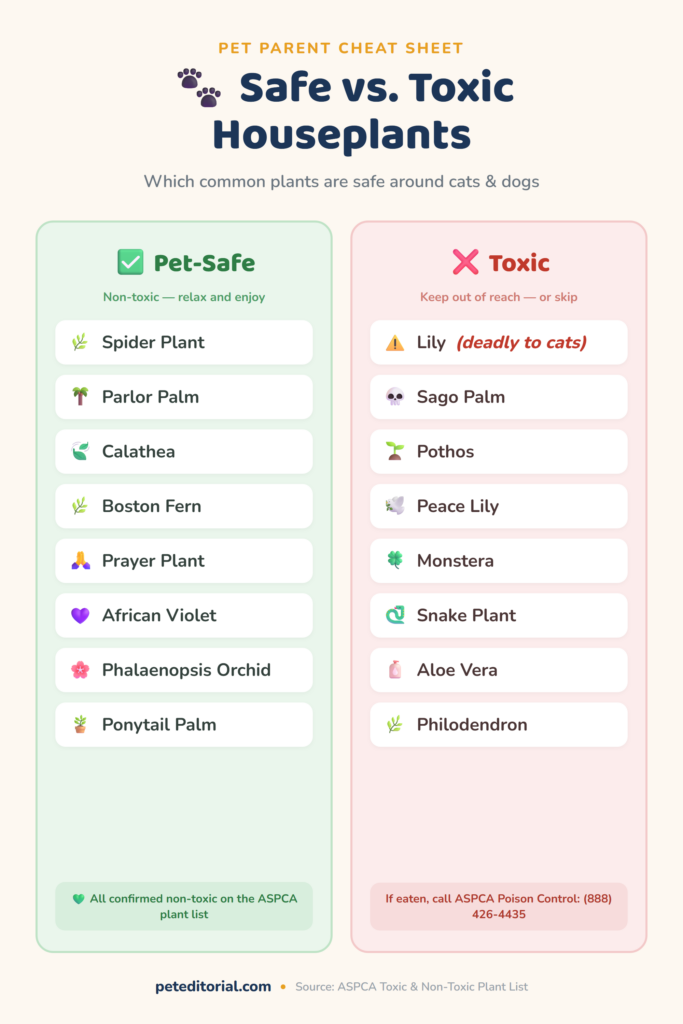
Save this chart — pin it or screenshot it for your next plant-shopping trip.
Common toxic houseplants to avoid or elevate: pothos, monstera, snake plant, peace lily, aloe vera, ZZ plant, sago palm, and true lilies (especially dangerous to cats). Browse our complete plant-safety library for the full breakdown on any plant.
If your pet eats a toxic plant
Don’t wait for symptoms. Call your veterinarian or the ASPCA Animal Poison Control Center at (888) 426-4435 right away — with lilies and sago palm especially, fast treatment saves lives. If you can, note the plant’s name and roughly how much was eaten.