
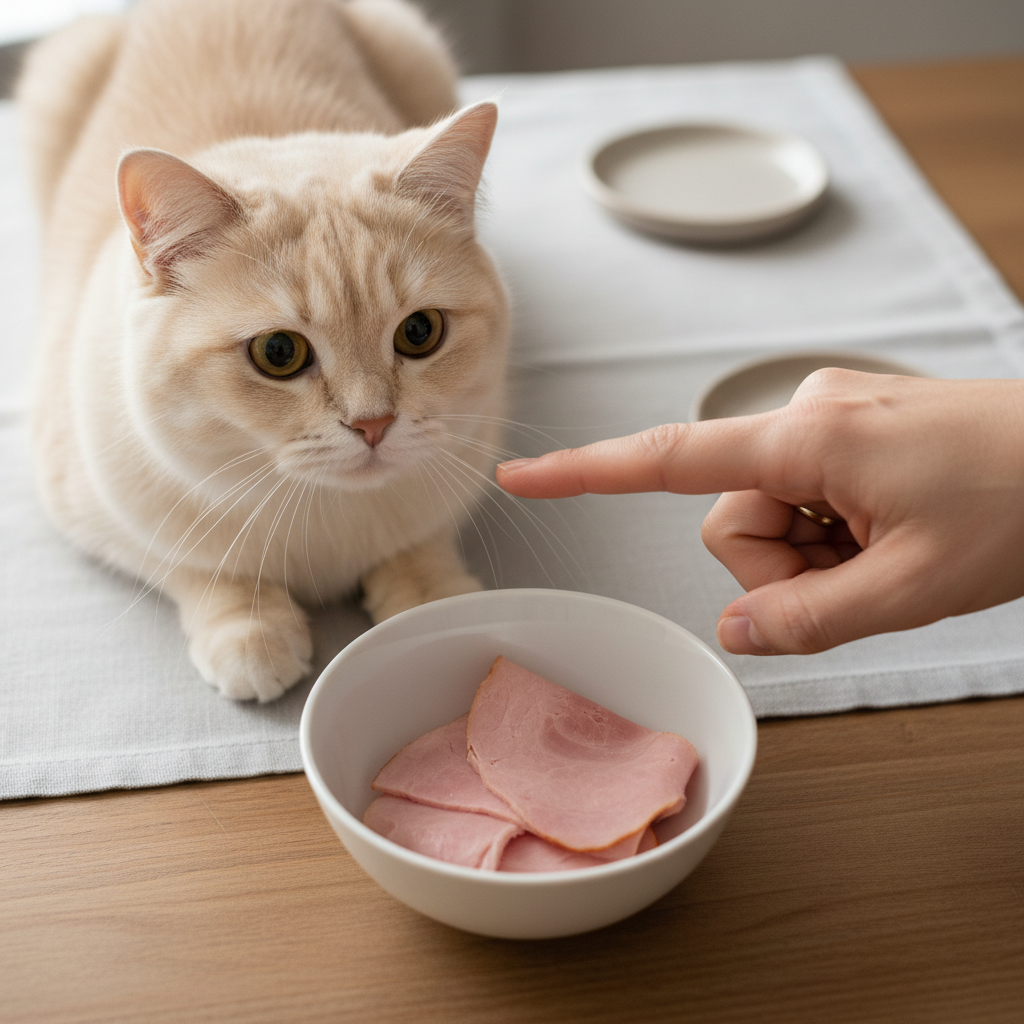
Key Takeaways
- Ham is not recommended for cats
- Extremely high sodium content can cause poisoning
- Nitrates and preservatives are harmful
- High fat content risks pancreatitis
- A tiny piece accidentally eaten is unlikely to harm, but don’t make it a habit
Is Ham Safe for Cats?
Ham is not safe for cats and should be avoided. While a small accidental piece won’t typically cause immediate poisoning, ham contains levels of salt, preservatives, and fat that make it inappropriate and potentially dangerous for feline consumption.
Cats are obligate carnivores but have specific nutritional requirements and sensitivities. Their bodies are not designed to handle the high sodium levels found in cured meats like ham. The preservatives used in ham (nitrates and nitrites) have been linked to health concerns and provide no benefit to cats.
The American Society for the Prevention of Cruelty to Animals (ASPCA) warns that excessive salt can cause sodium ion poisoning in pets, with symptoms including vomiting, diarrhea, tremors, and seizures. A single slice of ham can contain over 1000mg of sodium — far more than a cat should consume in a day.
Nutritional Value
While ham does contain protein, the risks far outweigh any nutritional benefits:
- Protein: Present but available from safer sources
- Sodium: Dangerously high levels for cats
- Fat: High levels can trigger pancreatitis
- Preservatives: Nitrates offer no benefit and potential harm
Risks and What to Avoid
Sodium ion poisoning: Ham contains 1000+ mg of sodium per serving — far more than cats should consume. Symptoms include vomiting, diarrhea, excessive thirst, tremors, seizures, and even death.
Pancreatitis: The high fat content in ham can trigger this painful, potentially life-threatening inflammation of the pancreas.
Kidney strain: Cats with kidney disease (common in older cats) cannot handle excess sodium.
Obesity: Regular ham consumption contributes to weight gain.
Processed meat concerns: The World Health Organization classifies processed meats as carcinogenic.
How Much Is Dangerous?
There is no established safe amount of ham for cats. Even small pieces contribute unnecessary sodium and fat. If your cat accidentally eats a small piece of ham, monitor them closely for signs of distress, but don’t intentionally feed ham as a treat.
Cats who consume large amounts of ham or who eat ham regularly are at risk for serious health complications including sodium toxicity, pancreatitis, and kidney damage.
When to Call Your Vet
Contact your veterinarian immediately if your cat eats a large amount of ham or shows symptoms of sodium toxicity:
- Vomiting or diarrhea
- Excessive thirst and urination
- Lethargy or depression
- Tremors or seizures
- Loss of coordination
ASPCA Poison Control: 888-426-4435
Safe Alternatives
Instead of ham, consider these safe protein treats for your cat:
- Plain, cooked chicken breast
- Small pieces of cooked turkey
- Commercial cat treats formulated for feline nutrition
- Small amounts of cooked fish (sardines, salmon)