
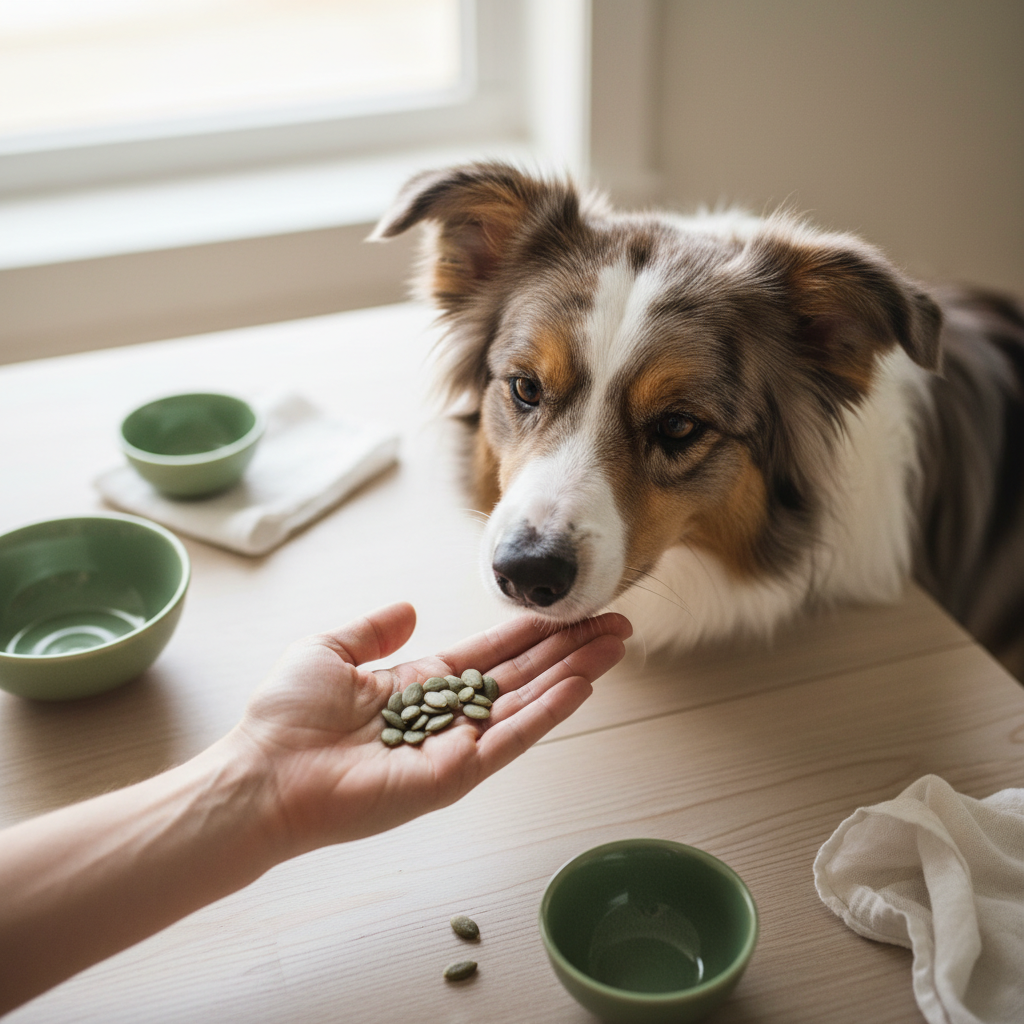
Key Takeaways
- Plain, unsalted pumpkin seeds (pepitas) are safe for dogs
- Good source of protein, magnesium, zinc, and antioxidants
- May support urinary health and digestive function
- Can help eliminate certain intestinal parasites (traditional use)
- Feed unsalted, unseasoned seeds only; shells optional but ground is safer
Is Pumpkin Seeds Safe for Dogs?
Plain, unsalted pumpkin seeds (also called pepitas) are safe and healthy for dogs when fed in moderation. These flat, green seeds are nutritional powerhouses packed with protein, healthy fats, minerals, and antioxidants. They’ve been used traditionally in both human and veterinary medicine for various health benefits.
Veterinary sources note that pumpkin seeds contain cucurbitacin, a compound that has been traditionally used to help eliminate intestinal parasites, though modern veterinary dewormers are more effective and reliable.
As with all seeds and nuts, pumpkin seeds are calorie-dense and should be fed sparingly as a treat, not a dietary staple.
Nutritional Value
Pumpkin seeds provide excellent nutrition:
- Protein: 5 grams per ounce — excellent plant protein source
- Magnesium: Supports muscle, nerve, and heart function
- Zinc: Immune support and skin health
- Iron: Oxygen transport
- Antioxidants: Vitamin E and carotenoids
- Healthy fats: Omega-6 and omega-9 fatty acids
Benefits
- Urinary health: Traditional use for supporting bladder and prostate health
- Digestive support: Fiber aids regular bowel movements
- Immune function: Zinc and antioxidants support immunity
- Skin and coat: Healthy fats and vitamin E promote shine
- Parasite support: Traditional deworming aid (consult vet for actual parasite treatment)
Risks and What to Avoid
Salt and seasonings: Most store-bought pumpkin seeds are salted or flavored. Excess sodium is dangerous.
Shells: While softer than sunflower seed shells, pumpkin seed shells can still cause digestive irritation. Shelled (pepita) seeds or ground seeds are safest.
High fat content: Can trigger pancreatitis in susceptible dogs. Feed sparingly.
Calorie density: Easy to overfeed. Seeds should be an occasional treat.
Roasted in oil: Many commercial seeds are roasted in unhealthy oils. Choose raw or dry-roasted.
How Much Can a Dog Eat?
| Size | Max Serving | Frequency |
|---|---|---|
| Small (under 10 lbs) | 1/4 teaspoon ground | Few times per week |
| Medium (10–50 lbs) | 1/2 teaspoon ground | Few times per week |
| Large (50+ lbs) | 1 teaspoon ground | Few times per week |
When to Call Your Vet
Contact your veterinarian if your dog consumes a large quantity of salted seeds, shows signs of pancreatitis (vomiting, abdominal pain, lethargy), or has difficulty after eating whole shells. ASPCA Poison Control: 888-426-4435.