
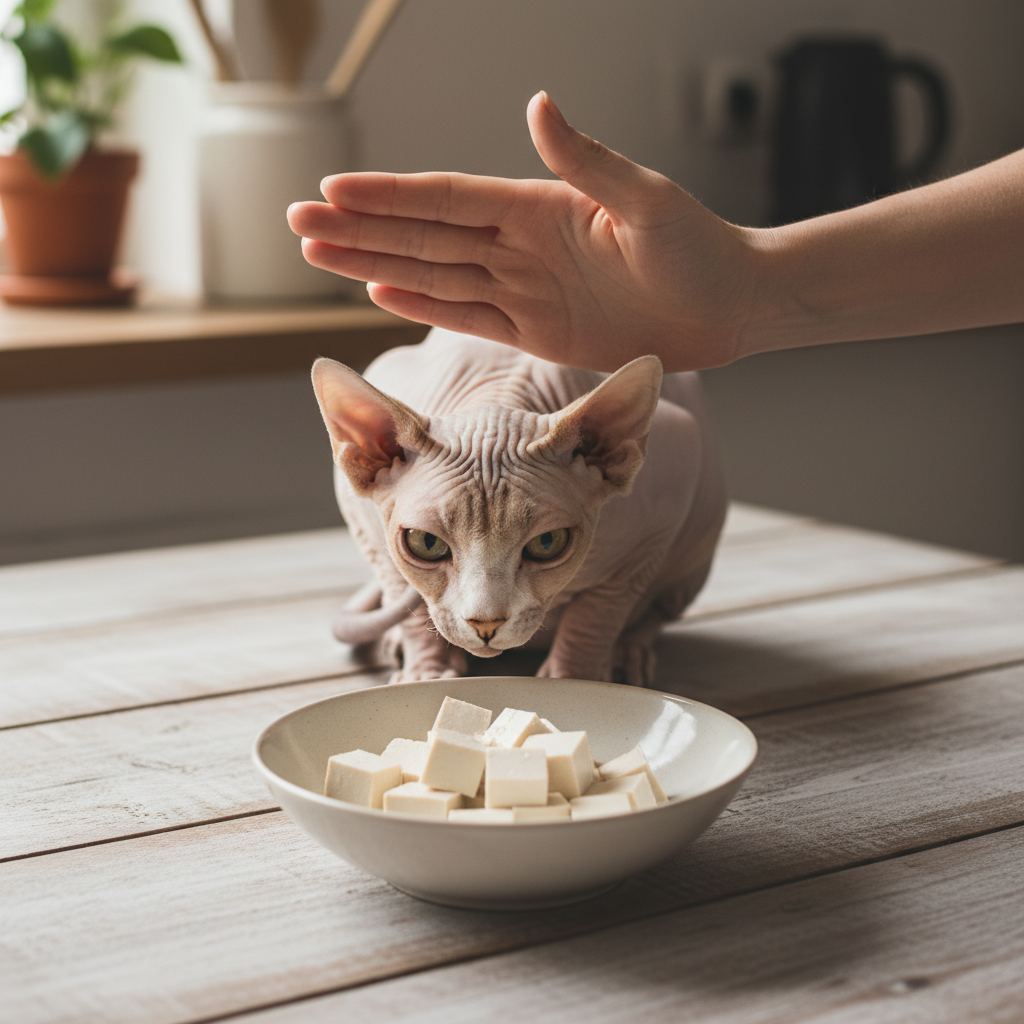
Key Takeaways
- Plain tofu is not toxic to cats but offers limited nutritional value
- Cats are obligate carnivores and require nutrients found in animal protein
- Tofu lacks taurine, which is essential for feline health
- Can cause digestive upset in some cats
- If fed, should be plain, cooked, and in very small amounts only
Is Tofu Safe for Cats?
Plain tofu is not toxic to cats, but it’s not an ideal food for them either. Cats are obligate carnivores, meaning they evolved to get all their nutrition from animal prey. While tofu provides protein, it is plant-based and lacks several nutrients cats absolutely require, most notably taurine — an amino acid essential for heart and eye health that is only found in animal tissue.
A cat fed a diet primarily of tofu would eventually develop serious, life-threatening nutritional deficiencies including dilated cardiomyopathy (heart disease), vision problems, immune dysfunction, and poor coat condition. Tofu should never be more than an occasional tiny treat for a healthy cat.
Some cats enjoy the texture of tofu and may beg for it. A small piece occasionally won’t harm a healthy cat, but it shouldn’t become a habit. There are many better treat options that actually support feline health.
Nutritional Value
Tofu provides:
- Plant protein: Incomplete for feline needs — lacks essential amino acids
- Calcium: From coagulants used in production
- Iron: Plant-based, less bioavailable than heme iron from meat
- Isoflavones: Phytoestrogens with unknown effects in cats
- Magnesium: Though magnesium content can be problematic for cats with urinary issues
What’s Missing
Tofu lacks critical nutrients cats need for survival:
- Taurine: Essential for heart and eye health — only found in animal tissue
- Vitamin A: Cats cannot convert beta-carotene from plants; they need preformed vitamin A from animals
- Arachidonic acid: Essential fatty acid found only in animal sources
- Carnitine: Important for heart function and energy metabolism
- Vitamin B12: Only available from animal products — essential for neurological function
- Complete amino acid profile: Plant proteins lack the full range cats require
Risks and What to Avoid
Nutritional deficiency: Regular consumption can lead to serious, life-threatening health problems including heart disease and blindness.
Digestive upset: Some cats cannot digest soy well and may experience gas, bloating, or diarrhea. Cats lack the enzymes to efficiently process plant proteins.
Soy allergies: Though rare, some cats are allergic to soy and may develop skin issues or gastrointestinal problems.
Seasoned tofu: Garlic, onions, and spices in flavored tofu are toxic to cats. Even plain tofu from restaurants may have been prepared with unsafe seasonings.
Fried tofu: High fat content can trigger pancreatitis, a serious inflammatory condition.
High magnesium: Tofu contains magnesium, which can contribute to urinary crystal formation in susceptible cats.
How Much Can a Cat Eat?
| Size | Max Serving | Frequency |
|---|---|---|
| All sizes | Small pea-sized piece | Rarely, if at all |
Tofu should be considered an occasional curiosity, not a treat. There are many better options for cat treats that provide actual nutritional benefit.
When to Call Your Vet
Contact your veterinarian if your cat regularly eats tofu or shows signs of nutritional deficiency (lethargy, vision problems, heart issues, poor coat). If your cat ate seasoned tofu, contact poison control immediately. ASPCA Poison Control: 888-426-4435.