
What You’ll Need
- High-value treats for both dogs
- Separate training areas or barriers
- Leashes for initial control
- Patience and realistic expectations
Why Training Multiple Dogs Matters
Training multiple dogs simultaneously saves time and teaches them to focus on you even when their canine companions are present. However, it’s also more complex — dogs distract each other, compete for rewards, and can gang up on you with undesirable behaviors. Training them together requires teaching them to take turns, wait patiently, and respond to cues individually.
The American Kennel Club notes that dogs in multi-dog households often develop stronger bonds with each other than with their humans if not properly managed. Individual training time is essential, but training together teaches valuable skills like impulse control and the ability to work as a team.
Step-by-Step: How to Train Multiple Dogs
Step 1: Train Individually First
Each dog should reliably know basic cues (sit, stay, come) on their own before group training. You can’t expect dogs to perform together what they don’t know individually. Spend one-on-one time with each dog daily, even if it’s just 5-10 minutes.
Individual training also strengthens your bond with each dog and prevents one dog from always being the “assistant” while the other does all the learning.
Step 2: Add One Dog at a Time
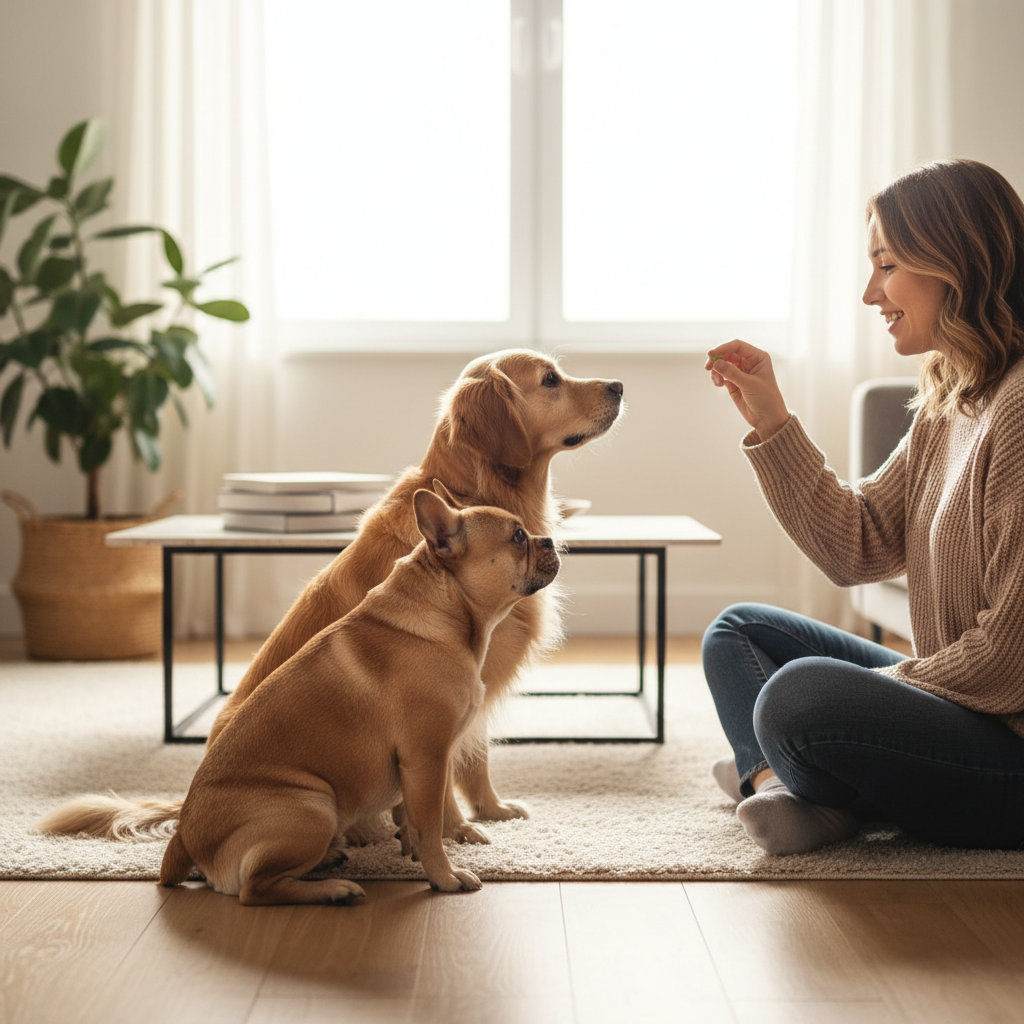
Start with the dog who knows the most. Ask for a sit, reward. Bring in the second dog on leash. Ask the first dog for a behavior while the second watches. Reward the working dog. Then ask the second dog for a behavior while the first watches. This teaches turn-taking.
If the watching dog gets excited or tries to interfere, increase distance or use a barrier. They’ll learn that patience leads to their turn.
Step 3: Work Together
Once both dogs understand taking turns, try simultaneous cues. Ask both dogs to sit at the same time. Reward both. Try walking both dogs together, rewarding for polite leash manners. Practice stays where one dog holds position while you work with the other.
Use names before cues: “Rover, sit” then “Fido, sit.” This helps dogs learn which cue is for them.
Training Tips
- Use different reward values if needed: One dog may need better treats to focus
- Reward the dog who isn’t behaving: If one dog stays while the other breaks, reward the one who stayed
- Keep sessions short: Multi-dog training is mentally challenging
- Be fair: Ensure each dog gets equal attention and rewards
- Manage excitement: Start calm sessions, gradually add energy
Common Mistakes to Avoid
- Always training the same dog first: Rotate who starts
- Skipping individual sessions: Both are necessary
- Rewarding bad behavior: Don’t treat the pushy dog who crowds in
- Expecting too much too soon: This takes time to develop
Troubleshooting
My dogs only pay attention to each other: Increase distance between them. Use higher-value treats. Practice individually more.
One dog is much better trained than the other: This is common. The better dog can be a distraction for the learner. Work the less-trained dog separately more, or use the better dog as a reward (“work with me, then you can play with Buddy”).
My dogs fight over treats: Separate them more. Toss treats to different locations. Use lower-value rewards that don’t create high arousal.
When to Move On
Your dogs are successfully training together when they can both respond to cues in the same space, take turns without frustration, and maintain focus on you despite each other’s presence. They should be able to walk together politely, wait their turn, and work simultaneously on basic behaviors.