
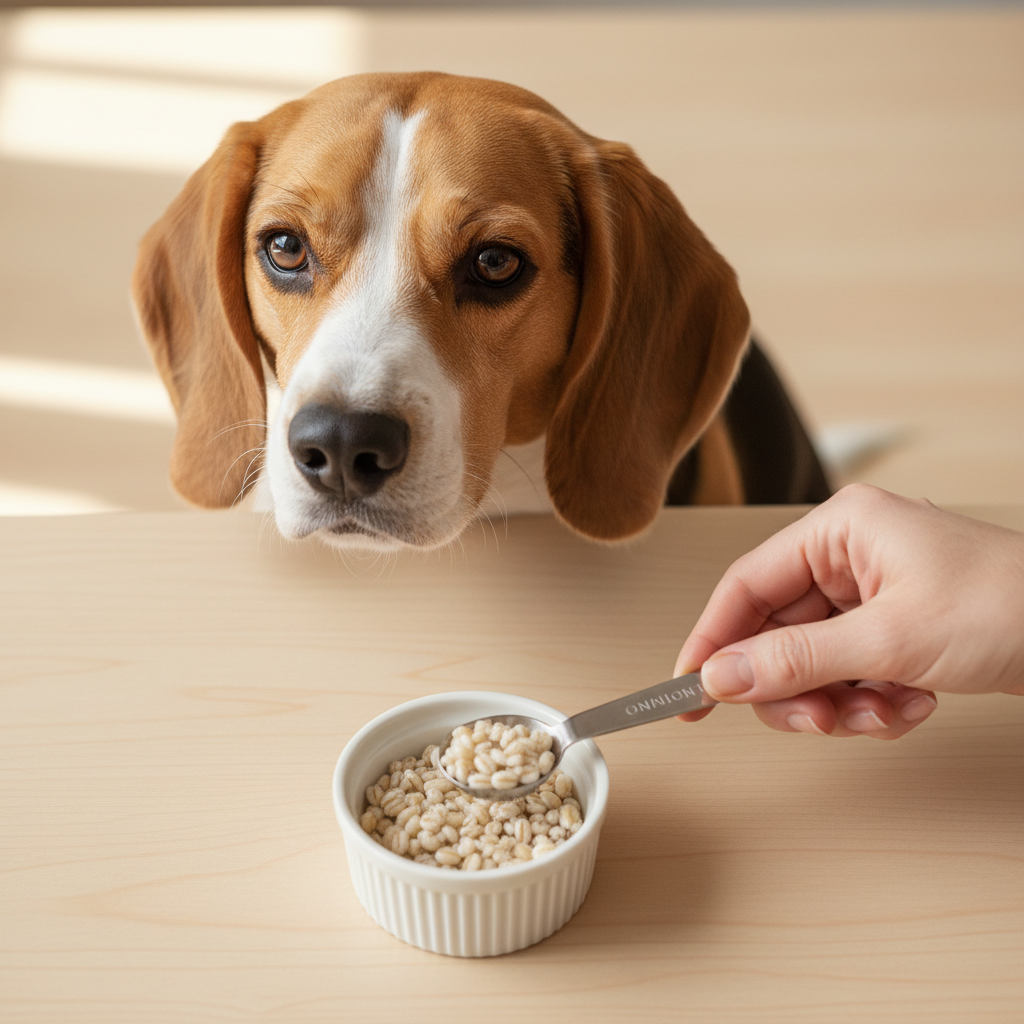
Key Takeaways
- Cooked, plain barley is safe for dogs
- Good source of fiber, selenium, and B vitamins
- Contains gluten — avoid if your dog has wheat sensitivities
- Always cook thoroughly — raw barley is indigestible
- Serve plain without salt, seasonings, or butter
Is Barley Safe for Dogs?
Cooked barley is safe for dogs and is a common ingredient in many commercial dog foods. This ancient grain provides digestible carbohydrates, dietary fiber, and various micronutrients that can complement a balanced canine diet. Barley has a lower glycemic index than many other grains, making it a steady energy source.
Veterinary nutritionists consider barley a nutritious grain option for dogs without gluten sensitivities. It’s less likely to cause blood sugar spikes compared to white rice or corn, which can be beneficial for diabetic dogs or those prone to energy crashes.
Raw barley kernels are hard and essentially indigestible for dogs. They must be cooked thoroughly in water until soft to be nutritionally available and safe to eat.
Nutritional Value
Cooked barley provides:
- Fiber: 3 grams per half-cup — excellent for digestive health
- Selenium: Antioxidant that supports thyroid function
- B vitamins: Including niacin and B6 for energy metabolism
- Manganese: Supports bone health
- Copper: Important for red blood cell formation
- Magnesium: Supports muscle and nerve function
Benefits
- Digestive health: High fiber content supports regular bowel movements
- Sustained energy: Low glycemic index provides steady blood sugar
- Weight management: Fiber promotes satiety
- Gut health: Beta-glucan fiber feeds beneficial gut bacteria
Risks and What to Avoid
Gluten content: Barley contains gluten. Dogs with celiac disease, wheat allergies, or gluten sensitivities should avoid it.
Raw barley: Uncooked barley is indigestible and can cause intestinal blockage. Always cook thoroughly.
Barley soup or stew: Human preparations often contain onions, garlic, salt, and other ingredients dangerous for dogs.
Beer: Contains hops and alcohol — both toxic to dogs. Never let dogs consume beer, even “small amounts.”
How Much Can a Dog Eat?
| Size | Max Serving | Frequency |
|---|---|---|
| Small (under 10 lbs) | 1 teaspoon | Once per week |
| Medium (10–50 lbs) | 1 tablespoon | 1-2 times per week |
| Large (50+ lbs) | 2 tablespoons | 1-2 times per week |
When to Call Your Vet
Contact your veterinarian if your dog shows signs of gluten intolerance (itching, digestive upset), choking, or allergic reactions. ASPCA Poison Control: 888-426-4435.