
What You’ll Need
- Your dog’s fetch toy (ball, frisbee, etc.)
- High-value treats (small, soft, pea-sized pieces)
- Two identical toys for trading
- Patience and consistency
Why Teaching Drop the Ball Matters
A game of fetch quickly becomes frustrating if your dog won’t release the toy. Teaching your dog to drop the ball (or frisbee, or toy) makes fetch enjoyable and efficient for both of you. It also reinforces trust — your dog learns that giving up the toy leads to more fun, not the end of the game.
The American Kennel Club emphasizes that fetch should be a back-and-forth game, not a game of keep-away. Dogs who learn to drop the ball promptly can play longer and get more exercise. For dogs who resource guard, teaching a reliable drop during low-stakes play helps prevent more serious guarding issues.
Step-by-Step: How to Teach Drop the Ball
Step 1: Teach the Trade
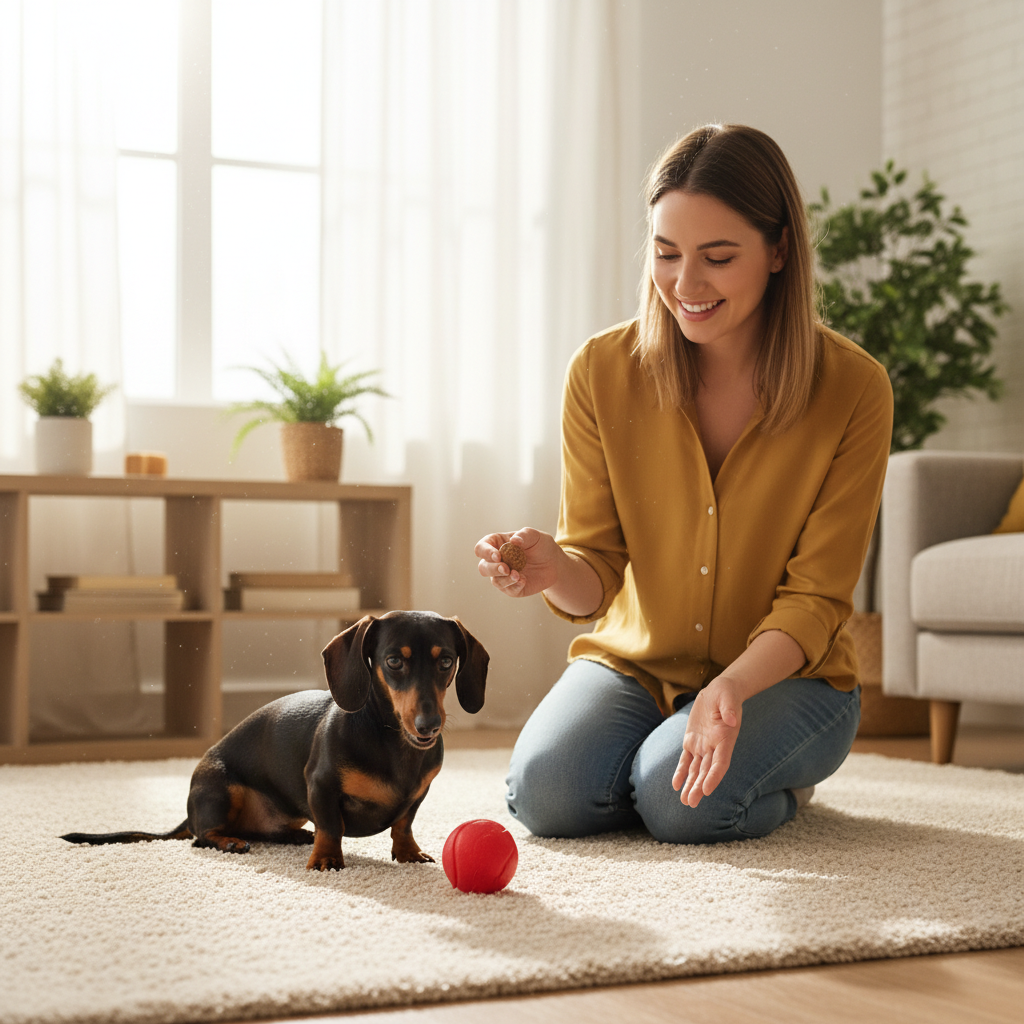
Start without throwing. Hold a ball and let your dog take it. Present a high-value treat at their nose. Most dogs will drop the ball to take the treat. The moment the ball leaves their mouth, mark “Yes!” and give the treat — then immediately throw the ball as a bonus reward.
This teaches your dog that dropping the ball gets them what they want (treats AND the ball thrown again). Repeat 10-15 times until your dog eagerly drops the ball when they see the treat.
Step 2: Add the Cue and the Fetch Context
Once the trade is reliable, add the verbal cue “drop it” or “out” just before presenting the treat. Practice with the ball in various contexts — after a short toss, during tug, or when your dog is simply holding it.
Now add the fetch context. Throw the ball, and when your dog returns, present the treat and cue “drop it.” When they drop the ball, treat and immediately throw again. The quick continuation of the game is the real reward.
Step 3: Fade the Treats and Build Reliability
Gradually use treats less frequently. Sometimes treat, sometimes just throw the ball immediately, sometimes praise and throw. The game itself becomes the reward. Eventually, your dog will drop the ball promptly knowing the next throw is coming.
Practice in various locations and with different toys to generalize the behavior.
Training Tips
- Use high-value treats initially: Better than the ball
- Never chase: If your dog won’t drop, turn and walk away
- Throw immediately after the drop: This is the real reward
- Keep throws short initially: Easy returns make drops easier
- End with the drop: Finish the game on a successful exchange
Common Mistakes to Avoid
- Chasing your dog: This turns fetch into keep-away
- Taking the ball without giving it back: This teaches guarding
- Waiting too long to throw: The reward must be immediate
- Getting frustrated: Negative energy makes dogs reluctant to share
Troubleshooting
My dog runs away with the ball: You’re throwing too far or waiting too long to reward returns. Shorten throws. Use a long line for control. Never chase.
My dog drops the ball too soon: This is actually progress! Reward it. Gradually require them to hold it longer before dropping.
My dog won’t drop even for treats: Use better treats or a second toy. Some dogs are natural keepers — try teaching with a lower-value toy first.
When to Move On
Your dog has mastered drop the ball when they consistently return, drop the toy promptly on cue, and wait eagerly for the next throw. The game flows smoothly without keep-away or reluctance to release.