
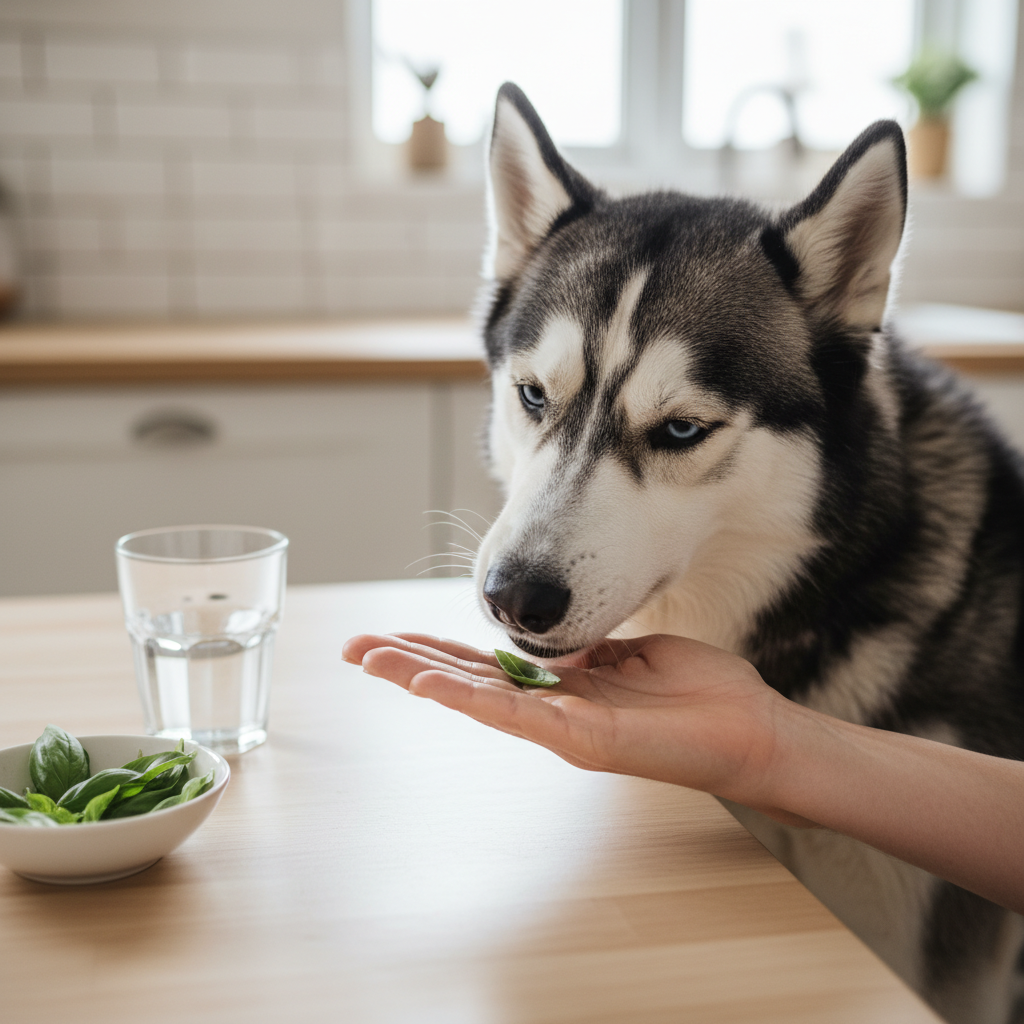
Key Takeaways
- Fresh basil is safe and non-toxic for dogs
- Contains antioxidants, anti-inflammatory compounds, and essential oils
- May help with anxiety and have antimicrobial properties
- Feed in small quantities — large amounts can cause digestive upset
- Avoid concentrated essential oils which are too potent
Is Basil Safe for Dogs?
Fresh basil is safe for dogs and is listed as non-toxic by the ASPCA. This aromatic herb, popular in Italian and Mediterranean cuisines, contains several compounds that may offer health benefits for dogs, including antioxidants and anti-inflammatory properties. However, like all herbs, it should be fed in moderation.
Veterinary herbalists sometimes recommend basil for its calming properties and digestive benefits. However, scientific research on basil’s specific effects in dogs is limited, and it should be considered a supplemental treat rather than a therapeutic agent.
Concentrated basil essential oil is a different matter — essential oils are too potent for dogs and should never be given internally or applied to their skin without veterinary guidance.
Nutritional Value
Fresh basil contains:
- Antioxidants: Including flavonoids and polyphenols
- Anti-inflammatory compounds: Such as eugenol
- Vitamin K: Supports blood clotting and bone health
- Vitamin A: Vision and immune function
- Manganese: Metabolism support
- Essential oils: Including linalool and estragole
Benefits
- Antioxidant protection: Combats free radical damage
- Anti-inflammatory: May help with arthritis and inflammatory conditions
- Calming properties: Traditional use for anxiety relief
- Antimicrobial: May support immune function
- Digestive aid: Traditionally used for stomach upset
Risks and What to Avoid
Digestive upset: Large amounts of basil can cause vomiting or diarrhea due to the essential oils.
Essential oils: Concentrated basil oil is dangerous for dogs. Never give internally or apply topically.
Dried vs. fresh: Dried basil is more concentrated. If using dried, use smaller amounts.
Seasoned dishes: Pesto and other basil-containing foods often include garlic (toxic), salt, cheese (high fat), and pine nuts (high fat). Only feed plain, fresh basil.
How Much Can a Dog Eat?
| Size | Max Serving | Frequency |
|---|---|---|
| Small (under 10 lbs) | 1 small leaf | Occasionally |
| Medium (10–50 lbs) | 2-3 leaves | Occasionally |
| Large (50+ lbs) | 3-4 leaves | Occasionally |
When to Call Your Vet
Contact your veterinarian if your dog consumes a large amount of basil, basil essential oil, or pesto (which contains garlic), or shows signs of digestive upset. ASPCA Poison Control: 888-426-4435.