
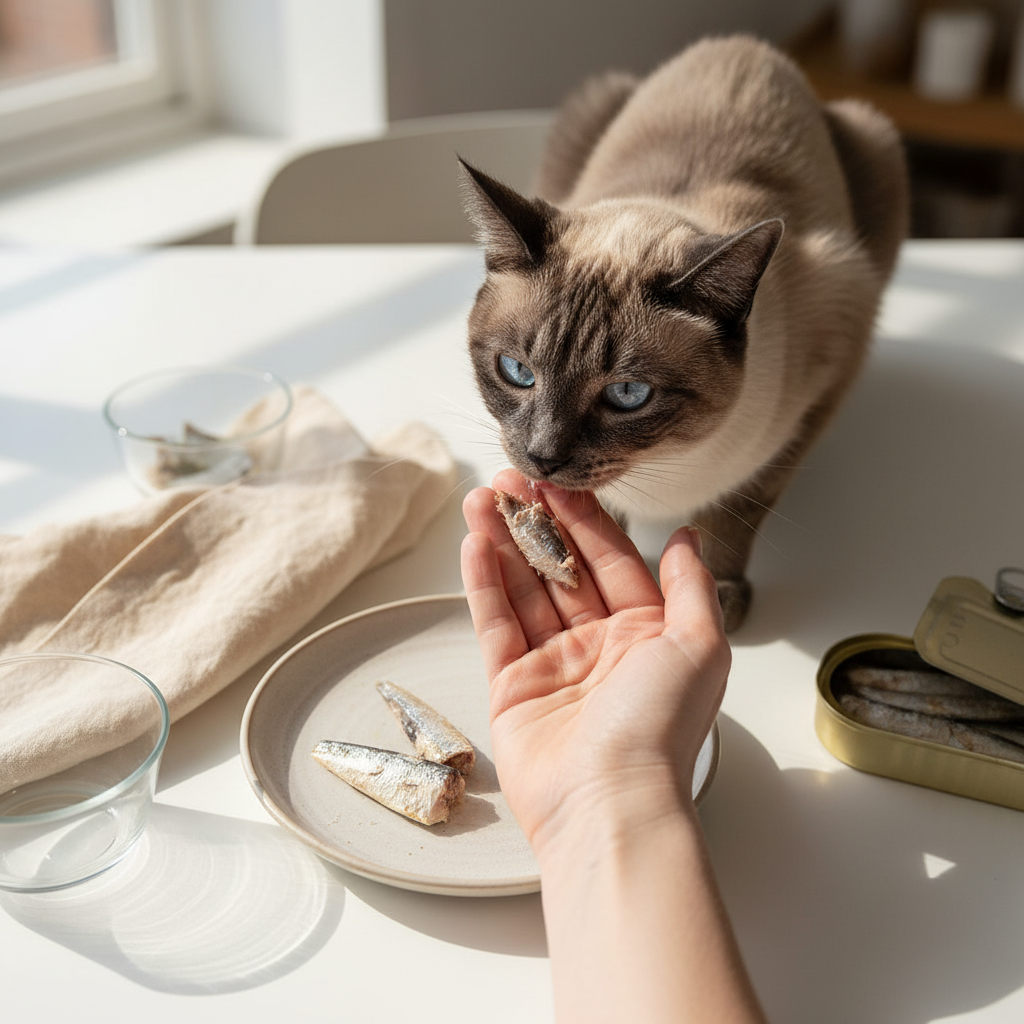
Key Takeaways
- Sardines are safe and nutritious for cats as an occasional treat
- Excellent source of omega-3 fatty acids, protein, and taurine
- Choose sardines packed in water, not oil, brine, or sauce
- High calorie content means feed sparingly
- Remove bones if concerned, though sardine bones are usually soft and edible
Are Sardines Safe for Cats?
Sardines are safe and highly nutritious for cats when fed appropriately. These small, oily fish are a natural food source that aligns with cats’ evolutionary diet as obligate carnivores. Sardines provide high-quality protein, essential omega-3 fatty acids, and taurine — an amino acid critical for feline heart and eye health that cats cannot synthesize on their own.
Veterinary nutritionists often recommend sardines as a healthy treat or food topper, particularly for cats who need encouragement to eat or could benefit from omega-3 supplementation for skin, coat, or joint health. However, their richness means they should be fed in moderation.
The main concern with sardines is how they’re packaged. Oil-packed sardines add unnecessary fat and calories, while those in tomato sauce or brine contain salt and other ingredients cats don’t need. Always choose sardines packed in water for your feline friend.
Nutritional Value
Sardines provide excellent nutrition for cats:
- Omega-3 fatty acids (EPA and DHA): Anti-inflammatory, support skin, coat, and joint health
- Protein: High-quality complete protein
- Taurine: Essential amino acid for heart and eye health
- Vitamin B12: Neurological function and energy
- Vitamin D: Bone health
- Selenium: Antioxidant mineral
- Calcium: From edible bones
Benefits
- Skin and coat health: Omega-3s reduce inflammation and promote shine
- Joint support: Anti-inflammatory effects benefit arthritic cats
- Appetite stimulation: Strong smell appeals to finicky eaters
- Heart health: Taurine and omega-3s support cardiovascular function
- Brain health: DHA supports cognitive function, especially important for senior cats
Risks and What to Avoid
Mercury concerns: Sardines are low on the food chain and have very low mercury levels compared to larger fish — one of their advantages over tuna.
Calorie density: Sardines are rich and calorie-dense. Overfeeding leads to weight gain and obesity.
Oil-packed sardines: Add unnecessary fat and calories. Always choose water-packed varieties.
Flavored sardines: Tomato sauce, mustard, and hot sauce preparations contain salt, sugar, and spices unsuitable for cats.
Sodium content: Even water-packed sardines contain some salt. Rinse if concerned, especially for cats with kidney issues.
How to Serve Sardines to Cats
For best results when feeding sardines:
- Drain the water and rinse briefly to reduce sodium
- Mash the sardines with a fork to check for any hard pieces
- Serve at room temperature for maximum aroma
- Mix a small amount with regular food as a topper
- Refrigerate opened cans and use within 2 days
How Much Can a Cat Eat?
| Size | Max Serving | Frequency |
|---|---|---|
| Small (under 8 lbs) | 1/4 can or 1 whole sardine | Once per week |
| Medium (8–12 lbs) | 1/2 can or 1-2 sardines | Once per week |
| Large (12+ lbs) | 1/2 can or 2 sardines | Once or twice per week |
When to Call Your Vet
Contact your veterinarian if your cat shows signs of digestive upset, vomiting, or diarrhea after eating sardines. For cats with kidney disease, diabetes, or pancreatitis, consult your vet before feeding fish. ASPCA Poison Control: 888-426-4435.