
What You’ll Need
- High-value treats (small, soft, pea-sized pieces)
- A variety of safe chew toys
- A quiet training area
- Patience and understanding
Why Stopping Biting/Nipping Matters
Mouthing, biting, and nipping are natural behaviors for dogs, especially puppies exploring their world. However, when directed at human skin and clothing, these behaviors become problematic. Puppy bites hurt, and adult dog bites can cause serious injury. Nipping can also damage clothing and make your dog unpleasant to be around.
The American Kennel Club emphasizes that biting is how puppies play and explore, but they must learn bite inhibition — controlling the pressure of their jaws. While the goal isn’t to stop mouthing entirely (it’s normal and necessary for development), you must teach your dog that human skin is off-limits for teeth.
Step-by-Step: How to Stop Biting and Nipping
Step 1: Teach Bite Inhibition
Puppies learn bite inhibition from their littermates — when one puppy bites too hard, the other yelps and stops playing. You can mimic this by letting your puppy mouth gently, then yelping “Ouch!” in a high-pitched voice and withdrawing attention when they bite too hard. Resume play after a brief pause.
Gradually shape softer and softer mouths until your puppy understands that human skin requires extreme gentleness or no contact at all. This process takes weeks or months, not days.
Step 2: Redirect to Appropriate Items
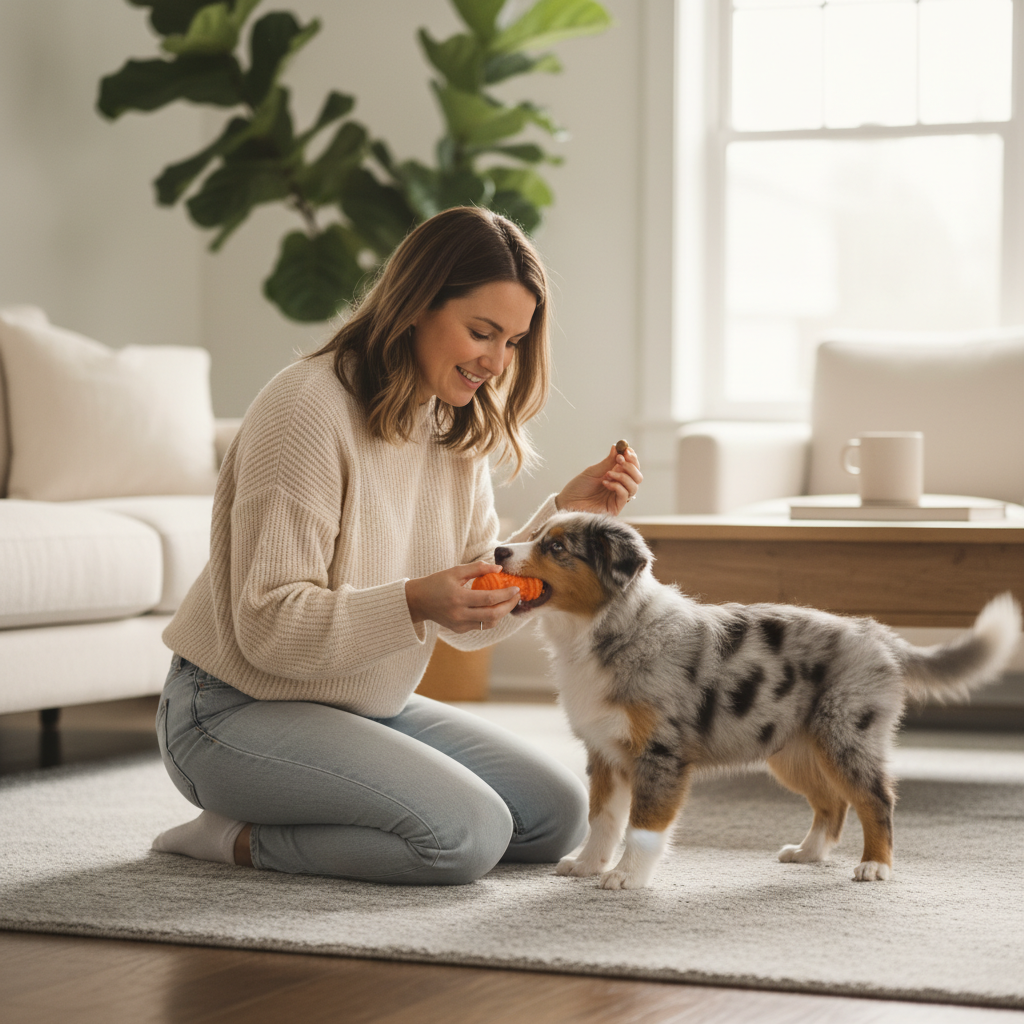
When your dog mouths you, immediately redirect to an appropriate chew toy. Have toys readily available in every room. Make the toy more interesting than your hand — wiggle it, play tug, or stuff it with treats. Reward your dog enthusiastically for choosing the toy over you.
For teething puppies, frozen toys or wet washcloths provide relief and appropriate chewing outlets.
Step 3: Teach That Biting Ends Fun
If redirection doesn’t work, use the timeout method. When your dog bites, say “Ouch!” firmly but calmly, then immediately leave the room or put your dog in a brief timeout (30-60 seconds) behind a baby gate. Return only when your dog is calm. This teaches that biting makes you go away — the opposite of what they want.
Consistency is crucial — everyone in the household must respond the same way.
Training Tips
- Never use your hands as toys: This blurs the line between play and no-biting
- Provide plenty of appropriate chews: A dog with outlets is less likely to mouth you
- Exercise and mental stimulation: Overtired, bored dogs nip more
- Teach impulse control: Sit and stay help dogs control their impulses
- Be patient: This is a developmental process that takes time
Common Mistakes to Avoid
- Hitting or holding the mouth shut: This damages trust and can increase aggression
- Pulling away quickly: This turns your hand into a toy and can trigger chase instinct
- Inconsistent responses: If biting works sometimes, it continues
- Expecting too much too soon: Puppies need months to learn bite inhibition
Troubleshooting
My puppy bites constantly: This is normal puppy behavior. Increase exercise, provide more chew toys, and be consistent with timeouts. The phase will pass.
My dog only bites when excited: Preempt the behavior. Ask for a sit before excitement builds. Have a toy ready for high-energy moments. Calmly end play if biting starts.
My dog bites aggressively, not playfully: This requires professional help. Consult a certified trainer or veterinary behaviorist immediately.
When to Move On
Your dog has stopped problematic biting when they no longer use their teeth on human skin, redirecting to toys instead, even during excitement or play. Remember that gentle mouthing is normal for young puppies and decreases naturally with age and training.