
Key Takeaways
- Plain, cooked pork is safe for cats as an occasional treat
- Good source of protein, B vitamins, and minerals
- High fat content means feed sparingly to avoid pancreatitis
- Never feed raw pork due to parasite risk (trichinosis)
- Avoid seasoned, cured, or processed pork products
Is Pork Safe for Cats?
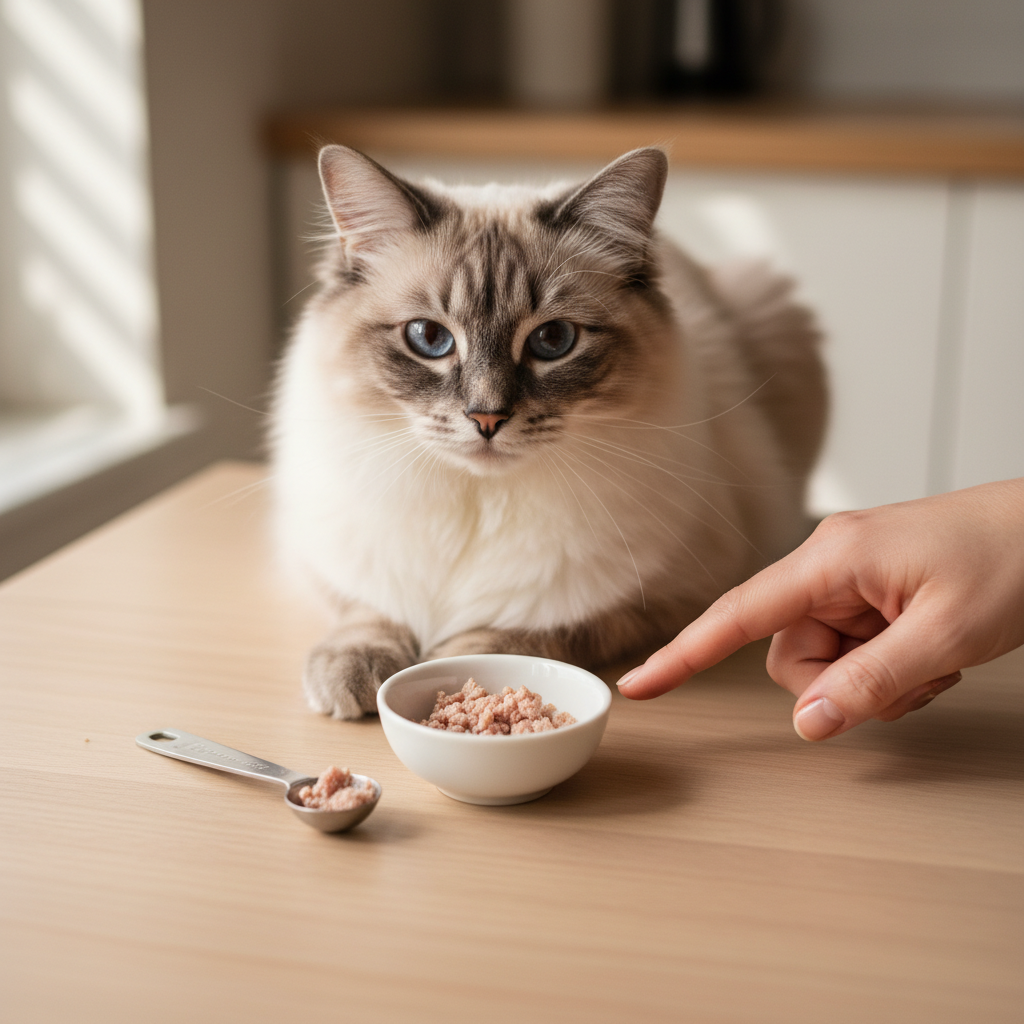
Cooked, plain pork is safe for cats when fed as an occasional treat. As obligate carnivores, cats require animal protein, and pork can provide this along with essential nutrients like B vitamins, zinc, and iron. However, pork should not be a dietary staple due to its high fat content.
According to veterinary nutritionists, pork is a less common protein source in commercial cat foods compared to chicken or fish, which makes it useful for cats with allergies to more common proteins. However, its richness means it must be introduced gradually and fed in moderation.
Raw pork is dangerous due to the risk of trichinosis (trichinellosis), a parasitic infection that can cause serious illness in cats. Always cook pork thoroughly to an internal temperature of 145°F (63°C).
Nutritional Value
Cooked pork provides:
- Protein: Essential for muscle maintenance and overall health
- B vitamins: Including thiamine (B1), crucial for cats
- Zinc: Supports immune function and skin health
- Iron: Important for oxygen transport
- Selenium: Antioxidant mineral
Benefits
- Novel protein: Useful for cats with allergies to chicken or fish
- High palatability: Many cats find pork very tasty
- Protein variety: Rotating proteins can provide nutritional diversity
Risks and What to Avoid
Raw pork: Risk of trichinosis and other parasites. Always cook thoroughly.
High fat content: Can cause pancreatitis, especially in cats prone to this condition.
Bacon and ham: High in salt and preservatives; bacon fat can cause pancreatitis.
Seasoned pork: Garlic, onions, and spices are toxic to cats.
Bones: Cooked pork bones can splinter and cause choking or internal injury.
How Much Can a Cat Eat?
| Size | Max Serving | Frequency |
|---|---|---|
| Small (under 8 lbs) | 1 teaspoon | Once per week |
| Medium (8–12 lbs) | 1-2 teaspoons | Once per week |
| Large (12+ lbs) | 1 tablespoon | Once per week |
When to Call Your Vet
Contact your veterinarian if your cat shows signs of pancreatitis (lethargy, loss of appetite, vomiting, abdominal pain) or digestive upset after eating pork. ASPCA Poison Control: 888-426-4435.