
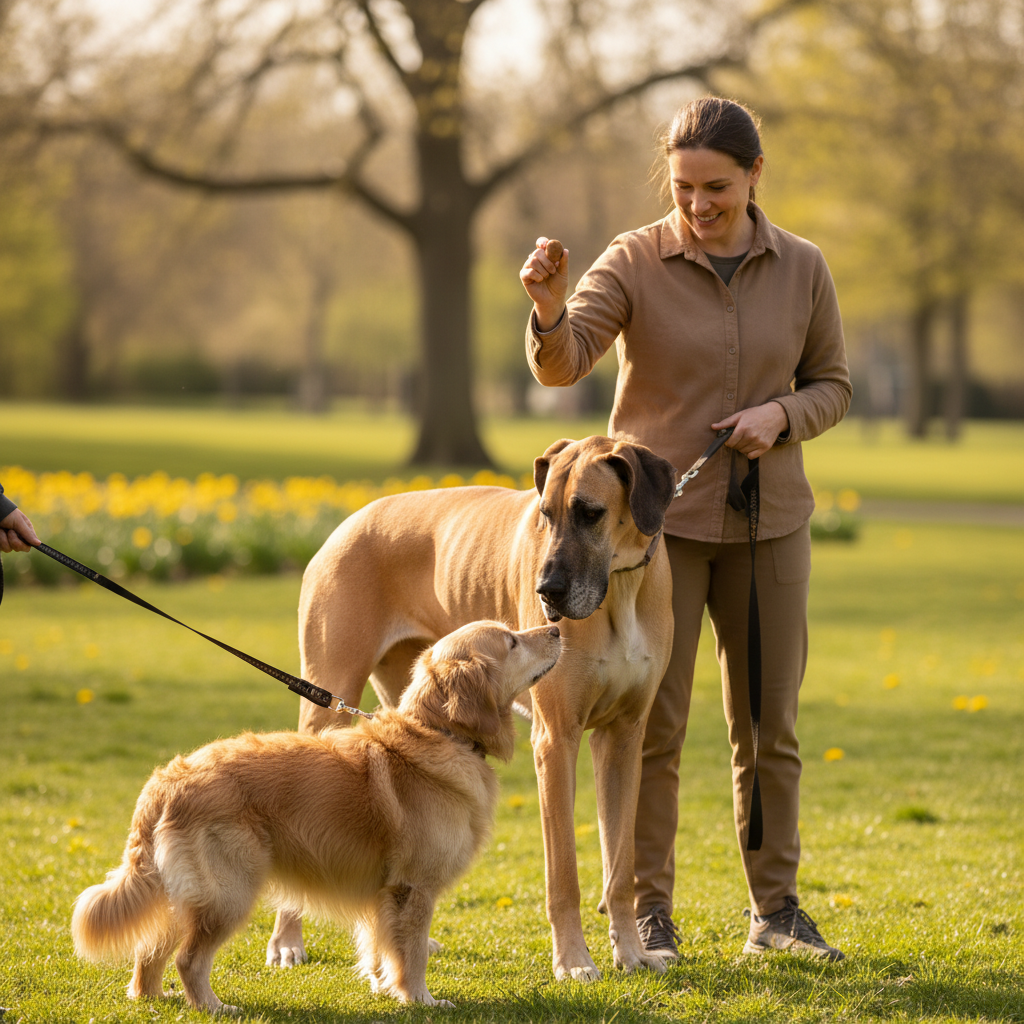
What You’ll Need
- A calm, friendly dog for practice
- High-value treats
- A neutral, fenced area
- Patience and realistic expectations
Why Socialization Matters
Proper socialization with other dogs is essential for your dog’s wellbeing and your peace of mind. Well-socialized dogs can enjoy dog parks, daycare, boarding, and walks without reactivity or fear. They’re less likely to develop aggression and are generally more confident and relaxed in various situations.
The American Kennel Club emphasizes that socialization is not just about exposure — it’s about positive experiences. Simply throwing your dog into situations with other dogs can backfire if those experiences are negative. Proper socialization is gradual, controlled, and focused on building confidence through positive associations.
Step-by-Step: How to Socialize Your Dog
Step 1: Assess Your Dog’s Current Comfort Level
Before introducing your dog to others, understand where they stand. Does your dog bark, lunge, or cower at the sight of other dogs? Or are they curious but unsure? Start at your dog’s comfort level — forcing interactions with a fearful or reactive dog can cause trauma.
For dogs with existing reactivity or fear, consult a professional trainer before proceeding. Socialization for these dogs looks different and requires careful management.
Step 2: Start with Parallel Walking
The best introduction is no introduction at all — initially. Find a calm dog and owner willing to help. Walk parallel to each other on opposite sides of the street or across a field. Reward your dog for calm behavior while in the presence of the other dog. Gradually decrease distance over multiple sessions as your dog remains comfortable.
This teaches your dog that other dogs are neutral — nothing to fear, nothing to get excited about. Only proceed to closer interactions when your dog is calm at a distance.
Step 3: Allow Brief, Off-Leash Interactions
Once your dog is comfortable near other dogs, arrange a meeting in a securely fenced area. Both dogs should be off-leash — leashes can create tension and restrict natural body language. Allow them to approach naturally without forcing interaction.
Keep the session short (5-10 minutes) and positive. End before either dog gets overwhelmed. Gradually increase duration and frequency as both dogs show comfort.
Training Tips
- Choose appropriate playmates: Match energy levels and play styles
- Watch body language: Loose, wiggly bodies are good; stiff, staring, or cowering means break it up
- Keep it positive: End on a good note before anyone gets tired or cranky
- Don’t force interactions: Let dogs choose their distance
- Supervise constantly: Things can go wrong quickly
Common Mistakes to Avoid
- Rushing the process: Pushing too fast creates fear or reactivity
- Using the dog park for socialization: Unpredictable and overwhelming for learning dogs
- Ignoring warning signs: Growling, lip curling, or hard staring means separate the dogs
- Forcing scared dogs: This creates trauma and worsens fear
Troubleshooting
My dog barks at other dogs on walks: This is leash reactivity, often from frustration or fear. Create distance from triggers. Reward for looking at you instead of the other dog. Consider professional help.
My dog hides from other dogs: Your dog is fearful. Don’t force interaction. Work on building confidence with parallel walking at a comfortable distance. Consult a trainer if fear is severe.
My dog plays too rough: Some dogs have rough play styles. Interrupt frequently for “settle” breaks. Match with dogs who enjoy similar play. Teach a reliable recall to call them out when needed.
When to Move On
Your dog is well-socialized when they greet other dogs appropriately (or ignore them), play politely when invited, and recover quickly from minor conflicts. They should remain calm in the presence of other dogs without excessive excitement or fear.