
Key Takeaways
- Plain, unsalted, shelled sunflower seeds are safe in moderation
- Good source of vitamin E, healthy fats, and selenium
- Shells are dangerous — can cause intestinal blockage
- Salted seeds can cause sodium toxicity
- High fat content means feed sparingly
Is Sunflower Seeds Safe for Dogs?
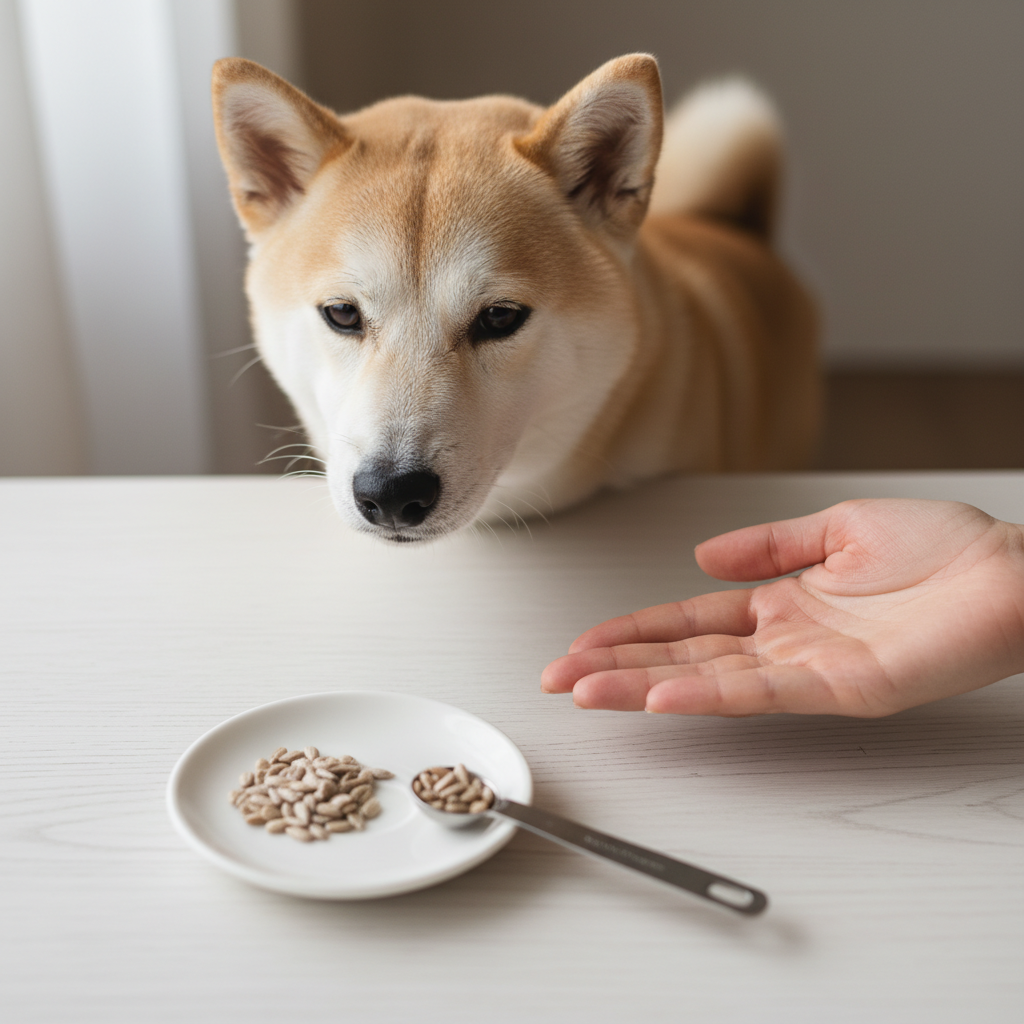
Plain, unsalted, shelled sunflower seeds are safe for dogs in small quantities. These seeds are nutrient-dense and provide vitamin E, healthy fats, and minerals that can benefit your dog’s skin, coat, and overall health. However, they must be fed carefully to avoid potential hazards.
The American Kennel Club and veterinary experts warn that most sunflower seeds sold for human consumption come with dangerous additions: salt, seasonings, and shells. These make an otherwise safe snack potentially harmful for dogs.
Sunflower seeds are also calorie-dense due to their fat content. They should be an occasional treat, not a regular dietary component.
Nutritional Value
Shelled sunflower seeds provide:
- Vitamin E: Potent antioxidant for skin and immune health
- Healthy fats: Linoleic acid supports coat condition
- Selenium: Antioxidant mineral
- Magnesium: Supports muscle and nerve function
- Phosphorus: Bone health
- Protein: Approximately 3 grams per tablespoon
Benefits
- Skin and coat health: Vitamin E and healthy fats promote shine
- Antioxidant support: Vitamin E and selenium combat oxidative stress
- Anti-inflammatory: May help with minor inflammatory conditions
Risks and What to Avoid
Salt: Most packaged sunflower seeds are heavily salted. Excess sodium can cause vomiting, diarrhea, tremors, and even sodium ion poisoning.
Shells: Sunflower seed shells are sharp, fibrous, and indigestible. They can cause intestinal blockage, perforation, or choking. Only feed shelled (kernel) seeds.
Flavorings: Ranch, BBQ, and other flavored seeds contain garlic, onion powder, and artificial ingredients dangerous for dogs.
High fat content: Too many seeds can cause pancreatitis, especially in susceptible dogs. Feed sparingly.
Calorie density: Easy to overfeed. Obesity is a major health risk for dogs.
How Much Can a Dog Eat?
| Size | Max Serving | Frequency |
|---|---|---|
| Small (under 10 lbs) | 2-3 seeds | Once per week |
| Medium (10–50 lbs) | 5-10 seeds | Once per week |
| Large (50+ lbs) | 10-15 seeds | Once per week |
When to Call Your Vet
Contact your veterinarian immediately if your dog consumes salted seeds with shells, shows signs of intestinal blockage (vomiting, lethargy, abdominal pain), or exhibits symptoms of sodium toxicity (excessive thirst, tremors, seizures). ASPCA Poison Control: 888-426-4435.