
What You’ll Need
- Heavy-duty bells (potty bells, service bells, or cowbells)
- A sturdy hook or ribbon to hang them on the door
- High-value treats
- Patience and consistency
Why Teaching Bell Ringing Matters
Teaching your dog to ring a bell to go outside is a game-changer for potty training. Instead of barking, scratching at the door, or having accidents, your dog has a clear, polite way to communicate their needs. This reduces frustration for both you and your dog and prevents the “sniffing around anxiously” behavior that often precedes accidents.
The American Kennel Club recommends bell training as part of a comprehensive potty training plan. While not every dog needs bells (some naturally signal in other ways), it’s particularly helpful for dogs who are subtle about their needs, puppies learning bladder control, and owners who want clear communication.
Step-by-Step: How to Teach Bell Ringing
Step 1: Teach Touching the Bell
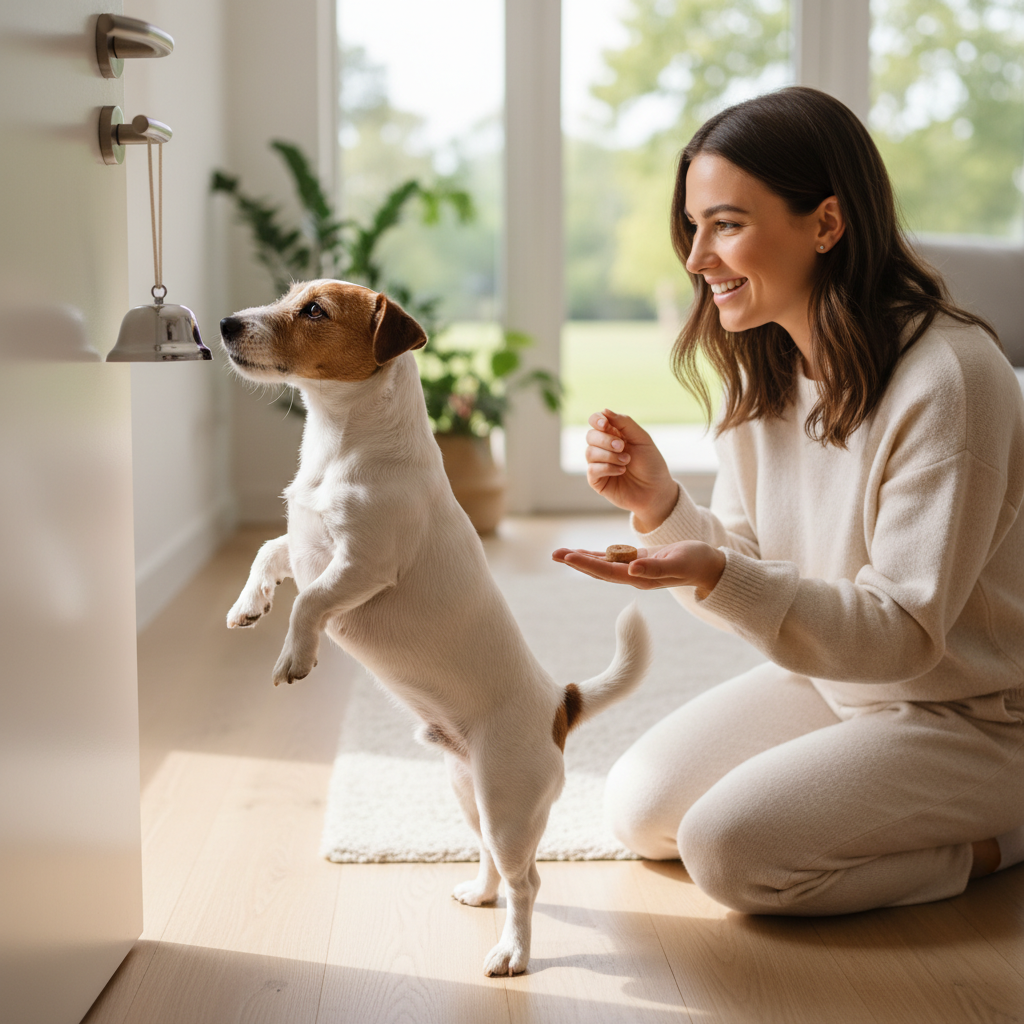
Hold the bell in your hand. When your dog sniffs or touches it with their nose, mark “Yes!” and treat. If your dog doesn’t interact, put a little peanut butter or treat paste on the bell to encourage investigation. Repeat until your dog readily touches the bell with their nose to earn a treat.
Add a verbal cue like “touch” or “bell” as they make contact. Practice until your dog touches the bell on cue.
Step 2: Hang the Bell on the Door
Hang the bells on the door you use for potty trips, at your dog’s nose level. Point to the bells and give your cue. When your dog touches them, mark, treat, and immediately open the door and go outside. Even if your dog doesn’t need to potty, this builds the association: bell = door opens = outside.
Practice several times a day, always following the bell touch with going outside.
Step 3: Apply to Real Potty Needs
When you think your dog needs to go (after meals, naps, play), direct them to the bell. Encourage them to touch it, then immediately go outside. If your dog rings the bell on their own, respond immediately — even if you’re busy. This reinforces that the bell works.
If your dog rings the bell but doesn’t potty, bring them back inside without play. They’ll learn that bell ringing is for potty, not just going outside to play.
Training Tips
- Respond promptly: The bell must always work, or your dog will stop using it
- Hang at nose level: Your dog should reach the bells easily
- Use bells that make clear sound: Your dog needs to hear the result
- Be consistent: Everyone in the household must respond to the bell
- Reward potty, not just bell: The goal is communication, not just noise
Common Mistakes to Avoid
- Ignoring the bell: If you don’t respond, your dog will stop using it
- Responding too slowly: Delayed response weakens the association
- Letting play follow bell ringing: This teaches ringing for fun, not potty
- Punishing accidents: This creates anxiety around potty needs
Troubleshooting
My dog won’t touch the bells: Make it easier. Hold the bells in your hand initially. Use stinky treats to encourage investigation. Be patient.
My dog rings the bell constantly: You’re likely providing play or long outings after ringing. Take them out on leash, give them 3-5 minutes to potty, then back inside. No play after bell ringing until they’ve pottied.
My dog uses the bell but still has accidents: The bell is communication, not a solution for incomplete potty training. Ensure you’re taking your dog out frequently enough and rewarding potty outside generously.
When to Move On
Your dog has mastered bell ringing when they consistently use the bell to signal potty needs and wait patiently for you to respond. Continue responding promptly to maintain the behavior. The bell becomes part of your household communication system.