
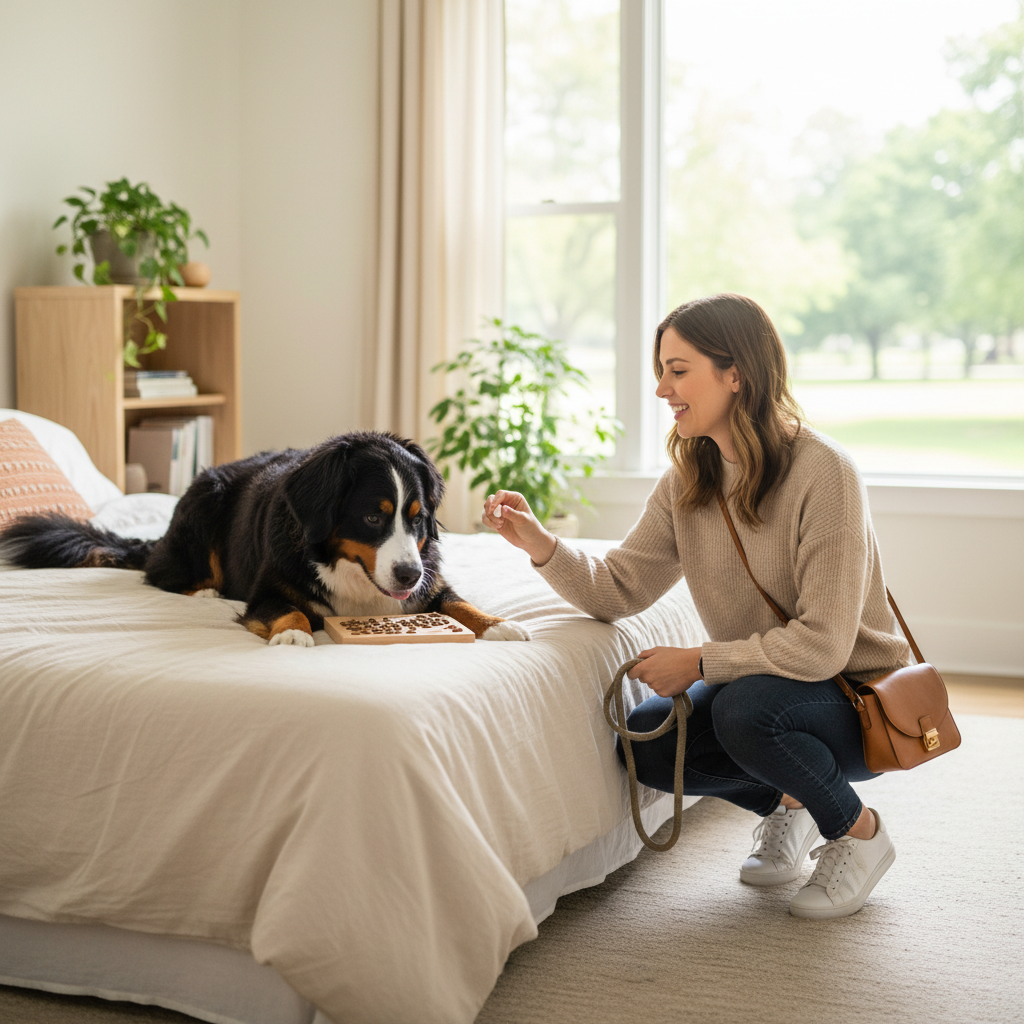
What You’ll Need
- High-value treats and food-stuffed toys (Kongs, Toppls)
- A comfortable crate or safe confinement area
- Calming aids (optional: pheromone diffusers, calming music)
- Patience and a calm approach
Why Addressing Separation Anxiety Matters
Separation anxiety is one of the most challenging behavioral issues dog owners face. Dogs with this condition experience genuine panic when left alone, leading to destructive behavior, excessive vocalization, house soiling, and self-harm. It’s heartbreaking to see your dog suffer, and the destruction can be costly and frustrating.
The American Kennel Club and veterinary behaviorists emphasize that separation anxiety is not “revenge” or “spite” — it’s a panic response similar to a human panic attack. Punishment makes it worse, as the dog is already terrified. Successful treatment requires patience, gradual desensitization, and often professional help.
Step-by-Step: How to Help Your Dog with Separation Anxiety
Step 1: Rule Out Medical Issues and Other Causes
First, visit your veterinarian to rule out medical causes for house soiling or sudden behavioral changes. Ensure your dog is getting adequate exercise and mental stimulation — many destructive behaviors stem from boredom, not anxiety.
Video your dog when left alone. True separation anxiety involves distress behaviors starting within minutes of departure: panting, pacing, drooling, howling, destructive attempts to escape. If your dog sleeps peacefully for an hour then chews something, that’s likely boredom, not anxiety.
Step 2: Create Positive Associations with Alone Time
Teach your dog that your departures are no big deal. Start with extremely short absences — walk to the door and immediately return. Gradually increase to 5 seconds, 10 seconds, 30 seconds. Only proceed when your dog remains calm at each level.
Provide special items only when you leave — food-stuffed Kongs, puzzle feeders, or safe chew toys. These create positive associations with your departure and keep your dog occupied.
Step 3: Practice Graduated Departures
Once your dog handles short absences, build duration gradually. Go from 30 seconds to 1 minute, 2 minutes, 5 minutes, 10 minutes. Vary your routine — leave through different doors, at different times, with different pre-departure cues.
Keep departures and arrivals low-key. Don’t make a big fuss when leaving or returning — this makes your presence/absence more emotionally charged.
Training Tips
- Never punish: Anxiety is fear, not misbehavior
- Use food-stuffed toys: These create positive associations with alone time
- Exercise before departures: A tired dog has less energy for anxiety
- Consider medication: Anti-anxiety medication can help severe cases
- Hire help: Dog walkers or daycare prevent anxiety from building
Common Mistakes to Avoid
- Punishing the behavior: This increases fear and worsens anxiety
- Moving too fast: Gradual desensitization takes weeks or months
- Making departures emotional: Keep hellos and goodbyes calm
- Ignoring the problem: Separation anxiety rarely resolves without intervention
Troubleshooting
My dog destroys things only when I’m gone: This is classic separation anxiety. Follow the desensitization protocol. Consider confinement in a crate (if your dog is crate trained and comfortable) or a dog-proofed room.
My dog barks constantly when alone: This is distress vocalization. Ensure your dog has had exercise and mental stimulation. Use white noise or calming music. Gradual desensitization is essential.
I’ve tried everything and nothing works: Consult a veterinary behaviorist. Severe separation anxiety often requires medication alongside behavior modification. This is a medical issue, not a training failure.
When to Move On
Your dog has overcome separation anxiety when they remain calm during your departures, relax while you’re gone, and don’t exhibit distress behaviors. This may take weeks or months. Maintenance involves continuing to provide enrichment and occasionally practicing short absences to maintain tolerance.